
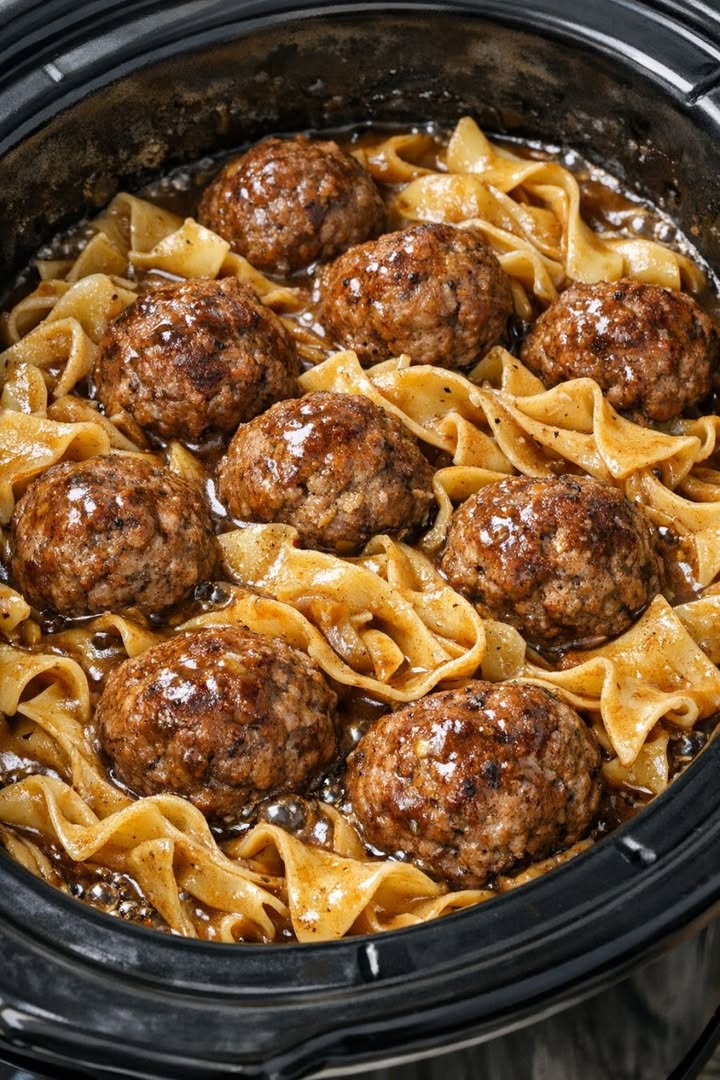
There is a legendary, farmhouse magic in a meal that brings together the heartiness of hand-rolled beef and the tender embrace of wide egg noodles. These Amish Meatball Noodles are a “community-potluck” favorite, known for their rich, brown-butter undertones and a savory cream sauce that ensures every bite is a melt-in-your-mouth experience of pure comfort.
This recipe is a favorite for those who want a “heritage-style” dinner with almost zero active preparation. It captures the essence of a traditional Lancaster County kitchen—offering a dense, satisfying texture and a nostalgic, home-cooked aroma—providing a reliable, warming meal that proves the most unforgettable dishes are often the result of beautiful simplicity.
This recipe matters because it honors the beauty of the “one-bowl” comfort. It saves you from the thin, flavorless sauces of modern pasta dishes by utilizing a straightforward “simmer-and-serve” method, providing a reliable, family-friendly centerpiece that is as nourishing as it is delicious.
Ingredients
-
1 pound Ground beef (Lean)
-
1/2 cup Breadcrumbs (Plain or seasoned)
-
1 large Egg (Beaten)
-
1/4 cup Whole milk (For the meatballs)
-
1/2 teaspoon Onion powder
-
1/2 teaspoon Garlic powder
-
16 oz Wide egg noodles
-
2 cans (10.5 oz each) Cream of Mushroom or Cream of Chicken soup
-
1 1/2 cups Beef broth
-
2 tablespoons Unsalted butter
-
(Optional: Fresh parsley or a pinch of nutmeg for a traditional finish)
Instructions
-
In a large bowl, combine the ground beef, breadcrumbs, egg, milk, onion powder, and garlic powder.
-
Roll the mixture into small, bite-sized meatballs; smaller meatballs are the secret to a legendary, easy-to-eat distribution throughout the noodles.
-
In a large Dutch oven or deep skillet, melt the butter over medium-high heat and brown the meatballs on all sides. They don’t need to be fully cooked through yet, as they will finish in the sauce.
-
Remove the meatballs and set aside. In the same pan, whisk together the canned soup and the beef broth, scraping up any browned bits from the bottom for a professional-grade flavor.
-
Bring the sauce to a gentle simmer.
-
Meanwhile, boil the wide egg noodles in a separate pot of salted water for about 2 minutes less than the package directions (the “Al Dente” stage).
-
Drain the noodles and add them to the simmering sauce along with the browned meatballs.
-
Cover and simmer on low for 10 to 12 minutes, allowing the noodles to absorb the savory broth and the meatballs to reach a succulent finish.
-
If the sauce becomes too thick, stir in an extra splash of broth until it reaches a velvet-like consistency.
-
Serve hot in deep bowls, garnished with fresh parsley for a bright, professional touch.
Why This Recipe Works
-
The Starch-Broth Bond: By finishing the noodles directly in the sauce, the surface starch of the pasta acts as a natural thickener, creating a cohesive, “clinging” gravy that doesn’t pool at the bottom of the plate.
-
Milk-Moistened Proteins: Adding milk to the meatball mixture prevents the beef from tightening during the browning process, ensuring a professional-grade “tender” bite.
-
Maillard Fond Incorporation: Searing the meatballs first creates a “fond” (browned bits) in the butter that, when whisked into the soup, provides a deep, roasted-meat flavor that canned soup lacks on its own.
-
Egg-Noodle Resilience: Wide egg noodles have a higher protein content than standard pasta, allowing them to withstand the final simmer without becoming mushy or losing their structural integrity.
Tips for Best Results
Don’t overmix the meat. When forming your meatballs, handle the beef as little as possible. Overworking the meat leads to “tough” meatballs; a light touch is the secret to that legendary, melt-in-your-mouth texture.
Season the water. Always boil your egg noodles in water that is “salty like the sea.” This is your only chance to season the actual pasta, which provides a legendary foundation for the savory cream sauce.
Use the “Fond.” After browning the meatballs, do not wash the pan! Those browned bits are concentrated flavor. Use your broth to deglaze the pan and incorporate that “liquid gold” into your gravy.
Variations & Substitutions
For a “Golden Harvest” twist, add a cup of sliced carrots and celery to the butter before whisking in the soup for extra sweetness and crunch.
If you prefer a “Smoky Mountain” profile, add a teaspoon of smoked paprika to the meatball mixture and use Cream of Bacon soup.
To make this “Swiss Style,” stir in a half-cup of shredded Swiss or Gruyère cheese at the very end for a nutty, stretchy finish.
Frequently Asked Questions
How should I store and reheat Amish Meatball Noodles?
Store in an airtight container in the fridge for up to four days. Reheat in a saucepan over low heat, adding a splash of milk or broth to loosen the sauce; the noodles will have absorbed more flavor and be even more legendary on day two.
Can I use frozen meatballs?
Yes! If you’re in a hurry, high-quality frozen meatballs work perfectly. Just brown them in the butter as directed to add that roasted “depth” to the pan.
Why is my sauce too thick?
Egg noodles are like sponges. If the dish sits for too long, they will soak up the liquid. Simply stir in a little more beef broth or warm water until the sauce returns to a glossy, spoonable consistency.
Can I use a different pasta?
While wide egg noodles are the traditional choice, rotini or fettuccine are excellent substitutes as they have enough surface area to hold the thick cream sauce.
There is a simple, savory joy in a meal that feels like a seat at a long wooden table in a farmhouse kitchen. Amish Meatball Noodles are a reminder that the most legendary comfort is often found in the most humble of pans. We hope this golden, gravy-soaked classic becomes a favorite highlight of your next cozy family evening.