
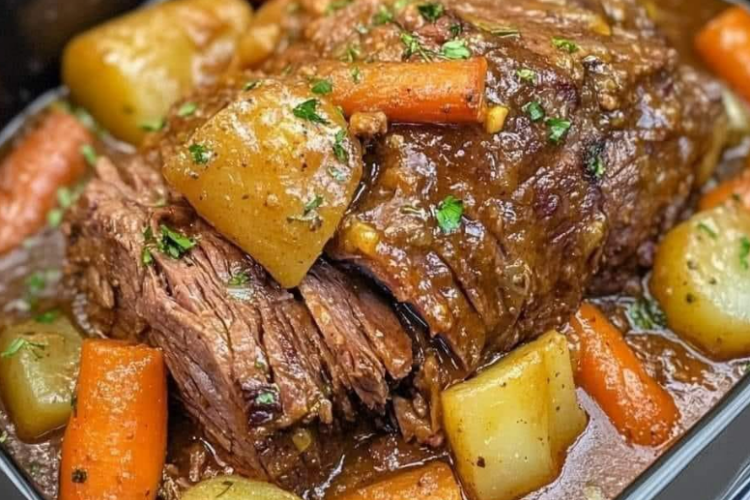
There is a unique kind of magic that happens when you walk through the door after a long day to the savory, mouth-watering aroma of a dinner that cooked itself. A slow-cooker pot roast is the ultimate centerpiece for a cozy family evening.
As seen in the image, the result is a beautifully browned, fork-tender roast surrounded by perfectly glazed vegetables. It is a meal that looks like it took hours of active labor, but in reality, it relies on the gentle, steady heat of the slow cooker to do the heavy lifting.
This recipe matters because it provides deep, soulful comfort with minimal prep time. It turns a humble, affordable cut of beef into a gourmet-style feast, giving you back your afternoon while promising a nutritious and satisfying meal that tastes like home.
Ingredients
3-4 lb beef chuck roast (well-marbled for the best flavor)
1 lb Yukon Gold potatoes, cut into large chunks
4 large carrots, peeled and cut into 2-inch pieces
1 large yellow onion, sliced into thick wedges
3 cloves garlic, minced
2 cups beef broth (low sodium preferred)
1 tablespoon Worcestershire sauce
1 teaspoon dried thyme (or two fresh rosemary sprigs)
2 tablespoons olive oil
Salt and black pepper to taste
Instructions
Generously season all sides of the beef roast with salt and black pepper.
Heat the olive oil in a large skillet over medium-high heat.
Sear the roast for 4 to 5 minutes per side until a deep brown crust forms.
Place the chopped onions, carrots, and potatoes in the bottom of the slow cooker.
Set the seared beef roast directly on top of the bed of vegetables.
Whisk together the beef broth, Worcestershire sauce, garlic, and herbs in a small bowl.
Pour the liquid mixture over the roast and vegetables.
Cover and cook on Low for 8 to 10 hours or on High for 5 to 6 hours.
Remove the meat to a cutting board and let it rest for 10 minutes before slicing or shredding.
Serve the meat and vegetables drizzled with the savory juices from the pot as shown in the image.
Why This Recipe Works
Tender Results: The low and slow cooking process breaks down the tough connective tissues in the chuck roast, resulting in meat that melts in your mouth.
One-Pot Meal: Having your protein, starch, and vegetables all cook together in one vessel means fewer dishes and a more cohesive flavor profile.
Flavor Infusion: Because the vegetables simmer in the beef juices and broth all day, they take on a rich, savory depth that you can’t achieve with boiling or steaming.
Tips for Best Results
Don’t Skip the Sear: Searing the meat before it goes into the slow cooker creates a Maillard reaction, which adds a complex, caramelized flavor to the final gravy.
Size Matters: Cut your vegetables into large, uniform chunks; if they are too small, they will turn to mush during the long cooking cycle.
Low is Better: While the High setting works in a pinch, cooking on Low allows the fats to render more slowly, resulting in a significantly more tender roast.
Variations & Substitutions
The Liquid: Swap half of the beef broth for a dry red wine like Cabernet Sauvignon to add a sophisticated, acidic depth to the sauce.
Root Veggie Mix: Feel free to add parsnips, turnips, or celery stalks to the vegetable bed for a more diverse flavor profile.
Thickened Gravy: If you prefer a thicker sauce, whisk 2 tablespoons of cornstarch with a little cold water and stir it into the pot for the last 30 minutes of cooking.
Frequently Asked Questions
How should I store leftovers?
Store the beef and vegetables together in an airtight container with plenty of the cooking liquid for up to four days. The liquid keeps the meat from drying out when reheating.
Can I make this ahead of time?
Yes, this roast actually tastes even better the next day. You can cook the entire meal, let it cool, and reheat it slowly on the stove or back in the slow cooker.
What is the best cut of meat to use?
Chuck roast is the gold standard because of its fat content. Avoid lean cuts like eye of round, as they can become tough and dry in the slow cooker.
Why is my meat still tough after cooking?
If the meat isn’t “fork-tender,” it usually just needs more time. Put the lid back on and give it another hour; every roast is different and some take a bit longer to break down.
There is nothing quite as rewarding as serving a meal that feels like a warm hug. This slow-cooker pot roast is a reliable classic that never fails to satisfy a hungry crowd. We hope this becomes a go-to recipe in your kitchen for those days when you need a little extra comfort with a lot less effort.