
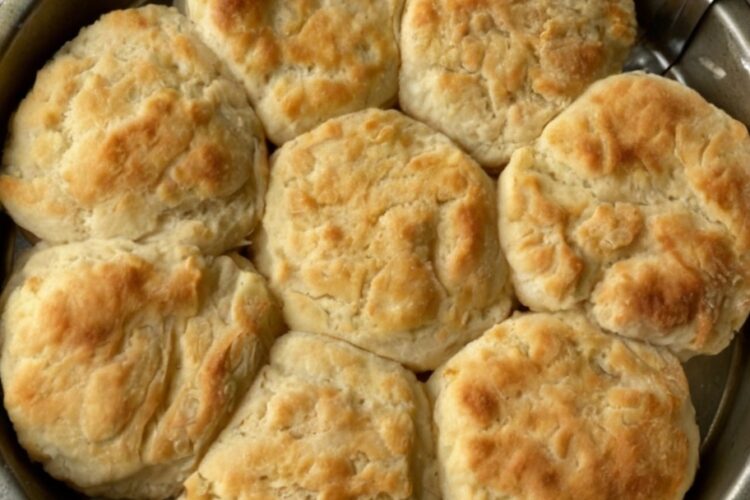
There’s a reason a warm buttermilk biscuit can quiet a whole breakfast table. It’s tall, it pulls apart in soft flaky layers, and the edges shatter with butter while the middle stays cloud-soft. After a lot of pans that came out flat and dense, I finally cracked the two things that matter most — keeping everything cold and refusing to overwork the dough — and now these come out sky-high every single time.
The best part? You don’t need a stand mixer, a special cutter, or an hour of work. Cold butter, tangy buttermilk, one bowl, and about 30 minutes. That’s the whole story.
If you’ve been buying the pop-open canned kind, this is the recipe that ends that habit for good.
Why You’ll Love This Recipe
- Tall and flaky, not flat. A quick fold-and-stack trick builds real buttery layers.
- One bowl, 30 minutes. From flour to golden tops before your coffee gets cold.
- Pantry ingredients. Nothing fancy — flour, butter, buttermilk, and leavening.
- Foolproof. The tips below fix the exact mistakes that ruin most biscuits.
- Freezer-friendly. Cut them, freeze them, bake fresh whenever you want.
Ingredients
- All-purpose flour — 2 cups (250 g). The everyday workhorse. Spoon it into the cup and level it off; scooping packs in too much and dries out the dough.
- Baking powder — 1 tablespoon. The main lift. Make sure yours is fresh.
- Baking soda — ¼ teaspoon. Reacts with the buttermilk’s acidity for extra rise and a golden top.
- Sugar — 1 teaspoon. Just enough to round out the flavor and help browning.
- Salt — ¾ teaspoon. Non-negotiable for flavor; unsalted butter lets you control it.
- Cold unsalted butter — ½ cup / 1 stick (113 g). The colder the better — this is what creates steam pockets and flaky layers.
- Cold buttermilk — ¾ cup + 2 tablespoons (200 ml). The tang and acidity are what make these tender. Keep it in the fridge until the second you need it.
- Melted butter — 1 tablespoon, for brushing (optional). For that bakery-shine finish on top.
How to Make Buttermilk Biscuits
- Heat the oven. Preheat to 425°F (220°C) and line a baking sheet with parchment. A hot oven gives the biscuits an immediate lift.
- Whisk the dry ingredients. In a large bowl, whisk the flour, baking powder, baking soda, sugar, and salt until evenly combined.
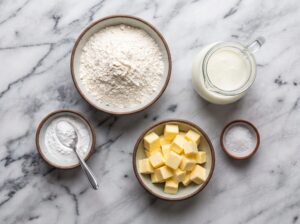
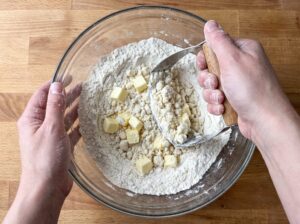
- Cut in the cold butter. Add the cubed butter and work it in with a pastry cutter or your fingertips until the mixture looks like coarse crumbs with pea-sized bits of butter still visible. Those butter bits are your future flaky layers — don’t blend them away.
- Add the buttermilk. Pour in the cold buttermilk and stir with a fork just until a shaggy, slightly sticky dough forms. Stop the moment there’s no dry flour left. Overmixing is the number-one biscuit killer.
- Fold for layers. Turn the dough onto a lightly floured surface, pat it into a rectangle, then fold it in thirds like a letter. Pat and fold two more times. This lamination is the secret to tall, pull-apart layers.
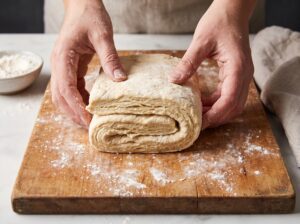
- Shape and cut. Pat the dough to about 1 inch (2.5 cm) thick. Cut straight down with a floured biscuit cutter or a sharp glass — press, don’t twist. Twisting seals the edges and stunts the rise.
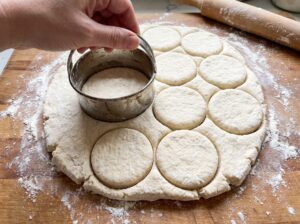
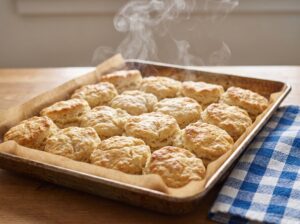
- Chill (don’t skip). Arrange biscuits on the sheet with sides just touching (for soft edges) and chill 10 minutes so the butter firms back up. This one pause is the difference between good and bakery-tall.
- Brush and bake. Brush the tops (not the sides) with buttermilk or melted butter and bake 15–18 minutes, until deep golden and risen.
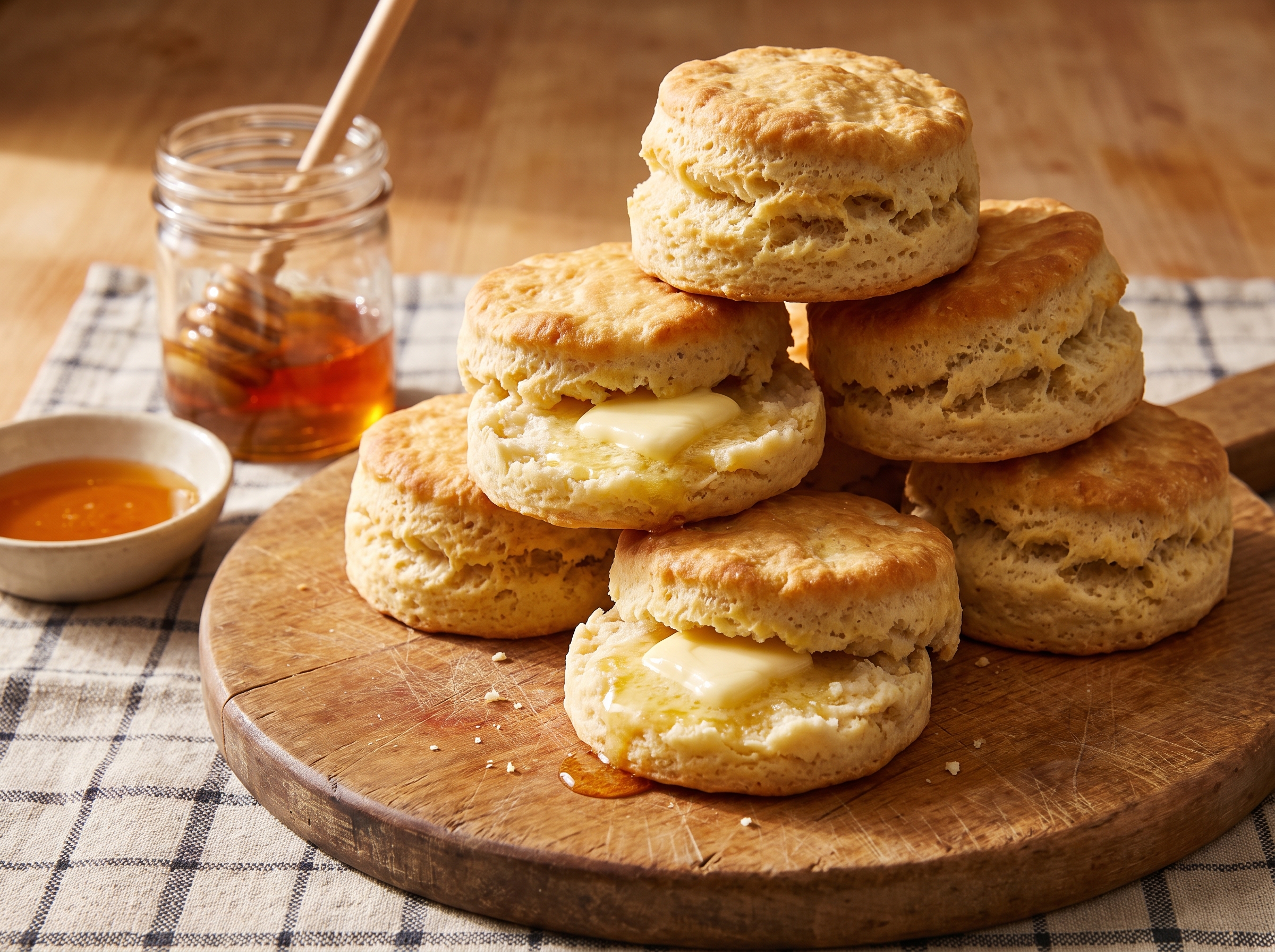
- Serve warm. Let them rest 5 minutes, then split and slather with butter, honey, or jam.
Tips for the Best Buttermilk Biscuits
- Freeze and grate the butter. For the most even flakiness, freeze the stick, then grate it on a box grater straight into the flour. It distributes perfectly with almost no work — my single favorite trick.
- Chill the cut biscuits before baking. Ten minutes in the fridge (or 5 in the freezer) re-solidifies the butter so it steams instead of leaking. This is what buys you height.
- Never twist the cutter. Press straight down and lift. A twist crimps the layers shut and gives you a lopsided, low biscuit.
- Sides touching = soft; spaced apart = crisp. Choose based on the texture you want.
- Weigh your flour if you can. 250 g is exact; measuring cups vary by up to 20%, and too much flour is why biscuits turn out dry.
- Don’t overwork the dough. Handle it as little as possible — a slightly rough, shaggy dough bakes up more tender than a smooth one.
Variations & Substitutions
- No buttermilk? Stir 1 tablespoon of lemon juice or white vinegar into a scant cup of milk and let it sit 5 minutes.
- Cheddar & chive biscuits: Fold ¾ cup shredded sharp cheddar and 2 tablespoons chopped chives into the dry mix.
- Honey-butter biscuits: Brush the hot tops with a mix of melted butter and honey.
- Whole wheat swap: Replace up to half the flour with white whole wheat for a nuttier, heartier biscuit.
- Drop biscuits (no rolling): Add 2 extra tablespoons of buttermilk and scoop the dough straight onto the sheet for a rustic, no-cut version.
How to Store, Freeze & Reheat
- Room temperature: Keep in an airtight container up to 2 days.
- Freeze baked: Cool completely, freeze in a zip bag up to 3 months, and reheat at 350°F (175°C) for 8–10 minutes.
- Freeze unbaked (best): Cut the biscuits, freeze on a tray, then bag them. Bake straight from frozen — just add 3–5 minutes. Fresh biscuits on demand.
- Reheat: A quick warm-up in the oven or toaster oven brings back the crisp exterior; the microwave makes them gummy.
What to Serve With Buttermilk Biscuits
Pile them with sausage gravy for a proper Southern breakfast, split and stuff with fried chicken for a sandwich, or keep it simple with salted butter and a drizzle of honey. They’re just as at home next to a bowl of soup or chili at dinner.
Frequently Asked Questions
Why didn’t my biscuits rise? Usually one of three things: the butter got warm, the dough was overworked, or the leavening was old. Keep everything cold, mix minimally, and check that your baking powder is fresh.
Can I make buttermilk biscuits without buttermilk? Yes. Add 1 tablespoon of lemon juice or vinegar to just under a cup of regular milk and let it curdle for 5 minutes. The acidity is what keeps the crumb tender, so don’t skip that step.
Can I make the dough ahead of time? Absolutely. Cut the biscuits, freeze them on a tray, then store in a freezer bag. Bake from frozen and add a few minutes to the time — no thawing needed.
Why do I cut straight down instead of twisting? Twisting the cutter seals the biscuit’s edges shut, which traps the layers and keeps them from rising evenly. Press straight down and lift for the tallest result.
Can I use self-rising flour? Yes — omit the baking powder, baking soda, and salt, and use about 2 cups of self-rising flour. The rise will be slightly gentler but still good.
Made these? Leave a ⭐⭐⭐⭐⭐ rating and a comment below

Ingredients
Method
- Preheat oven to 425°F (220°C); line a sheet with parchment.
- Whisk flour, baking powder, baking soda, sugar, and salt.
- Cut in cold butter until coarse and crumbly with pea-sized pieces.
- Stir in cold buttermilk just until a shaggy dough forms.
- Turn out, pat into a rectangle, and fold in thirds 3 times.
- Pat to 1 inch thick; cut straight down (no twisting).
- Place on sheet, sides touching; chill 10 minutes.
- Brush tops with buttermilk or melted butter.
- Bake 15–18 minutes until deep golden. Cool 5 minutes and serve.
Video