
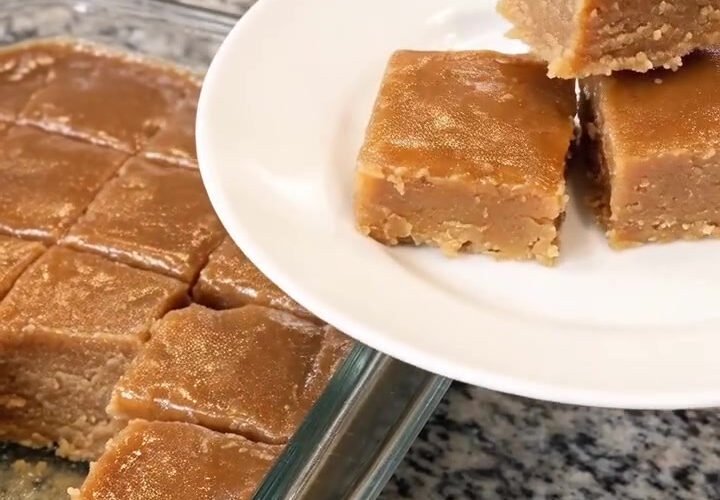
4-Ingredient Poor Man’s Caramel Fudge is an old-fashioned brown sugar candy with a rich caramel-like flavor and a tender, slightly crumbly bite. It uses brown sugar, milk, butter, and vanilla—no chocolate, marshmallow creme, or condensed milk required.
This is cooked fudge, so temperature matters more than the clock. You will boil the syrup to the soft-ball stage, let it cool undisturbed, then beat it until it begins to lose its shine. That last step turns a glossy syrup into fudge that can be sliced into small, sweet squares.
What Makes This Fudge Different?
The flavor comes from the molasses in brown sugar and the concentration that happens during cooking. You do not need to caramelize plain sugar separately. The result is closer to traditional brown sugar fudge than chewy caramel: it should yield when bitten and melt pleasantly on the tongue.
Yield: about 36 small pieces
Prep time: 10 minutes
Cooking time: about 15–25 minutes
Cooling and setting: about 2–3 hours
Pan: 8-inch square
The 4 Ingredients
- 3 cups (600 g) packed light brown sugar
- 1 cup whole milk
- 4 tablespoons (56 g) unsalted butter, cut into pieces
- 1 teaspoon vanilla extract
Equipment to Have Ready
Use a heavy-bottomed saucepan with plenty of room for the syrup to bubble, a reliable candy thermometer, a wooden spoon or sturdy heatproof spatula, and an 8-inch square pan lined with parchment. Keep a small bowl of cold water nearby if you want to cross-check the soft-ball stage.
Hot sugar can cause serious burns. Keep children away from the stove, avoid splashes, and never touch or taste the boiling syrup. Let any test sample cool completely in water before handling it.
How to Make 4-Ingredient Poor Man’s Caramel Fudge
1. Dissolve the brown sugar
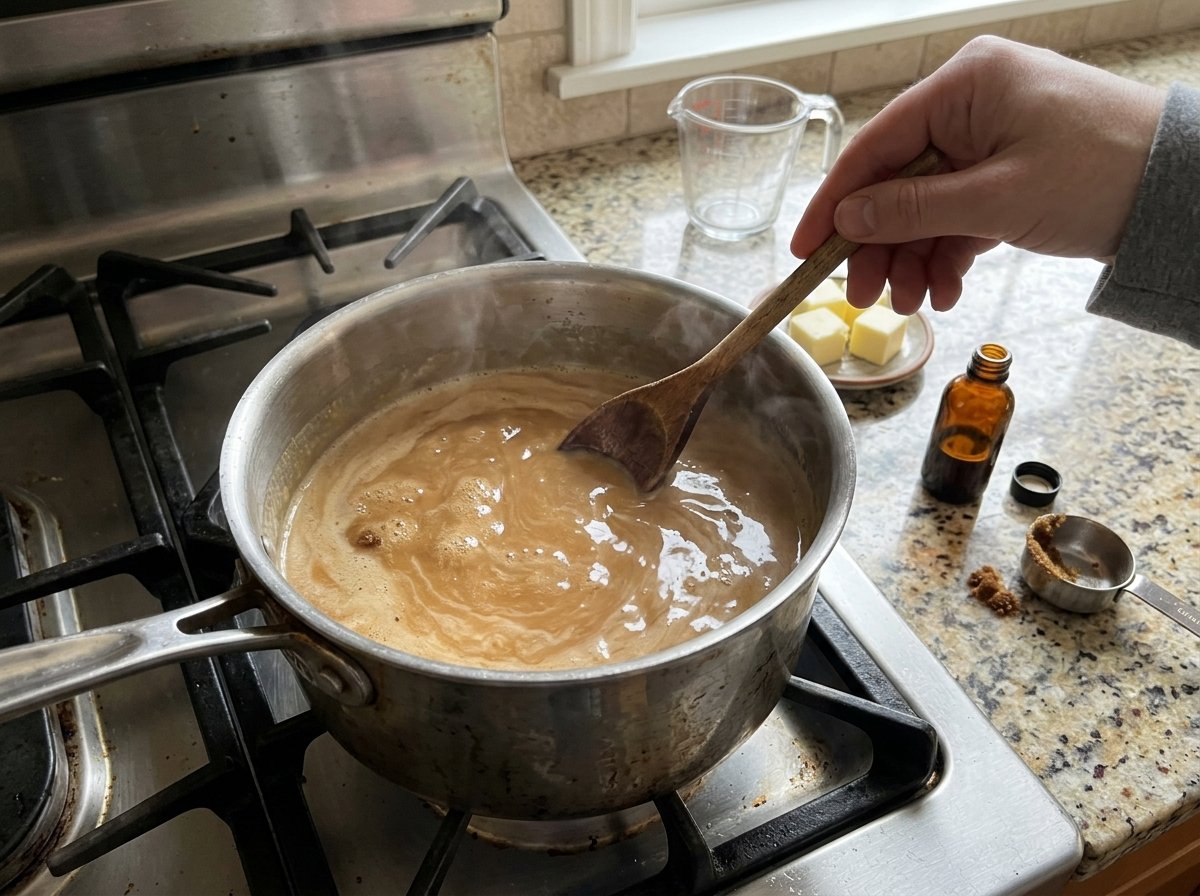
Line the pan with parchment, leaving overhang for lifting. Put the brown sugar and milk in a heavy 3-quart saucepan. Warm over medium-low heat, stirring gently until the sugar is dissolved and the mixture is smooth. Scrape the bottom carefully to prevent scorching.
2. Cook to the soft-ball stage
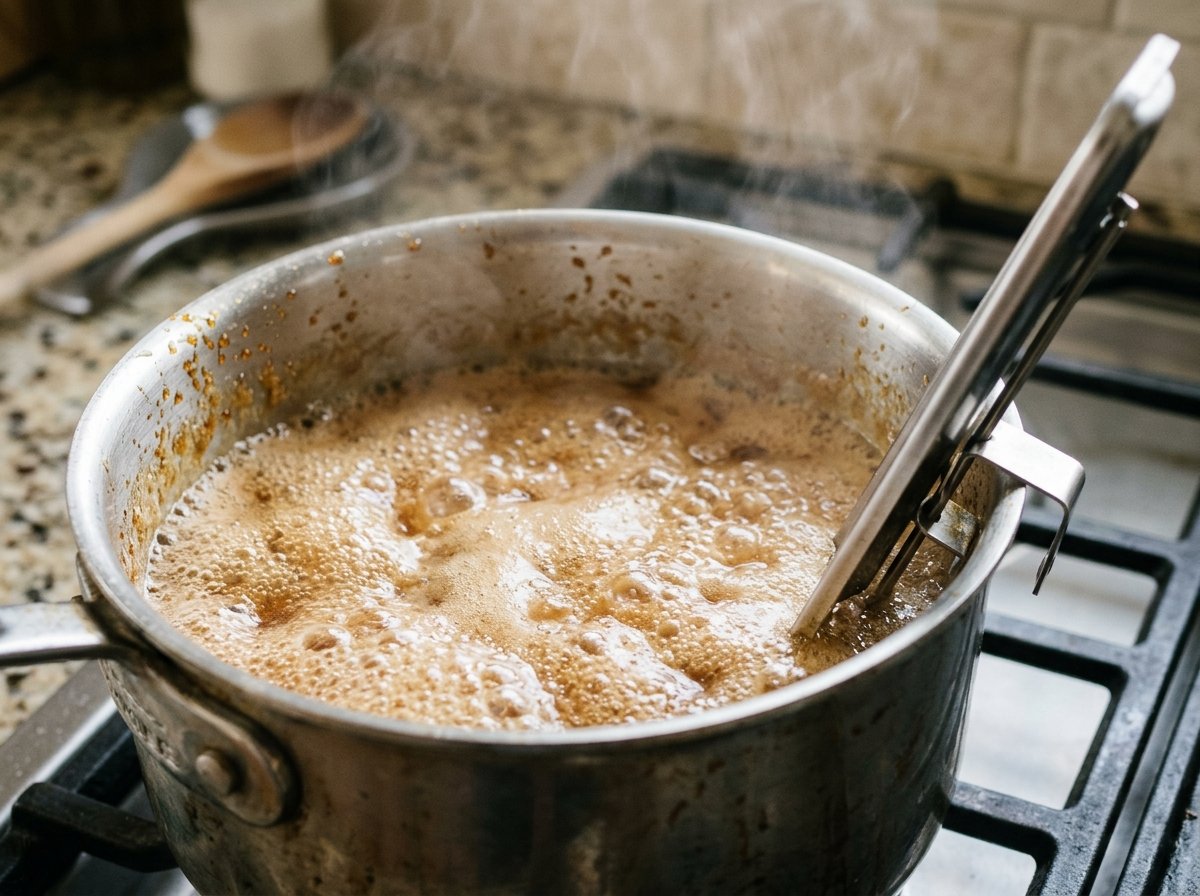
Bring to a steady boil over medium heat. Clip on the thermometer with its tip in the syrup but not touching the pan. Cook to 238°F (114°C) at sea level, avoiding unnecessary stirring and scraping of the sides. Reduce the heat if it threatens to boil over. A small drop placed in cold water should form a soft ball that flattens when removed. Take the pan off the heat promptly.
3. Cool, then beat
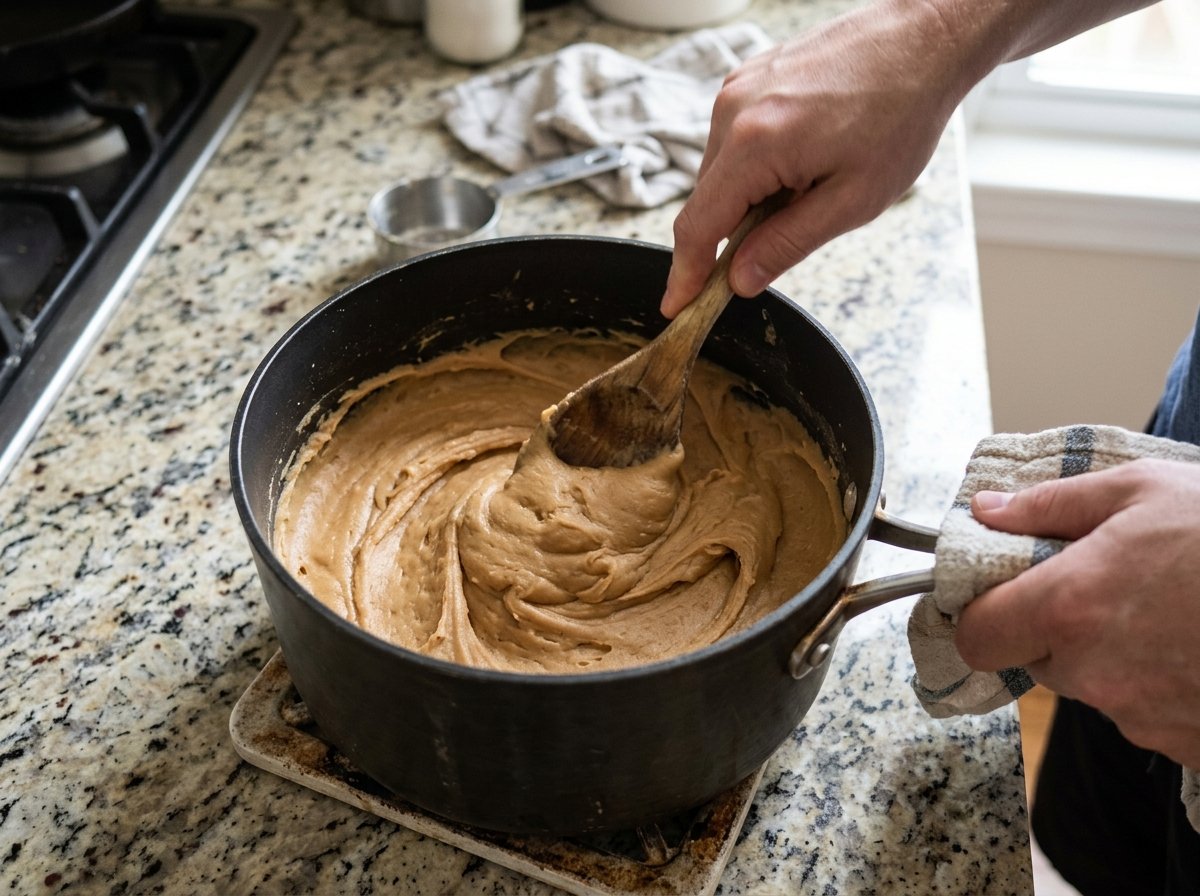
Add the butter and vanilla without stirring them in. Leave the pan undisturbed until the mixture cools to about 110°F (43°C); this can take 30–60 minutes or longer. Beat firmly with a wooden spoon until the mixture thickens, becomes less glossy, and begins holding soft ridges. This may take several minutes. Stop once it is thick but still spreadable.
4. Spread, set, and cut
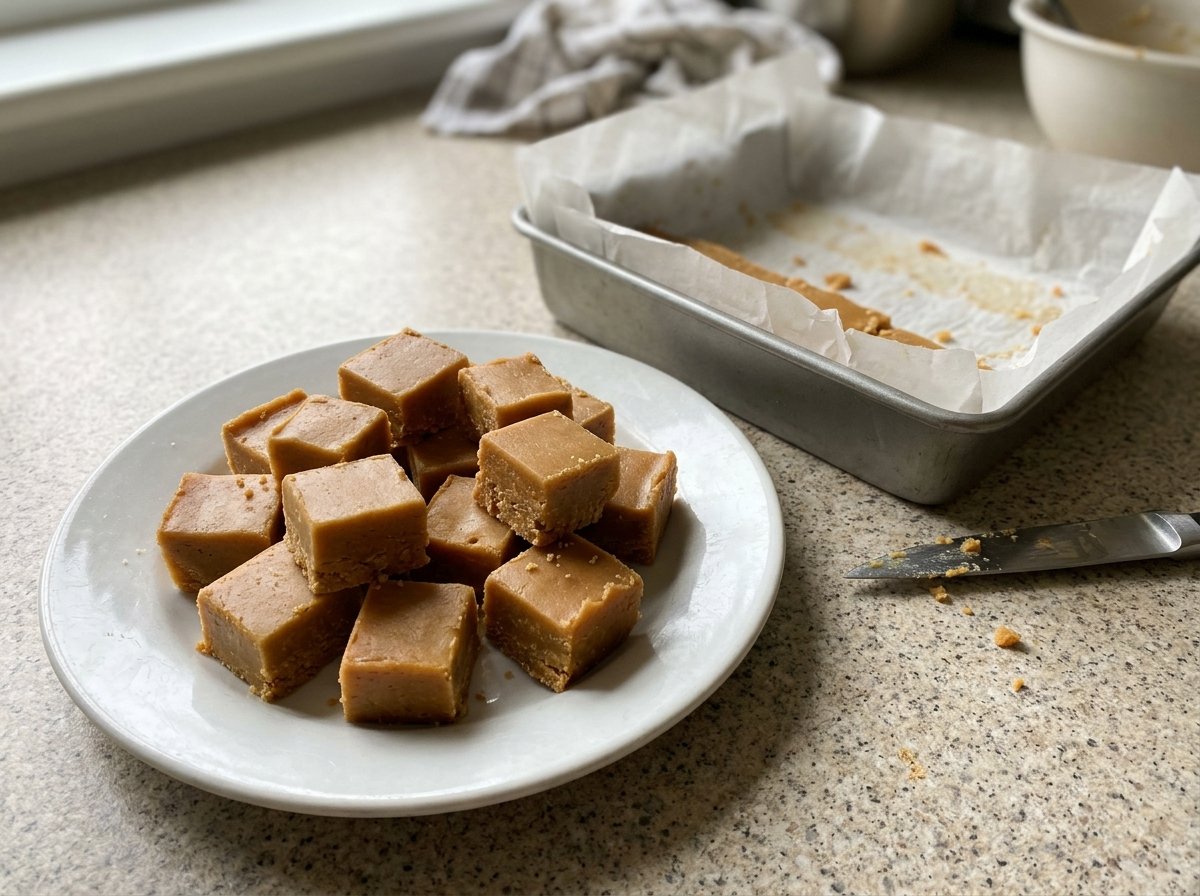
Immediately spread the fudge into the lined pan. Do not scrape hard, sugary crust from the saucepan into the smooth fudge. Level the top quickly and leave at room temperature until firm, about 1–2 hours. Lift out with the parchment and cut into small squares with a sharp knife.
Temperature Tips
Check your thermometer in boiling water before candy making. At sea level it should read 212°F; if it reads differently, account for that offset. At higher elevations, water boils at a lower temperature and candy targets need adjustment too. A practical approach is to lower the 238°F target by the difference between 212°F and your local boiling-water temperature.
Time alone cannot tell you when fudge is ready, because pan width, burner heat, and altitude all affect how quickly water evaporates. The soft-ball test provides a useful second check. The general soft-ball range is described in the Great British Cookbook’s vanilla fudge guide.
Common Problems and How to Avoid Them
- Soft fudge: the syrup may not have reached the right temperature, or it may not have been beaten enough after cooling.
- Hard, dry fudge: the syrup may have cooked too far, or the mixture may have been beaten beyond the spreadable stage.
- Grainy texture: stirring while cooling or scraping sugar crystals from the sides can encourage large crystals.
- Scorched flavor: use a heavy pan and moderate heat. Burnt milk and sugar cannot be repaired by adding vanilla.
Ingredient Notes
Light brown sugar gives a mild caramel-like flavor. Dark brown sugar makes a deeper, more molasses-forward candy. Use fresh, soft sugar so it dissolves readily. Whole milk gives a fuller flavor than skim milk; do not replace it with sweetened condensed milk, which has a different sugar and water balance.
The recipe stays at four ingredients. If you choose to add chopped nuts or a pinch of salt, treat those as optional variations rather than part of the base recipe. Fold nuts in only after beating, just before spreading.
Serving and Storage
Cut small pieces because this fudge is rich and sweet. It is lovely with strong coffee or tea and fits neatly into holiday candy boxes. Let it set fully before wrapping so the pieces keep their shape.
Store in an airtight container in a cool room for up to 1 week, with parchment between layers. In a warm kitchen, refrigerate for up to 2 weeks and let pieces stand briefly before serving. Freeze tightly wrapped portions for up to 2 months. Thaw in the wrapping to reduce condensation on the surface.
Frequently Asked Questions
Is this chewy caramel?
No. It has a caramel-like brown sugar flavor, but beating creates the fine crystals that give traditional fudge its tender bite.
Can I skip cooling before beating?
Do not skip it. Cooling undisturbed helps control the crystal structure and makes a smoother candy.
Do I need a mixer?
No. A sturdy wooden spoon works well and lets you feel the change in texture. Have the lined pan ready before you begin beating.
Why did it set in the saucepan?
It was likely beaten too long. Next time, transfer as soon as it loses its glossy appearance and thickens enough to leave soft ridges.