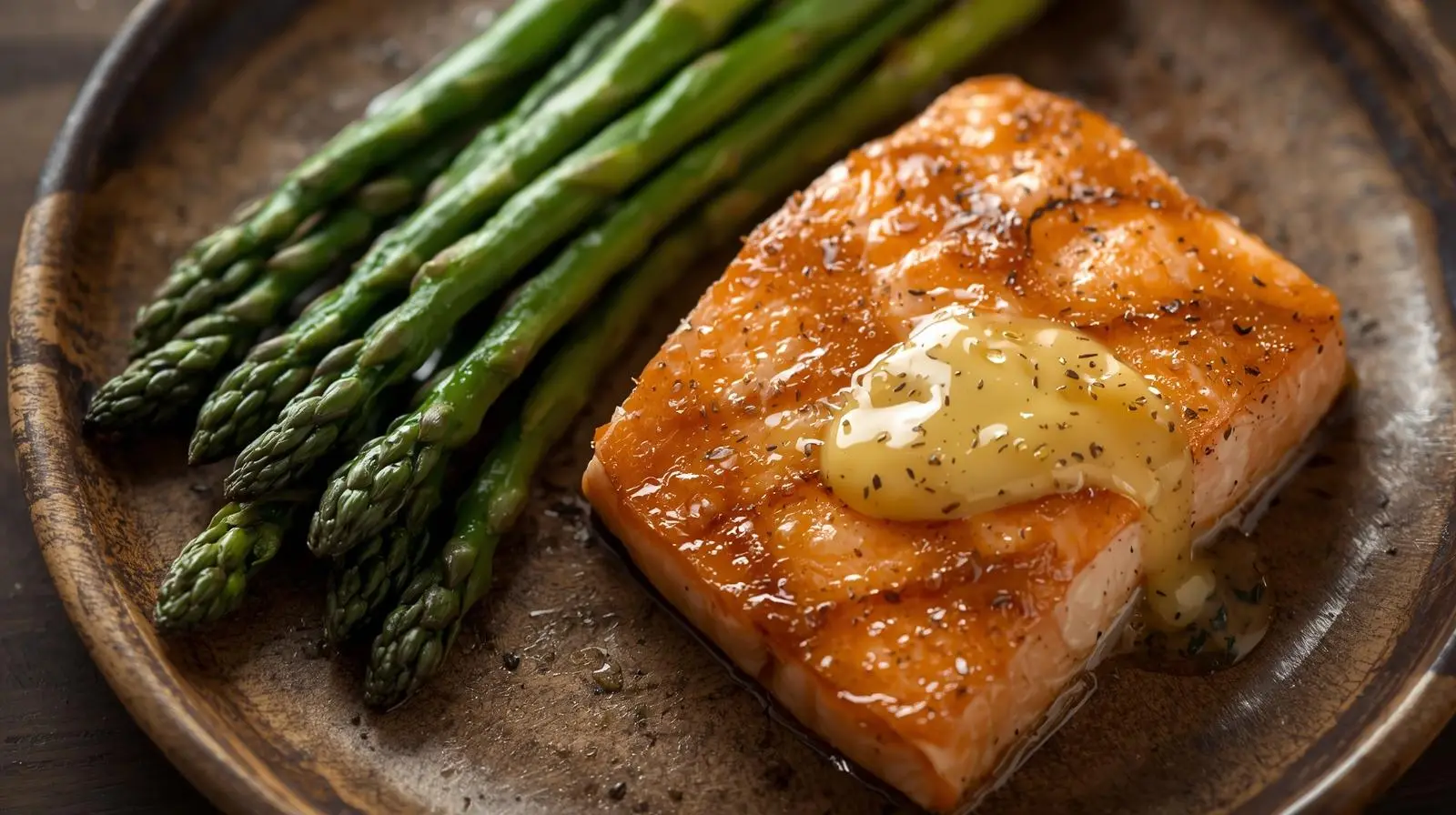
Garlic Butter Salmon with Asparagus
Imagine a dish that combines the rich flavors of garlic butter with the tender taste of salmon, all in under 30 minutes. Garlic Butter Salmon with Asparagus is a simple yet impressive recipe perfect for a weeknight dinner or a special occasion.
You can easily prepare this delicious meal by following a few straightforward steps. The key to this recipe is using fresh ingredients, including asparagus and high-quality salmon fillets. The result is a flavorful and nutritious meal that is sure to become a favorite.
Key Takeaways
- Quick and easy preparation
- Uses fresh and healthy ingredients
- Perfect for both weeknight dinners and special occasions
- Can be customized with your favorite seasonings
- Ready in under 30 minutes
The Health Benefits of Salmon
Salmon is packed with omega-3 fatty acids and supports heart health. It’s a nutrient-rich food that boosts overall well-being. Adding salmon to your diet is a great way to stay healthy.
Nutritional Profile of Salmon
Salmon is a great source of omega-3 fatty acids, like EPA and DHA. These are key for heart and brain health. It also has lots of protein, vitamins D and B12, and selenium.
The nutritional value of salmon can vary. It depends on whether it’s wild-caught or farmed. But both types are good for you. Wild-caught salmon often has more omega-3s and is better for the environment if caught right.
Why Salmon Should Be Part of Your Diet
Eating salmon can greatly benefit your health. Its omega-3s fight inflammation, improve heart health, and boost brain function. Choosing sustainable and wild-caught salmon makes your diet even better.
By picking salmon certified by groups like the Marine Stewardship Council, you help the environment. This supports eco-friendly fishing.
Selecting the Perfect Salmon for Your Dish
To make a truly exceptional garlic butter salmon, you need to start with the right type of salmon. The type of salmon you choose can significantly impact the flavor, texture, and overall quality of your dish.
Types of Salmon Available in the US Market
The US market offers several types of salmon, each with its unique characteristics. The most common types include:
- Atlantic Salmon: Known for its mild flavor and tender texture, Atlantic salmon is a popular choice.
- Sockeye Salmon: With its rich, robust flavor and firm texture, Sockeye salmon is ideal for those who prefer a stronger salmon taste.
- King Salmon: As one of the fattiest types of salmon, King salmon offers a rich, buttery flavor that’s perfect for garlic butter recipes.
When choosing a type of salmon, consider the flavor profile and texture you prefer.
Fresh vs. Frozen Salmon
One common debate is whether to use fresh or frozen salmon. Both options have their advantages:
- Fresh Salmon: Offers a slightly better texture and flavor.
- Frozen Salmon: Can be just as good as fresh if it’s frozen properly, and it’s often more convenient and affordable.
When selecting salmon, look for wild-caught options for a more robust flavor and better nutritional profile.
Choosing and Preparing Fresh Asparagus
The secret to a tasty asparagus dish is picking the right spears and preparing them well. Asparagus is a versatile veggie that can be cooked in many ways. But, its quality depends on choosing and preparing it right.
Selecting Quality Asparagus
When picking asparagus, look for spears with tightly closed buds and a bright green color. Stay away from wilted or smelly spears. Thicker spears are often softer and more tender.
Here’s a quick guide to selecting the best asparagus:
| Characteristic | What to Look For |
|---|---|
| Buds | Tightly closed |
| Color | Vibrant green |
| Stem | Firm, not wilted |
Preparing Asparagus for Cooking
To get asparagus ready, start by rinsing it under cold water to wash off dirt. Then, trim the ends to remove the tough parts. You can either snap them off or cut about an inch off the bottom. Blanching asparagus before cooking helps keep its color and texture.
By following these simple steps, you can enjoy perfectly cooked asparagus with your garlic butter salmon.
Essential Ingredients for Garlic Butter Sauce
To make a delicious garlic butter sauce, focus on the quality of its ingredients. This sauce is key to the garlic butter salmon with asparagus dish. Its flavor can make the whole meal better.
Butter Selection Tips
Choosing the right butter is crucial. European-style butter is best because it’s creamier. Look for butter with just cream and salt. The quality of the butter affects the sauce’s richness and flavor.
Garlic Preparation Techniques
Garlic is a key ingredient, but it can overpower if not prepared right. To avoid bitterness, mince or crush garlic just before using. Roasting garlic can also give a sweeter flavor.
Additional Flavor Enhancers
Other ingredients can make your sauce even better. Adding fresh lemon juice brings brightness. Chopped parsley or dill adds freshness. These can balance the butter’s richness and add depth to the sauce.
| Ingredient | Purpose | Tips |
|---|---|---|
| European-style Butter | Richness and Creaminess | Choose high-fat content for the best results |
| Garlic | Flavor Base | Mince or crush to avoid bitterness |
| Lemon Juice | Brightness and Balance | Add a squeeze just before serving |
| Fresh Herbs (Parsley, Dill) | Freshness and Complexity | Chop finely and add towards the end of preparation |
Kitchen Tools You’ll Need
Having the right kitchen tools makes cooking garlic butter salmon with asparagus easy. You’ll need some essential cookware and helpful utensils to prepare this dish.
Essential Cookware
To cook garlic butter salmon with asparagus, you need a few key pieces of cookware. A large skillet is essential for searing the salmon and cooking the asparagus. A non-stick pan or a cast-iron skillet works great for this.
Also, a medium saucepan is needed for making the garlic butter sauce.
- Large skillet or cast-iron skillet
- Medium saucepan
Helpful Utensils and Gadgets
Along with cookware, the right utensils and gadgets make cooking easier. A garlic press is useful for mincing garlic. A microplane grater is great for grating lemon zest.
You’ll also need a fish spatula for flipping the salmon. And a pair of tongs for handling the asparagus.
- Garlic press
- Microplane grater
- Fish spatula
- Pair of tongs
Step-by-Step: Preparing the Garlic Butter
Making garlic butter is easy but key to a great Garlic Butter Salmon with Asparagus dish. The quality of your garlic butter greatly affects the meal’s flavor.
Making the Perfect Garlic Butter Base
You’ll need softened butter and minced garlic to begin. Start with 2 tablespoons of butter and 1 clove of garlic. Mix them well until they’re fully combined. You can use a stand mixer or a fork.
For smooth garlic butter, make sure your butter is soft and your garlic is finely minced. This avoids lumps in your garlic butter.
Adding Herbs and Seasonings
After making your garlic butter base, add herbs and seasonings. Choose parsley, chives, and a squeeze of lemon juice. A pinch of salt also enhances the taste. Mix well to spread the flavors.
Make-Ahead and Storage Tips
Garlic butter can be made ahead and stored for up to a week in the fridge or 3 months in the freezer. Wrap it in parchment paper, shape into a log, and roll up. Refrigerate or freeze until you’re ready to use it. This makes it easy to use just what you need.
How to Prepare Your Salmon Fillets
Preparing your salmon fillets is key for a tasty garlic butter salmon. It ensures the salmon cooks well and soaks up the garlic butter sauce.
Cleaning and Portioning Salmon
Start by cleaning and portioning your salmon fillets right. Rinse them under cold water to get rid of dirt. Then, dry them with paper towels to remove extra moisture.
If your salmon is big, cut it into smaller pieces. Make sure they’re all the same thickness so they cook evenly.
| Cleaning Step | Purpose |
|---|---|
| Rinse under cold water | Remove impurities |
| Pat dry with paper towels | Remove excess moisture |
| Portion into smaller fillets | Ensure even cooking |
Seasoning Techniques
Seasoning your salmon is important to bring out its natural taste. Use a mix of salt, pepper, and herbs. For more flavor, add paprika or garlic powder.
Tip: Use fresh herbs like parsley or dill for a brighter taste. Adding lemon zest to your seasoning can also add a nice citrus flavor.
Marinating Options
Marinating your salmon can add more flavor. Mix olive oil, lemon juice, and herbs for a simple marinade. Place the salmon in a dish, cover it with the marinade, and refrigerate for 30 minutes.
But don’t marinate too long, as it can make the salmon soft.
Common Preparation Mistakes to Avoid
When preparing salmon, avoid a few common mistakes. Don’t over-handle the fish, as it can become dense. Also, don’t over-season, as it can hide the salmon’s flavor. Make sure your salmon is at room temperature before cooking for even cooking.
By following these tips, you’ll prepare salmon fillets that will impress. Remember, the secret to a great garlic butter salmon is in the salmon’s preparation.
Cooking Methods for Perfect Salmon
Cooking salmon to perfection is an art. The right method can greatly affect its taste and texture. We’ll look at three popular ways: pan-searing, oven-baking, and grilling.
Pan-Searing Method
Pan-searing gives a crispy outside and a moist inside. Here’s how to do it:
Step 1: Preparing the Pan
Heat a skillet over medium-high heat. Add a bit of oil to prevent sticking.
Step 2: Cooking the Salmon
Put the salmon fillet skin-side up (if it has skin). Cook for 3-4 minutes. Flip it over and cook for another 3-4 minutes, until it’s done to your liking.
Step 3: Adding the Garlic Butter
In the last minute, add garlic butter on top. This adds rich flavor.
Oven-Baked Method
Oven-baking makes salmon tender and flaky. Here’s how:
Step 1: Preheating and Preparation
Preheat your oven to 400°F (200°C). Line a baking sheet with parchment paper or foil for easy cleanup.
Step 2: Baking Process
Put the salmon on the baking sheet. Season with herbs and spices. Bake for 12-15 minutes, until it’s cooked through.
Step 3: Finishing with Garlic Butter
Take the salmon out of the oven. Top it with garlic butter. Put it back in the oven for 1-2 minutes to melt the butter.
Grilling Method
Grilling salmon adds a smoky flavor. To grill salmon:
- Preheat your grill to medium-high heat.
- Brush the salmon with oil and season with salt, pepper, and other seasonings.
- Grill the salmon for 4-6 minutes per side, until it’s done to your liking.
Determining When Salmon is Perfectly Cooked
It’s important to cook salmon to an internal temperature of 145°F (63°C). You can check with a meat thermometer or by flaking the fish. If it flakes easily, it’s done.
Tips for Perfect Salmon:
- Don’t overcrowd the pan or grill.
- Use a thermometer to ensure the salmon is cooked to a safe temperature.
- Don’t overcook; salmon continues to cook a bit after being removed from heat.
Cooking the Asparagus to Perfection
To get tender and crisp asparagus, use a simple cooking method. The right way can make your asparagus taste great with garlic butter salmon.
Blanching Method
Blanching keeps asparagus bright and crunchy. It involves boiling the asparagus briefly, then cooling it down fast in ice water.
Step 1: Preparing the Water Bath
First, boil a big pot of salted water. Salt makes the asparagus taste better and seasons it inside out.
Step 2: Blanching Process
When the water boils, add the asparagus spears. Cook for 3-5 minutes, until it’s tender but not too soft.
Step 3: Ice Bath Technique
While cooking, get an ice bath ready. After blanching, put the asparagus in the ice bath. This keeps it colorful and crunchy.
Roasting Method
Roasting asparagus makes it sweet and flavorful. Preheat your oven to 425°F (220°C). Toss the asparagus with olive oil, salt, and seasonings. Roast for 12-15 minutes, until tender.
Sautéing with the Salmon
Sautéing asparagus with garlic butter salmon combines their flavors. Add the asparagus to the pan with the salmon for the last few minutes.
Troubleshooting Overcooked or Undercooked Asparagus
Overcooked asparagus is mushy and loses color. Undercooked asparagus is too crunchy. Watch the cooking time to get it just right.
Plating and Serving Your Garlic Butter Salmon with Asparagus
Plating your garlic butter salmon with asparagus brings the dish to life. It makes the meal feel like it’s from a restaurant. To do this, balance colors, textures, and heights on the plate.
Presentation Tips for Restaurant-Quality Appeal
To make your garlic butter salmon with asparagus look great, start with a clean, white plate. This lets the dish’s colors pop. Place the asparagus spears around the salmon in a way that looks good.
Tips for a visually appealing plate:
- Use fresh herbs like parsley or dill to add color.
- Drizzle garlic butter sauce around the plate for flavor and looks.
- Add lemon wedges for a bright, citrusy touch.
Complementary Side Dishes and Wine Pairings
Choose side dishes that don’t overpower the salmon’s flavors. Roasted potatoes or a green salad are good choices. For wine, a dry white like Sauvignon Blanc or Pinot Grigio works well. It matches the citrus and herbal notes in the salmon.
“The right wine can elevate the dining experience, much like the right presentation can make the dish more appealing.” –
A renowned chef
Think about the occasion when serving. For a casual dinner, keep it simple. But for a formal event, add garnishes or use fancy tableware.
PrintGarlic Butter Salmon with Asparagus
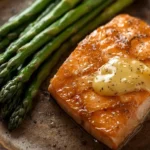
Garlic Butter Salmon with Asparagus is an elegant yet easy dish that brings together rich, buttery flavors and fresh, crisp vegetables — all ready in under 30 minutes. Perfect for a quick weeknight dinner or a special occasion, this recipe highlights the delicate taste of salmon enhanced by a fragrant garlic butter sauce and tender asparagus. Packed with omega-3s, protein, and vitamins, it’s a wholesome and restaurant-quality meal that’s simple to make at home.
- Prep Time: 10 minutes
- Cook Time: 15–20 minutes
- Total Time: 30 minutes
- Yield: 4 servings
- Method: Pan-Seared / Sautéed
- Cuisine: American / Mediterranean
- Diet: Gluten Free
Ingredients
For the Salmon and Asparagus:
-
4 salmon fillets (about 6 oz each), skin-on or skinless
-
1 lb fresh asparagus, trimmed
-
2 tbsp olive oil (divided)
-
Salt and black pepper to taste
-
Lemon wedges, for serving
For the Garlic Butter Sauce:
- 3 tbsp unsalted butter (preferably European-style)
-
3–4 cloves garlic, minced
-
1 tbsp lemon juice (freshly squeezed)
-
1 tbsp chopped fresh parsley or dill
-
Optional: ½ tsp paprika or chili flakes for spice
Instructions
-
Prepare the Ingredients:
Pat the salmon fillets dry with paper towels. Season both sides with salt, pepper, and paprika if desired. Trim asparagus and toss with 1 tbsp olive oil, salt, and pepper. -
Cook the Salmon (Pan-Searing Method):
Heat 1 tbsp olive oil in a large skillet over medium-high heat. Place salmon fillets skin-side down (if skin-on) and cook for 3–4 minutes per side, until golden and nearly cooked through. Remove and set aside. -
Cook the Asparagus:
In the same pan, add the asparagus and sauté for 3–4 minutes, stirring occasionally, until bright green and tender-crisp. Remove from pan and set aside with the salmon. -
Make the Garlic Butter Sauce:
Reduce heat to medium-low. In the same skillet, melt the butter. Add minced garlic and cook for 30 seconds until fragrant (don’t burn). Stir in lemon juice and herbs. -
Combine and Serve:
Return the salmon and asparagus to the pan. Spoon the garlic butter over them and heat for 1–2 minutes until everything is coated and warmed through. -
Plate and Garnish:
-
Serve immediately, drizzled with remaining garlic butter. Garnish with fresh herbs and lemon wedges.
Notes
-
For oven-baked salmon, preheat oven to 400°F (200°C) and bake fillets for 12–15 minutes. Add garlic butter during the last few minutes.
-
Grilling option: Brush salmon and asparagus with oil; grill over medium heat for 4–6 minutes per side.
-
Use wild-caught salmon (like Sockeye or King) for richer flavor and better nutrition.
-
Avoid overcooking; salmon should flake easily but remain moist.
-
Make-ahead tip: Prepare garlic butter up to 3 days in advance or freeze for 3 months.
-
Serve with mashed potatoes, rice pilaf, or a light salad for a complete meal.
Conclusion
You now have a simple yet impressive recipe for garlic butter salmon with asparagus. This dish is both nutritious and flavorful. By following the steps, you can make a meal that will impress your family and friends.
Salmon recipes like this one are a tasty way to add health benefits to your meals. The garlic butter adds a rich flavor, making it a favorite dish. You can adjust the recipe to fit your taste preferences.
Now, it’s time to start cooking. Try different seasonings and sides to make it your own. You’ll get lots of compliments when you serve this delicious meal.
FAQ
What is the best type of salmon to use for garlic butter salmon?
Wild-caught salmon, like Sockeye or King, is top-notch for its taste and health benefits. Atlantic salmon is a budget-friendly alternative.
How do I know if my salmon is fresh?
Fresh salmon is firm, shiny, and smells mild. Stay away from salmon that smells too fishy or feels soft.
Can I use frozen salmon for this recipe?
Yes, frozen salmon works great. Just thaw it well before cooking. It’s as nutritious and tasty as fresh if frozen right.
What are the health benefits of eating salmon?
Salmon is packed with omega-3s, which are good for your heart and brain. It’s also full of protein, vitamins, and minerals.
How do I cook asparagus to prevent it from becoming mushy?
To keep asparagus crisp, blanch it briefly in boiling water. Then, cool it down in an ice bath right away.
Can I make garlic butter ahead of time?
Absolutely, you can prep garlic butter early. Mix it, then chill it for up to a week or freeze for later.
What are some common mistakes to avoid when cooking salmon?
Avoid overcooking, underseasoning, and not letting it rest. Cook it to 145°F to ensure it’s just right.
How do I determine if my salmon is cooked to perfection?
Perfect salmon flakes with a fork and hits 145°F. Check by cutting into the thickest part of the fillet.