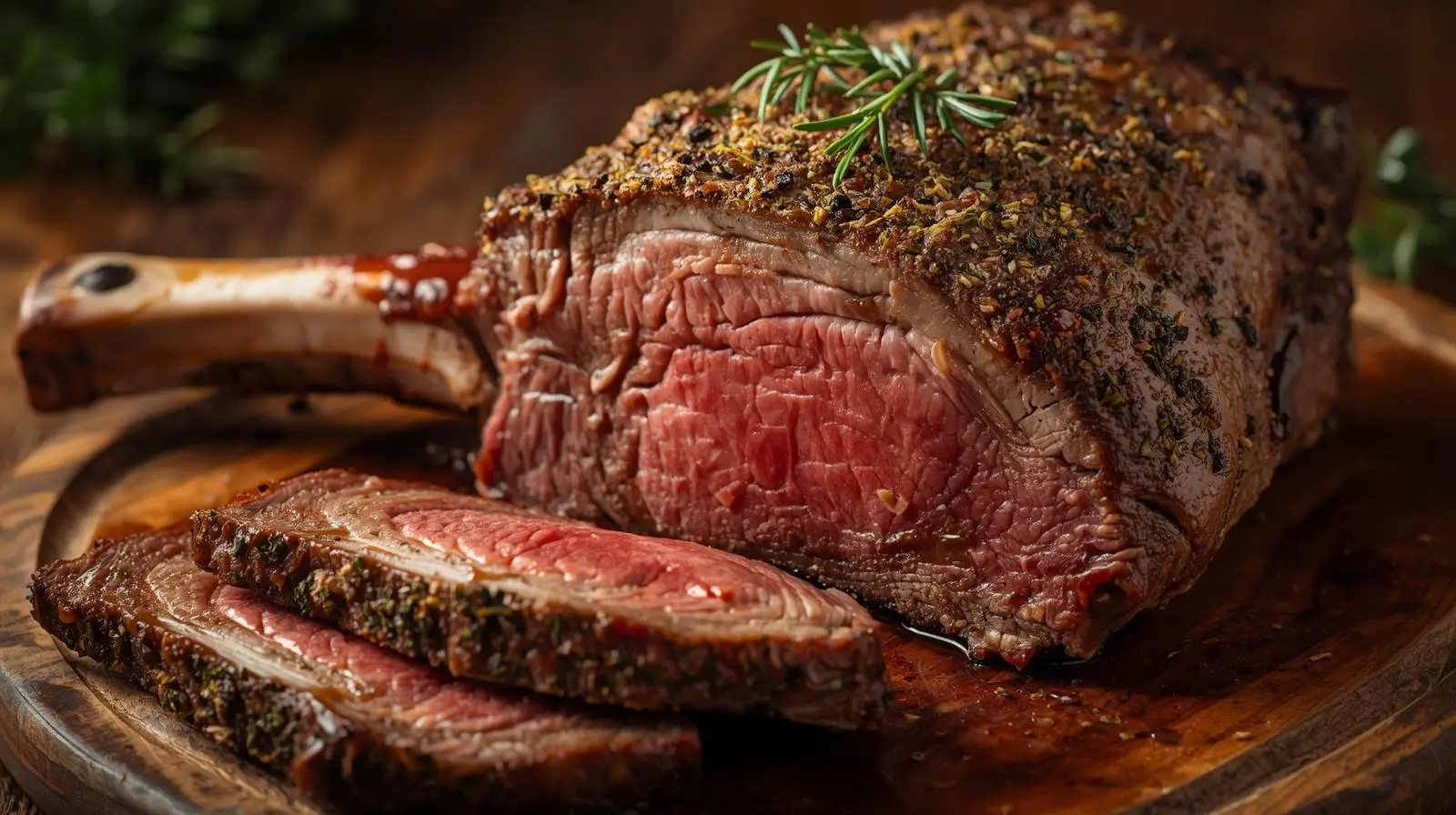
Herb-Crusted Prime Rib
Planning a holiday celebration? Look no further than an Herb-Crusted Prime Rib. It’s a dish that will wow your guests with its roasted taste and tender meat.
This dish is not just tasty. It’s also a festive touch for any holiday table. It offers a juicy and flavorful experience that will be talked about for a long time.
Key Takeaways
- Herb-Crusted Prime Rib is a show-stopping centerpiece for holiday gatherings.
- The combination of herbs and prime rib creates a rich, savory flavor.
- A well-cooked prime rib is a key to a successful holiday celebration.
- It’s a versatile dish that can be served with a variety of sides.
- With the right seasoning, prime rib can be a truly unforgettable experience.
The Allure of Prime Rib
Prime rib is loved for its rich taste and soft texture. It’s a favorite for special events and fancy dinners. When it’s cooked just right, it’s a feast for the senses.
What Makes Prime Rib Special
Prime rib stands out because it’s succulent and tender. This is thanks to the meat’s careful selection and preparation. The fat marbling adds to its flavor and softness, making it a hit with meat enthusiasts. The secret to a perfect prime rib is in the meat’s quality and how it’s cooked.
Why Herb Crust Elevates the Dish
An herb crust takes prime rib to the next level. It brings in a mix of fresh herbs, garlic, and spices. This flavorsome crust boosts the prime rib’s taste and looks great on the plate. It makes the dish a stunning centerpiece for any meal.
Essential Ingredients for a Perfect Herb-Crusted Prime Rib
To get a flavorful prime rib, start with the best ingredients. The quality of your prime rib depends on the meat, fresh herbs, and extra flavor boosters.
Selecting the Right Cut of Meat
Choosing the right cut of meat is key for a delectable prime rib. The type and grade of the cut greatly affect the taste.
Prime vs. Choice Grades
The meat’s grade, whether Prime or Choice, matters a lot. Prime meat has more marbling, making it juicier.
Bone-in vs. Boneless Considerations
Whether to choose a bone-in or boneless prime rib is up to you. Bone-in roasts are more flavorful, but boneless ones are simpler to carve.
Fresh Herbs and Aromatics
Fresh herbs and aromatics are crucial for the herb crust. Thyme, rosemary, and garlic are top picks. They add depth and complexity to the prime rib.
Additional Flavor Enhancers
For extra flavor, consider mustard, horseradish, and olive oil. These ingredients make the dish rich and savory.
Tools and Equipment You’ll Need
To get a perfectly roasted prime rib, you need the right tools. The quality of your cookware is very important. It can greatly affect how your dish turns out.
Roasting Pans and Racks
A good roasting pan is key for even cooking. Choose a pan big enough for your prime rib. It should have enough room for air to move around.
A roasting rack is also a must. It lifts the meat, letting hot air get under it. This helps create a crispy crust.
| Equipment | Purpose |
|---|---|
| Roasting Pan | Holds the prime rib and allows for even cooking |
| Roasting Rack | Elevates the prime rib for air circulation and a crispy crust |
Thermometers and Other Essentials
A meat thermometer is essential. It makes sure your prime rib is cooked just right. This means it will be juicy and tender.
You’ll also need kitchen twine to tie the roast. And a carving knife for slicing. Having the right equipment is crucial for a great prime rib dish.
Preparing Your Prime Rib
Preparing your prime rib is key to a delicious dish. It involves several important steps. These steps will make your prime rib taste amazing.
Trimming and Tying the Roast
First, trim and tie your prime rib roast. Cutting off extra fat helps it cook evenly. Tying it with twine keeps it in shape while cooking. This makes your prime rib look great and cook well.
Dry Brining for Enhanced Flavor
Dry brining uses salt and seasonings to boost flavor. It tenderizes the meat and deepens its taste.
Salt Ratios and Timing
The salt-to-seasoning ratio depends on your taste. Use about 1 tablespoon of kosher salt per pound of meat. Dry brining should last at least 2 hours, but overnight is best.
Additional Seasonings
Other seasonings can also enhance your prime rib’s flavor. Try black pepper, garlic powder, and paprika. Adding thyme or rosemary can add complexity to the taste.
| Seasoning | Amount | Timing |
|---|---|---|
| Salt | 1 tbsp/lb | 2 hours – overnight |
| Black Pepper | 1 tsp | Before roasting |
| Garlic Powder | 1 tsp | Before roasting |
By following these steps and using the right seasonings, you can make a succulent and flavorsome prime rib. Dry brining is especially good at bringing out the meat’s natural flavor. It’s a great technique to try for your next prime rib roast.
Creating the Perfect Herb Crust
Making the perfect herb crust is an art. It needs the right mix of herbs and technique. A great herb crust can make your prime rib both flavorful and beautiful to look at.
Classic Herb Combinations
There are classic herb mixes that go well with prime rib. Thyme, rosemary, and parsley are a timeless choice. You can also try oregano and sage for something different. The goal is to mix herbs so none overpower the others, making the crust delectable.
To make a classic mix, start with thyme and rosemary. Add fresh parsley for a burst of freshness. A bit of oregano adds depth. You can adjust the amounts to suit your taste.
Binding Agents for Your Crust
The binding agent is key. It keeps the herb crust together and on the prime rib while it cooks. There are many options, each with its own benefits.
Oil-Based Bindings
An oil-based binding is a popular choice. Olive oil, for example, binds herbs and adds flavor. Mix your herbs with olive oil until it’s like a paste. This will adhere well to the prime rib, making a tasty crust.
Mustard and Other Alternatives
Mustard is another good binding agent. Dijon mustard, in particular, adds a tangy taste that goes well with prime rib. You can also use horseradish or egg wash for different flavors. The important thing is to choose a binding agent that makes your dish taste better.
The Roasted, Juicy, and Festive Cooking Method
The secret to a delicious, herb-crusted prime rib is in the cooking method. To get a perfectly roasted prime rib, focus on temperature, timing, and keeping an eye on it while it cooks.
Temperature Guidelines
First, preheat your oven to the right temperature. Start with 450°F (230°C) to sear the prime rib. Then, lower it to 325°F (165°C) to roast it further. This high heat first creates a tasty crust, while the lower heat ensures it cooks evenly inside.
To make the prime rib juicy and tender, cook it to the right internal temperature. Use a meat thermometer to check. The ideal temperature is:
- 130°F – 135°F (54°C – 57°C) for medium-rare
- 140°F – 145°F (60°C – 63°C) for medium
- 150°F – 155°F (66°C – 68°C) for medium-well
Timing Your Roast Perfectly
Timing is key for roasting a prime rib. Roast it for 15 minutes per pound at 325°F (165°C) after searing. But, this can change based on the roast’s size and shape.
To be sure, use a meat thermometer and check the temperature often towards the end. Also, look at a cooking chart for prime rib for more exact advice.
Monitoring During Cooking
It’s important to watch your prime rib while it cooks to get a festive and tasty dish. Check it often to make sure it’s browning well and the temperature is right.
By following these tips on temperature, timing, and watching it cook, you’ll get a beautifully roasted prime rib. It will surely wow your guests.
Resting: The Secret to a Succulent Prime Rib
The resting period is key to a succulent prime rib. It’s tempting to carve it right away, but wait. Resting makes the prime rib tender and flavorful.
Why Resting Matters
Resting is important because it relaxes the meat’s fibers. This spreads the juices evenly. When you carve it, the juices stay inside, making it succulent and tasty. Without resting, the juices would spill out, leaving it dry.
How to Rest Without Losing Heat
To keep the prime rib warm while it rests, cover it loosely with aluminum foil. This keeps some heat in while letting it breathe. Place it on a wire rack over a baking sheet or carving board for better air flow. This helps keep the heat in during the resting time. A prime rib usually needs 15 to 20 minutes to rest before carving.
| Resting Technique | Benefits |
|---|---|
| Tenting with Aluminum Foil | Retains heat while allowing the roast to breathe |
| Using a Wire Rack | Improves air circulation around the roast |
| Resting Time | 15 to 20 minutes for optimal results |
Carving and Presentation Techniques
Now that your prime rib is perfectly roasted, it’s time to carve and present it. The way you carve and present your prime rib can make the dining experience unforgettable. It’s a chance to impress your guests.
Step-by-Step Carving Guide
Carving your prime rib needs some technique. Make sure your knife is sharp. Slice against the grain for tender pieces. Use gentle pressure to avoid tearing the meat.
| Carving Tool | Characteristics | Best For |
|---|---|---|
| Long, Thin Knife | Precision, ease of use | Thin slices, tender meat |
| Electric Carving Knife | Speed, ease with large roasts | Large gatherings, quick service |
| Carving Fork | Stability, control | Holding roast in place |
Plating for Maximum Impact
To make a big visual impact, arrange slices on a platter in a pattern. Add fresh herbs used in the herb crust for a cohesive look.
Delicious Accompaniments and Sauces
The perfect prime rib dinner needs great accompaniments and sauces. You can choose from many traditional side dishes and sauces. These enhance the flavors of your herb-crusted prime rib.
Traditional Side Dishes
Classic side dishes like roasted vegetables, mashed potatoes, and Yorkshire pudding are great with prime rib. A fresh green salad or sautéed spinach can also add variety. These options complement the prime rib and make your dinner more interesting.
Complementary Sauces
Sauces can really boost the flavor of your prime rib. Two favorites are classic au jus and horseradish cream.
Classic Au Jus
Au jus means “in its own juice” in French. It’s a flavorful sauce made from the juices of the roasted prime rib. To make it, use the pan drippings from your roast. Deglaze the pan with red wine or beef broth to get the browned bits.
Horseradish Cream and Other Options
If you like spice, horseradish cream is perfect with prime rib. It’s made by mixing horseradish with sour cream or crème fraîche. You can also try a rich demiglace or a simple horseradish sauce. These sauces add flavor and contrast to the richness of the prime rib.
Troubleshooting Common Prime Rib Problems
Don’t let common prime rib problems stop you. With a few simple fixes, your roast will be the star of the meal. This section will help you solve doneness issues, crust and flavor challenges, and how to store and reheat leftovers. You’ll learn how to achieve a perfectly cooked prime rib.
Addressing Doneness Issues
One common problem with prime rib is getting the right doneness. If it’s overcooked, it can become dry and tough. Use a meat thermometer to check the internal temperature. For medium-rare, aim for 130°F – 135°F (54°C – 57°C).
| Doneness Level | Internal Temperature (°F) | Internal Temperature (°C) |
|---|---|---|
| Rare | 120-130 | 49-54 |
| Medium Rare | 130-135 | 54-57 |
| Medium | 140-145 | 60-63 |
If your prime rib is overcooked, try slicing it thinly against the grain. This makes it more palatable.
Fixing Crust and Flavor Challenges
If your herb crust isn’t flavorful, try toasting the herbs and spices before mixing them. Toasting can enhance their aroma.
“The secret to a great prime rib is in the preparation and the resting. A good crust can make all the difference, but it’s equally important to let the meat rest to allow the juices to redistribute.”
Chef’s Insight
Storing and Reheating Leftovers
When storing leftovers, cool the prime rib to room temperature within two hours. This prevents bacterial growth. Wrap it tightly in plastic wrap or aluminum foil and refrigerate.
To reheat, slice the prime rib thinly. Reheat it in a low-temperature oven (250°F or 120°C) until warmed through. This method preserves tenderness and flavor.
By following these tips, you’ll be ready to tackle any common prime rib problems. You’ll ensure a delicious and memorable dining experience.
PrintHerb-Crusted Prime Rib
Make your holiday dinner unforgettable with this Herb-Crusted Prime Rib — a show-stopping centerpiece featuring a juicy, tender roast wrapped in a fragrant crust of fresh herbs, garlic, and olive oil. The result is a golden, aromatic exterior and a perfectly pink, melt-in-your-mouth interior. Ideal for Christmas, Thanksgiving, or any special gathering, this recipe guarantees an elegant, restaurant-quality roast that’s both comforting and impressive.
- Prep Time: 20 minutes (plus brining time)
- Cook Time: 1½ – 2½ hours
- Total Time: 2–3 hours
- Yield: 6–8 servings
- Method: Roasted
- Cuisine: American / Holiday
Ingredients
For the Prime Rib:
-
1 (5–6 lb) prime rib roast (bone-in or boneless)
-
1 tbsp kosher salt (about 1 tbsp per pound)
-
1½ tsp black pepper
-
1 tsp garlic powder
-
1 tsp paprika (optional, for color)
For the Herb Crust:
-
3 tbsp fresh rosemary, finely chopped
-
2 tbsp fresh thyme, finely chopped
-
2 tbsp fresh parsley, finely chopped
-
4 cloves garlic, minced
-
¼ cup olive oil (or melted butter for richer flavor)
-
1 tbsp Dijon mustard (optional, adds tang and helps herbs stick)
-
½ tsp crushed red pepper flakes (optional, for subtle heat)
Optional Flavor Boosters:
- 1 tbsp prepared horseradish
-
1 tbsp whole-grain mustard
-
1 tsp lemon zest
Instructions
-
Trim and Tie the Roast:
Trim excess fat, leaving a thin layer for flavor. Tie the roast with kitchen twine every 2 inches to maintain shape and even cooking. -
Dry Brine (Highly Recommended):
Rub kosher salt all over the roast. Place uncovered on a rack in the fridge for at least 2 hours, ideally overnight. This draws in seasoning and enhances tenderness. -
Prepare the Herb Crust:
In a small bowl, combine rosemary, thyme, parsley, garlic, olive oil, and Dijon mustard to make a thick paste. Adjust seasoning to taste. -
Season the Prime Rib:
Pat the roast dry. Sprinkle with black pepper, garlic powder, and paprika. Then, spread the herb mixture evenly over the surface, pressing gently so it adheres. -
Preheat the Oven:
Set oven to 450°F (230°C). Position the rack in the lower third. Place the roast on a rack inside a roasting pan to allow air circulation and even browning. -
Initial Sear:
Roast for 20 minutes at 450°F to form a flavorful crust. -
Lower the Temperature:
Without opening the door, reduce heat to 325°F (165°C) and continue roasting for about 15 minutes per pound. -
Monitor the Internal Temperature:
Use a meat thermometer to check doneness:-
Rare: 120–130°F (49–54°C)
-
Medium-Rare: 130–135°F (54–57°C)
-
Medium: 140–145°F (60–63°C)
For best results, remove from the oven when 5°F below target temperature — it will continue cooking as it rests.
-
-
Rest Before Carving:
Transfer to a cutting board and tent loosely with foil. Let rest for 15–20 minutes. This allows juices to redistribute, ensuring tenderness. -
Carve and Serve:
Slice against the grain into ½-inch thick slices. Arrange on a platter and garnish with sprigs of rosemary or thyme.
Notes
-
Dry brining overnight adds incredible flavor depth and juiciness.
-
Bone-in roasts are more flavorful, while boneless versions carve easily.
-
For extra richness, replace part of the olive oil in the crust with softened butter.
-
Avoid overcooking — the magic of prime rib is in its pink, tender center.
-
Always rest the meat before slicing; cutting too soon will release the juices.
Conclusion
You’ve learned how to make a roasted and juicy herb-crusted prime rib. It’s perfect for any festive celebration. Follow the steps to impress your guests with a delicious roast.
The secret to a great prime rib is in the prep and details. Choose the right meat and make a tasty herb crust. With practice, you’ll cook a tender, flavorful prime rib.
At your next special event, a well-cooked prime rib is more than food. It’s a chance to make memories with loved ones. Enjoy the process and try new flavors to make your celebration unforgettable.
FAQ
What is the ideal temperature for cooking a prime rib?
The best temperature for cooking a prime rib is between 325°F to 350°F. This ensures it’s roasted, juicy, and tender.
How long does it take to cook a prime rib to the perfect doneness?
Cooking time depends on the prime rib’s size and thickness. A good rule of thumb is to cook it for 15 minutes per pound. This will help it reach your desired doneness, making it flavorful and succulent.
What are some common issues that can arise when cooking a prime rib, and how can they be addressed?
Issues like overcooking, under-seasoning, and crust separation can happen. To avoid these, control the temperature well, use a flavorful herb crust, and rest the meat properly. This will help you achieve a delicious and festive prime rib.
How do I store and reheat leftover prime rib?
Wrap the prime rib tightly in foil or plastic wrap and refrigerate it at 40°F or below. To reheat, use a low-temperature oven (around 250°F). Cover it with foil to keep it moist. This way, you’ll get a tender and juicy reheated prime rib.
Can I use a boneless prime rib for my holiday gathering?
Yes, you can use a boneless prime rib. But remember, it might dry out faster than a bone-in prime rib. To prevent this, use a dry brine or marinade to add flavor and moisture. Also, make sure to cook and rest it properly to get a roasted and celebratory centerpiece.
What are some complementary sauces and side dishes that pair well with prime rib?
Classic au jus, horseradish cream, and roasted vegetables are great with prime rib. You can also serve it with creamy mashed potatoes or a fresh salad. These options will make your meal well-rounded and holiday-inspired.