

This crockpot potato soup has everything you want in a loaded baked potato, tucked into a warm, creamy bowl. Tender potato chunks give it substance, sharp cheddar adds a savory finish, and crisp bacon and green onions keep each spoonful interesting. Most of the cooking happens with the lid on, so there is very little to fuss over before dinner.
The trick is to cook the potatoes in broth first, mash just enough to thicken the soup, and add the cream and cheese at the end. That keeps the potatoes tender and the dairy smooth. You get a hearty soup without canned condensed soup, cream cheese, or a separate flour sauce.
Crockpot potato soup at a glance
- Yield: 6 generous servings
- Prep time: 20 minutes
- Cooking time: 6–7 hours on LOW or 3–4 hours on HIGH, plus 15–20 minutes to finish
- Equipment: 6-quart slow cooker, potato masher, cutting board, knife, and skillet for the bacon
Why this recipe works
Yukon Gold potatoes soften into a buttery texture while still leaving plenty of chunks to scoop up. Mashing a portion of them releases starch into the broth, creating body without a roux. Heavy cream rounds out the soup, and freshly grated cheddar melts into it once the heat is off. The bacon stays crisp because it goes on top instead of cooking in the broth all day.
Ingredients
- 3 pounds Yukon Gold potatoes, peeled and cut into 3/4-inch cubes
- 1 medium yellow onion, finely diced
- 3 garlic cloves, minced
- 4 cups low-sodium chicken broth
- 1/2 teaspoon dried thyme
- 1/2 teaspoon fine salt, plus more to taste
- 1/2 teaspoon freshly ground black pepper
- 1 cup heavy cream
- 2 cups freshly grated sharp cheddar cheese, divided
- 6 slices bacon, cooked until crisp and crumbled
- 3 green onions, thinly sliced
- Sour cream, optional, for serving
Ingredient notes and easy swaps
Potatoes: Yukon Golds give a creamy result with recognizable pieces. Russets also work, but break down more readily and make a thicker, fluffier soup. Cut either variety evenly so the pieces finish together.
Broth: Low-sodium broth lets you adjust the salt after the cheese and bacon are added. For a vegetarian version, use vegetable broth and leave out the bacon. Check the broth label if you need the dish to be gluten-free.
Cheese: Grate a block of cheddar rather than using pre-shredded cheese for the smoothest finish. Sharp cheddar brings plenty of flavor without needing an excessive amount.
Cream: Heavy cream is the most forgiving choice. Half-and-half makes a lighter soup, but needs gentle heat and should never boil. Save sour cream for topping, or stir a little into individual bowls.
How to make crockpot potato soup
Step 1: Prepare the vegetables
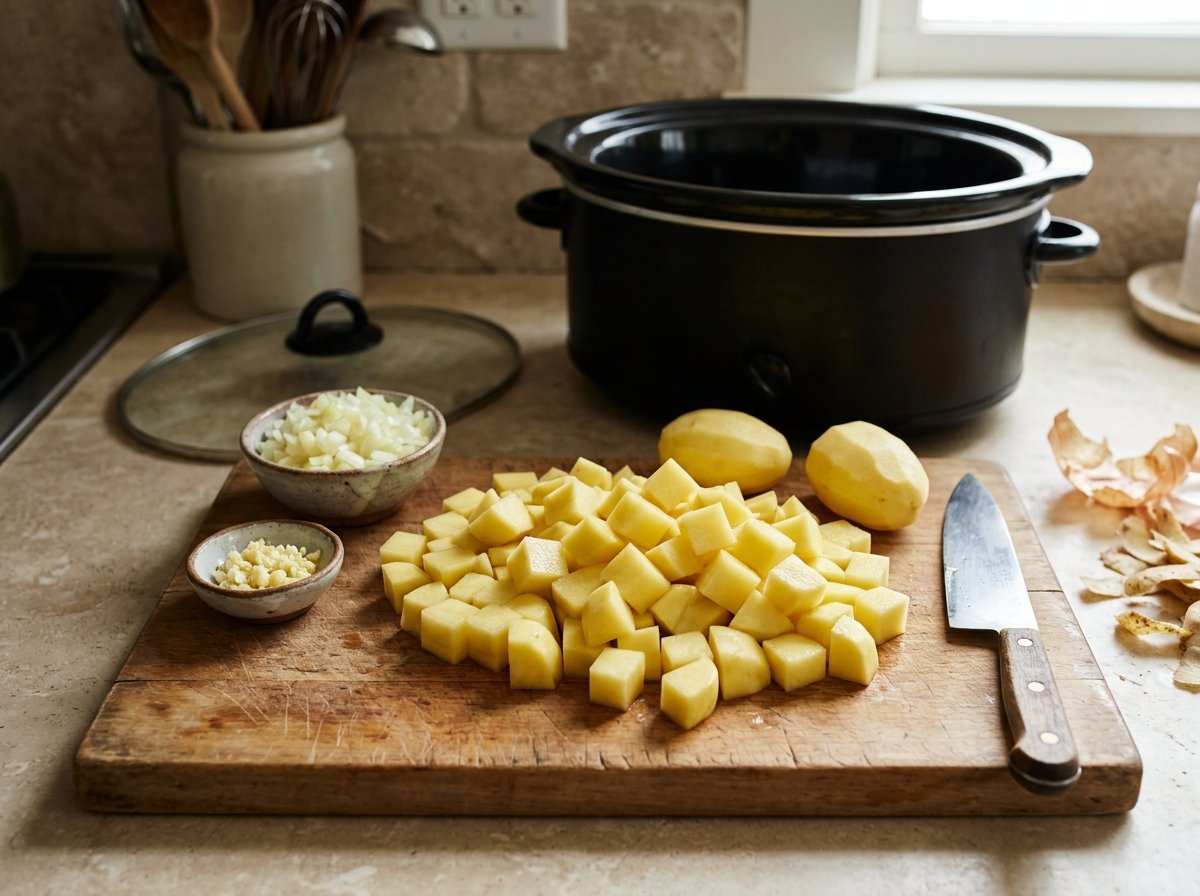
Peel the potatoes and cut them into even 3/4-inch cubes. Finely dice the onion and mince the garlic. Smaller onion pieces soften more evenly and blend into the finished soup. Keep the potato pieces similar in size rather than worrying about perfect cubes.
Step 2: Fill the slow cooker
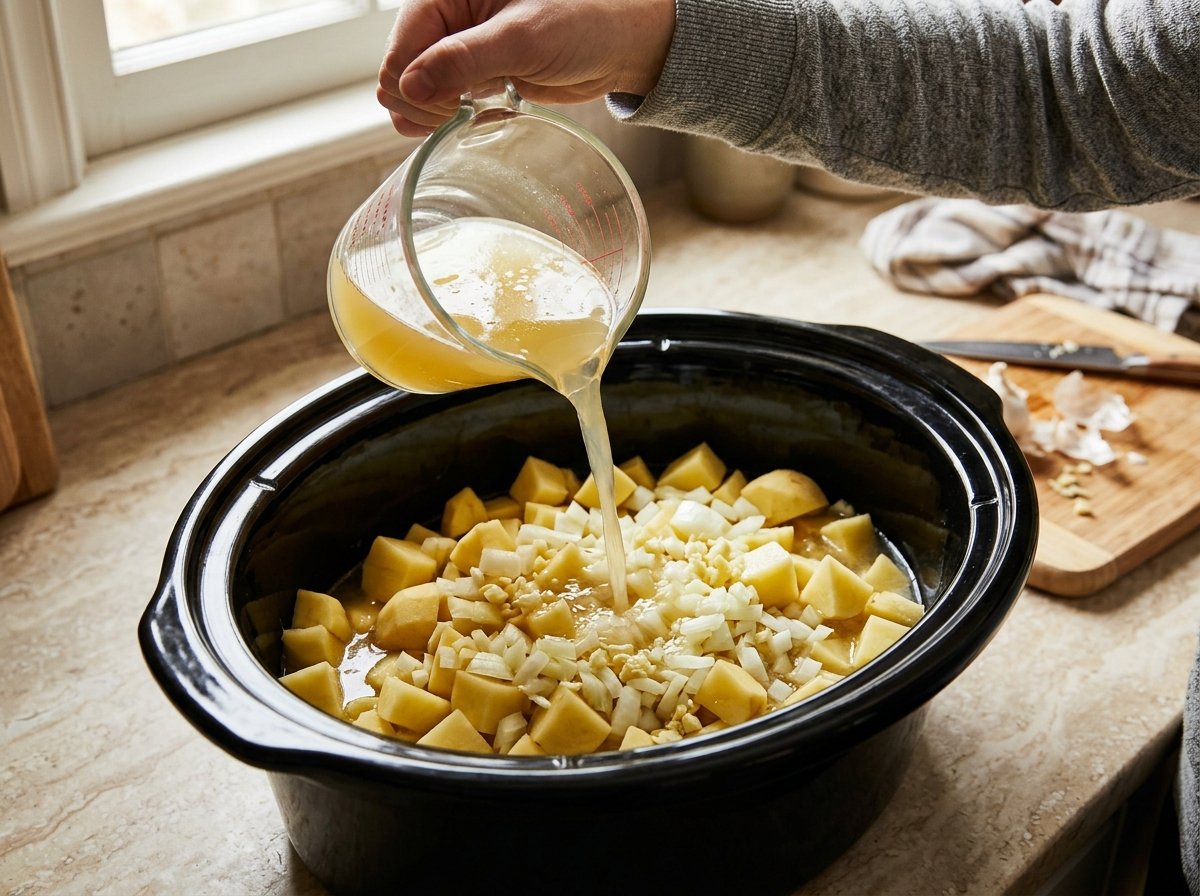
Add the potatoes, onion, garlic, broth, thyme, salt, and pepper to a 6-quart slow cooker. Stir to distribute the seasonings. The broth should come most of the way up the potatoes; they do not need to float in a deep pool of liquid. Leave the cream, cheese, and toppings out for now.
Step 3: Cook until the potatoes are tender
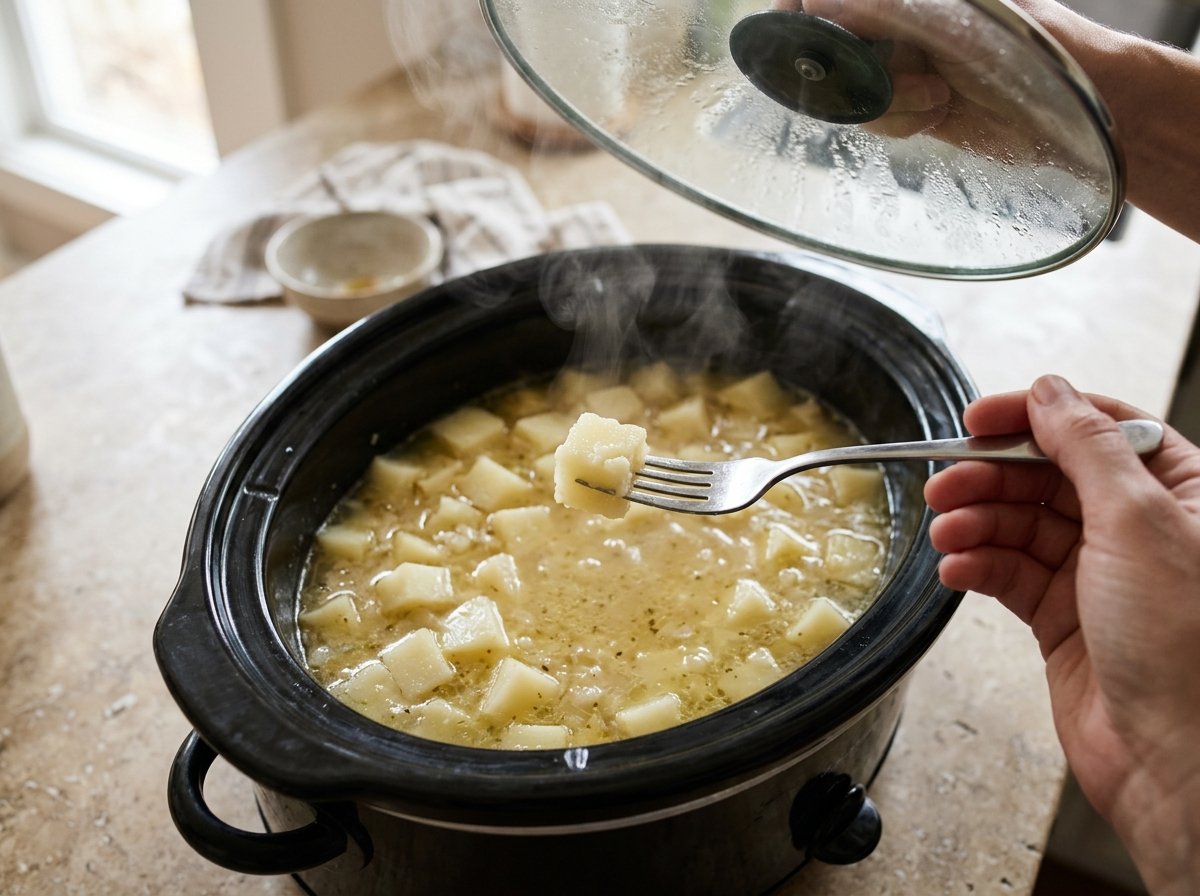
Cover and cook on LOW for 6–7 hours or HIGH for 3–4 hours. Start checking at the shorter time, since slow cookers vary. A fork should slide through a potato cube easily with no firm center. Keep cooking if the potatoes resist; dairy should wait until they are fully tender.
While the potatoes cook, crisp the bacon in a skillet, drain it, and crumble it. Grate the cheese and slice the green onions. Refrigerate prepared toppings if dinner is still several hours away.
Step 4: Mash some of the potatoes
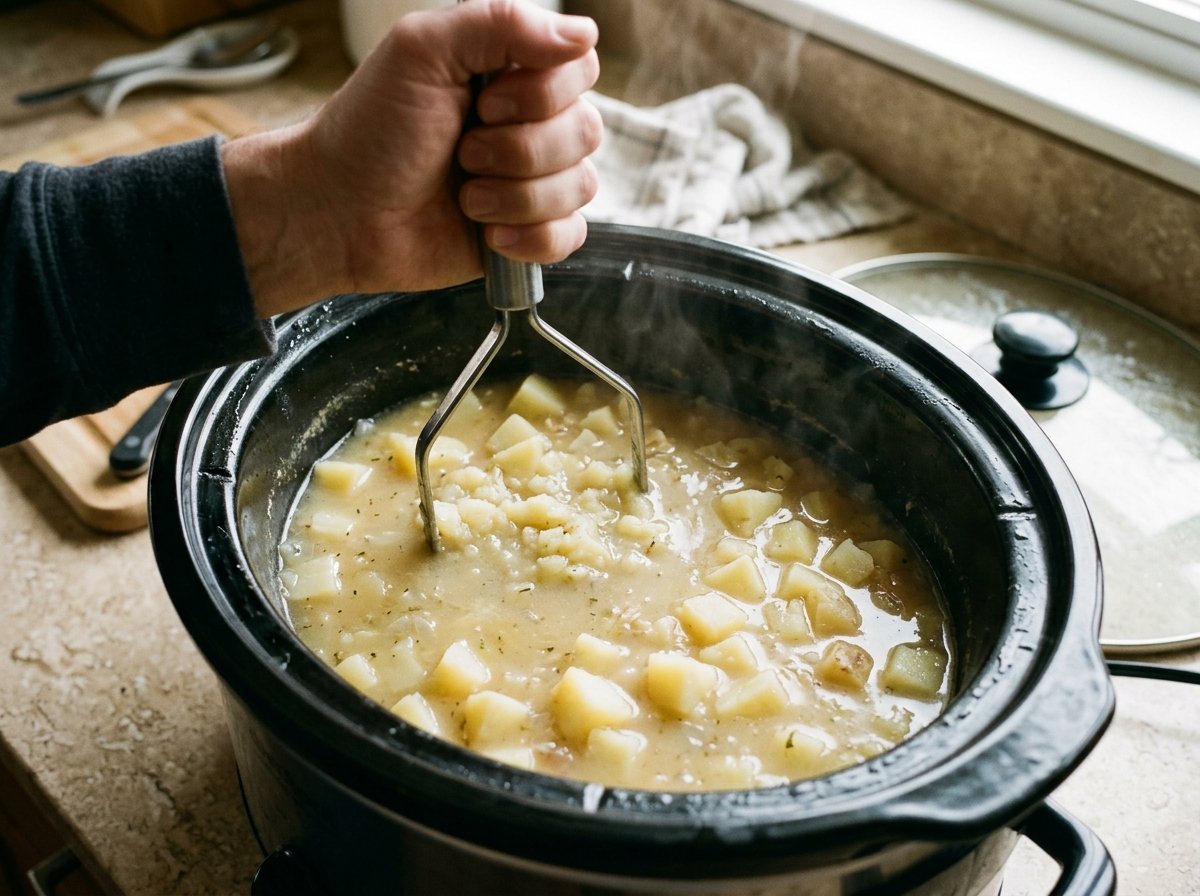
Use a potato masher to crush roughly one-third of the potatoes directly in the cooker. Stir, then decide whether you want a little more thickness. Leave plenty of chunks for a loaded potato soup texture. Avoid blending the whole batch at high speed, which can make potatoes gluey.
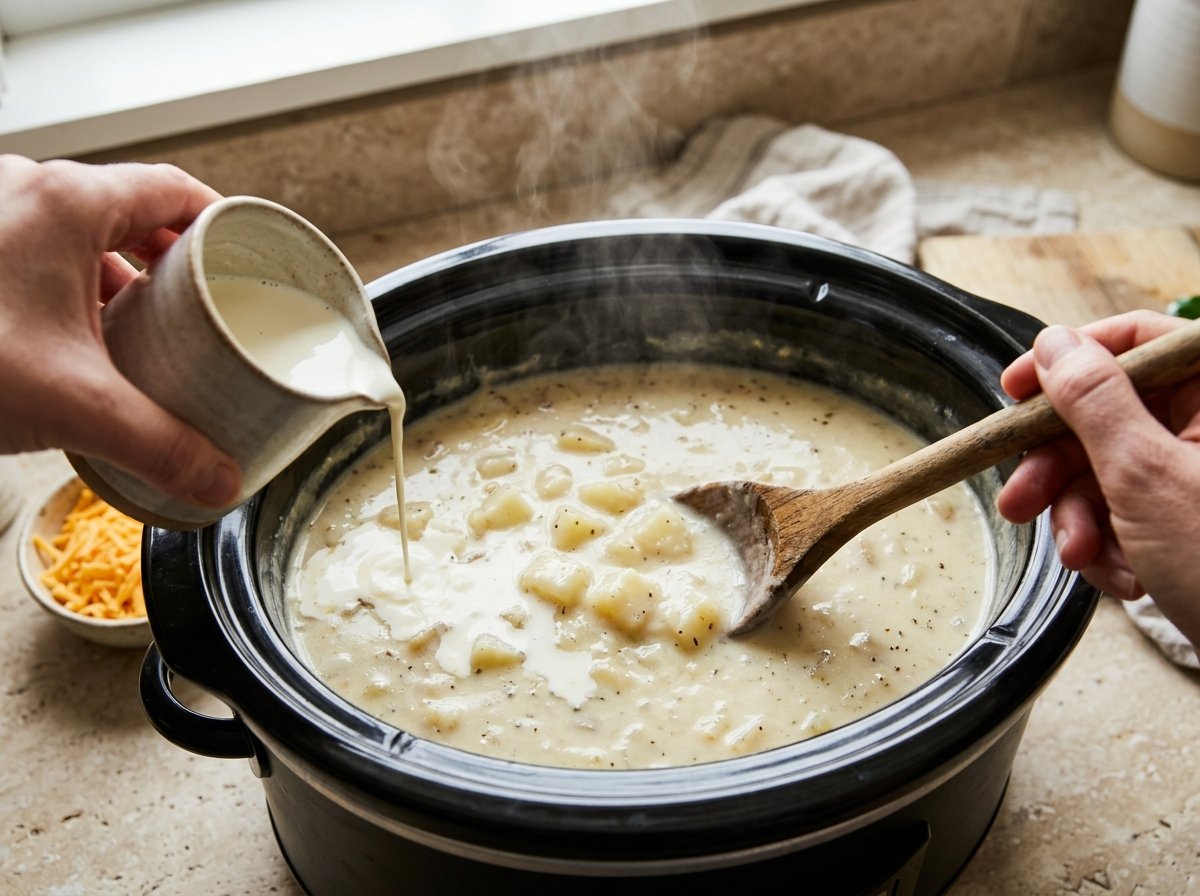
Step 5: Add the cream and cheddar
Stir in the heavy cream. Cover and cook on LOW for about 15–20 minutes, until hot throughout; avoid a hard boil. Turn the cooker off, then add 1 1/2 cups of the cheddar a handful at a time, stirring until each addition melts. Taste before adding more salt because both cheese and bacon bring their own seasoning.
If the soup is thicker than you like, stir in hot broth a little at a time. If it is too thin, mash a few more potatoes and let it stand briefly. It continues to thicken as it cools.
Step 6: Add toppings and serve
Ladle the soup into bowls. Top with the remaining 1/2 cup cheddar, crisp bacon, green onions, and extra black pepper. Add a small spoonful of sour cream if you like. Put the toppings on the table so everyone can finish their own bowl.

Tips for creamy potato soup
- Add dairy late. Hours of slow cooking are useful for potatoes, but unnecessary for cream and cheese.
- Use gentle heat for cheese. Boiling after adding cheddar can leave a grainy texture or an oily surface.
- Adjust thickness gradually. Mashing is easier to control than adding a large amount of thickener.
- Keep bacon separate. It stays crisp and makes leftovers easier to customize.
- Season at the end. Broth and cheddar vary considerably in saltiness.
What to serve with it
A simple green salad with a sharp vinaigrette balances the creamy soup. Crusty bread, dinner rolls, or a small piece of cornbread are good for scooping up the last spoonfuls. For an easy supper, set out the soup, a salad, and small bowls of toppings.
Variations
Vegetarian: Use vegetable broth and omit the bacon. Try chives, smoked paprika, or crispy onions on top.
Broccoli cheddar: Stir in separately steamed, finely chopped broccoli with the cream. Cooking broccoli for the full slow cooker time can make it overly soft.
A little heat: Add a pinch of cayenne or a dash of hot sauce at the end. Start small so the cheddar and potato flavor still comes through.
Storage, reheating, and making ahead
Refrigerate leftovers in shallow covered containers within 2 hours, or within 1 hour when the room or outdoor temperature is above 90°F. Keep at 40°F or below and use within 3–4 days. Store bacon and green onions separately when possible.
Reheat only the portion you need in a saucepan over gentle heat, stirring often, or in the microwave in short intervals. Add a splash of broth to loosen it and heat leftovers to 165°F. Do not use a slow cooker to reheat cold leftovers.
Creamy potato soup can separate and become grainy after freezing. For better results, freeze the cooked potato-and-broth base before adding dairy, for up to 2 months for best quality. Thaw in the refrigerator, reheat thoroughly on the stove, then finish with cream and cheese. For make-ahead prep, chop the onion, grate the cheese, and cook the bacon a day ahead and refrigerate them separately.
Frequently asked questions
Do I need to cook the potatoes before adding them?
No. Raw, peeled potato cubes cook directly in the broth. The important part is to let them become completely tender before adding the cream.
Can I leave the potato skins on?
Yes, especially with thin-skinned Yukon Gold potatoes. Scrub them well first. Peeling gives the soup a smoother, more uniform texture.
Why is my potato soup watery?
The potatoes may need more mashing, or the cooker may have retained more moisture than expected. Mash a little more of the soup and stir well before adding any extra thickener.
Why did the cheese turn grainy?
Excess heat and adding too much cheese at once are common causes. Turn the cooker off, use freshly grated cheese, and stir in small handfuls. Do not boil the soup afterward.
Can I use milk instead of heavy cream?
You can, but the soup will be thinner and less rich. Whole milk is preferable to skim milk, and it needs gentle heat. Mash more potatoes if you want extra body rather than boiling the soup down.
Can I double the recipe?
Use two slow cookers unless your appliance has enough capacity and its manual permits the larger quantity. Do not overfill it, and judge readiness by potato tenderness rather than simply doubling the time.