
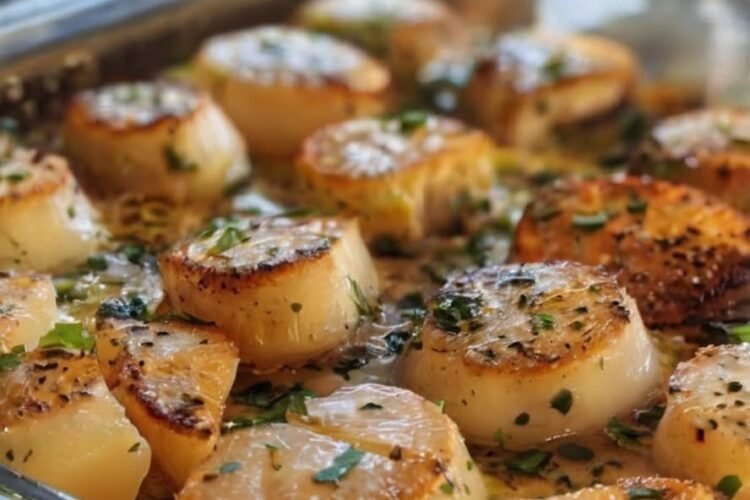
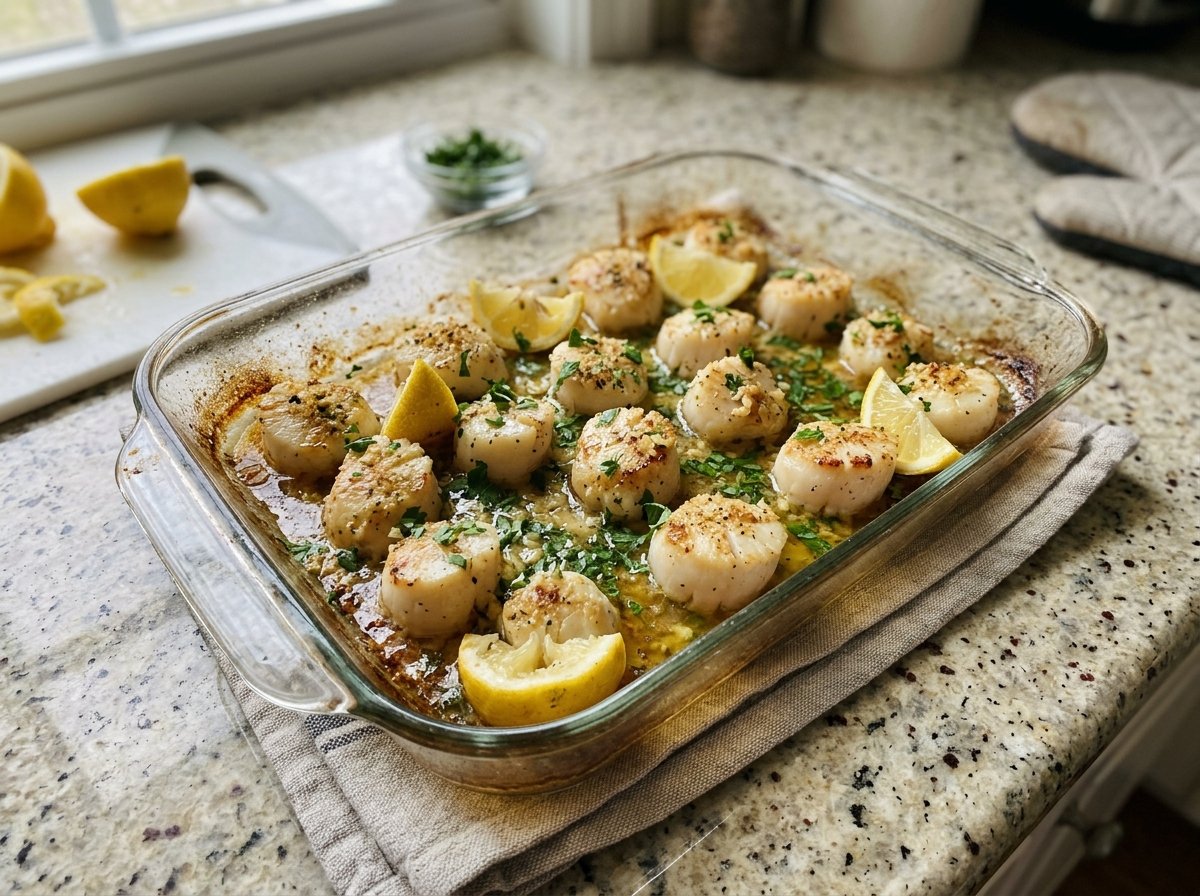
Baked Scallops need very little help to make a good dinner. A little garlic butter, lemon, and parsley keep their sweet flavor at the center of the plate. The oven cooks them together in one shallow dish, leaving buttery juices to spoon over rice or mop up with bread.
The trick is choosing similarly sized scallops and stopping as soon as the centers are opaque and just firm. A brief broil can give the tops some color, but it is optional and should not turn a delicate scallop into a chewy one.
Recipe at a glance
- Servings: 4
- Prep: 10 minutes
- Bake: 10–14 minutes
- Optional broil: 1–2 minutes
- Total: about 25 minutes
- Oven: 425°F (220°C)
Ingredients
- 1 1/2 pounds (680 g) large sea scallops, fully thawed if frozen
- 3 tablespoons butter, melted
- 1 tablespoon olive oil
- 2 garlic cloves, finely minced
- 1 teaspoon finely grated lemon zest
- 1 tablespoon lemon juice
- 1/2 teaspoon fine salt, or less if the scallops are salted
- 1/4 teaspoon black pepper
- 2 tablespoons chopped parsley, divided
- Lemon wedges, for serving
Choosing sea scallops
Large sea scallops are the right choice for this timing. Bay scallops are smaller and cook faster. Look for dry-packed scallops when available; they usually release less water than scallops treated with a solution. If using frozen scallops, thaw in the refrigerator and drain well.
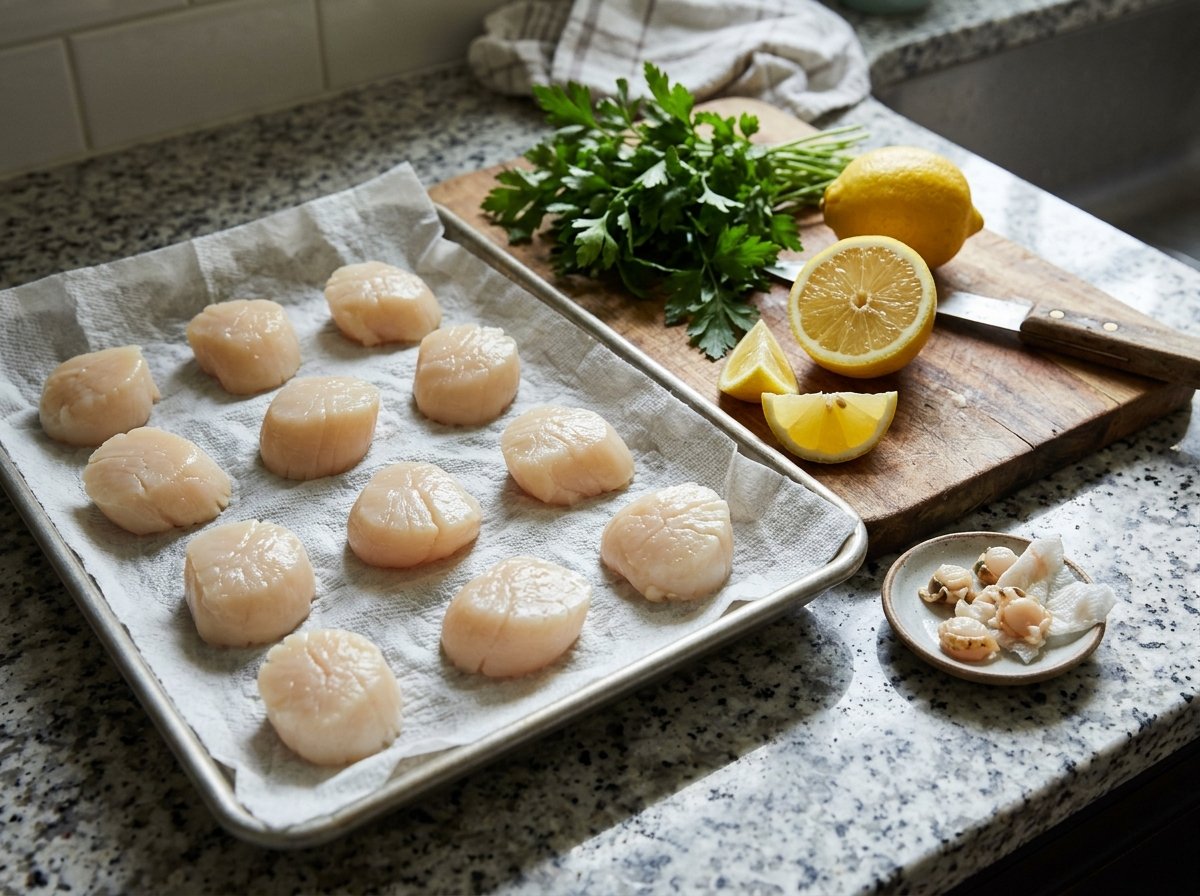
Remove the small, firm side muscle if it is still attached. It peels away easily and can feel tough after cooking. Pat the scallops dry on both sides. A wet surface dilutes the butter and makes light browning harder.
How to make Baked Scallops
Step 1: Prepare the scallops and dish
Heat the oven to 425°F (220°C). Choose a shallow baking dish large enough to hold the scallops in one layer with small gaps between them. Pat the scallops thoroughly dry and remove any attached side muscles.
Keep seafood chilled until you are ready to assemble the dish. Do not leave it on the counter while waiting for the oven to heat.
Step 2: Mix the garlic butter
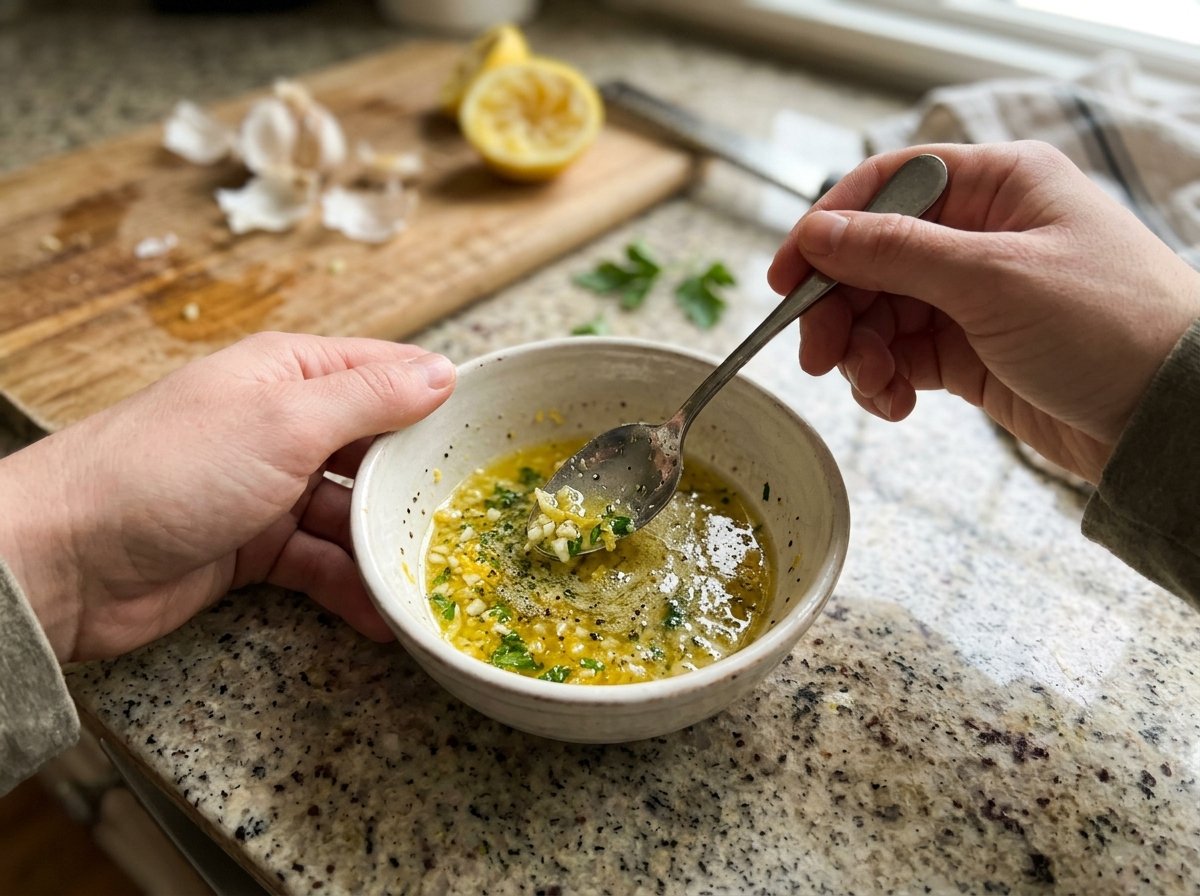
Combine the melted butter, olive oil, minced garlic, lemon zest, lemon juice, salt, pepper, and 1 tablespoon of the parsley. Stir well. Taste the mixture before adding it to the raw seafood and use less salt if the scallops were packed in a salty solution.
Finely mincing the garlic helps distribute its flavor without leaving large pieces that can burn under the broiler.
Step 3: Arrange and coat
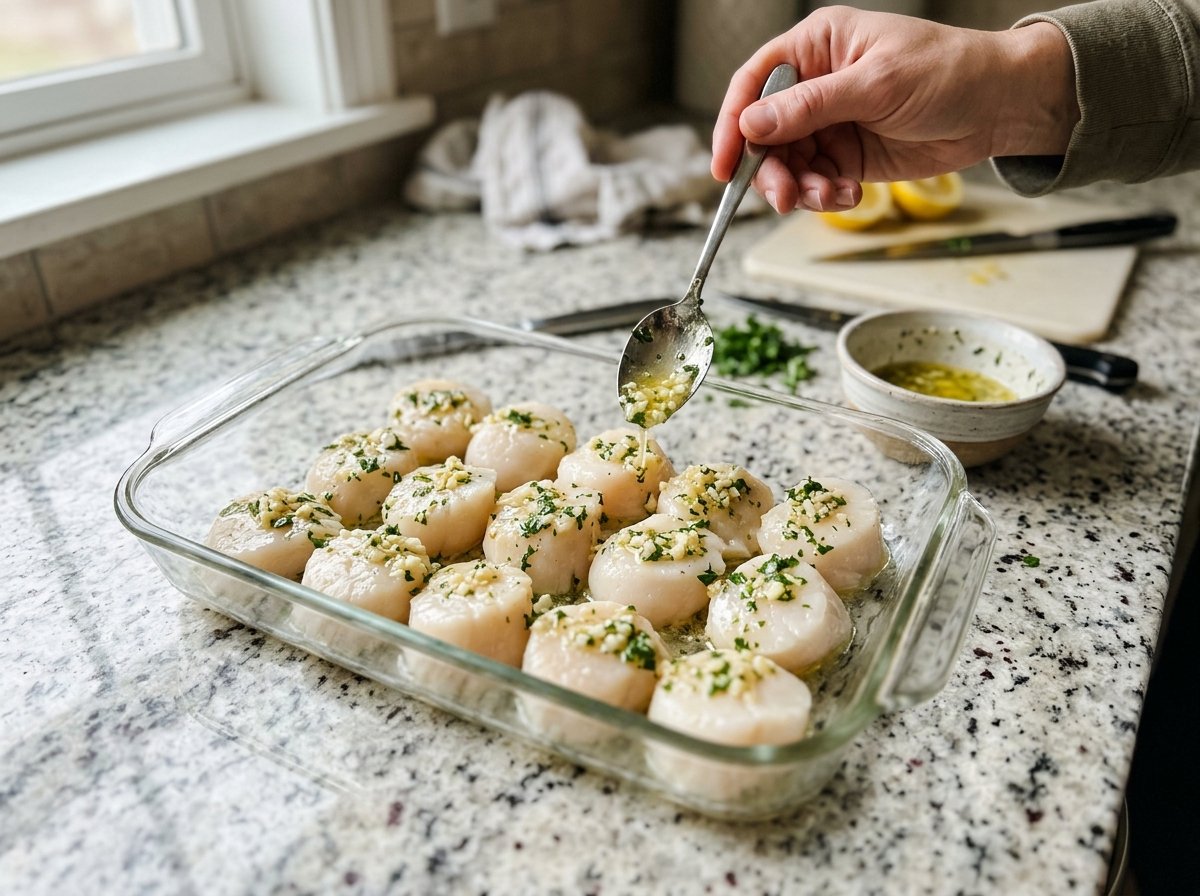
Set the scallops in the dish with their broad sides facing up. Spoon the butter mixture evenly over them and around the bottom. Avoid stacking, which makes the cooking uneven.
Use a metal or broiler-safe ceramic dish if you plan to broil. Many glass baking dishes are not rated for broiler heat; check the manufacturer’s directions rather than assuming they are safe.
Step 4: Bake just until done
Bake for 10–14 minutes, starting to check at 8 minutes for smaller sea scallops. They should turn opaque through the center and feel gently firm rather than hard. Seafood should reach 145°F; check a thick scallop from the side with a thin-tip thermometer.
If you want a little color and the scallops are nearly done, switch to the broiler for 1–2 minutes in a broiler-safe dish, watching continuously. Stop as soon as the tops color and the scallops reach their target temperature. Do not extend the cooking simply to chase a dark crust.
Sprinkle with the remaining parsley and serve immediately with lemon wedges and a little of the pan butter.
Tips for tender scallops
- Match the sizes. A very small scallop will finish before a large one.
- Dry them well. Excess liquid can leave the sauce watery.
- Use a shallow dish. It exposes the tops evenly to the heat.
- Watch the final minutes. Lean seafood can overcook quickly.
- Serve right away. Scallops continue to firm as they sit in a hot dish.
Variations and serving ideas
Add a pinch of paprika to the butter or use chives in place of part of the parsley. A few small capers bring a salty contrast; rinse and drain them first and reduce the added salt. Avoid heavy amounts of seasoning that cover the scallops’ natural sweetness.
Serve with rice, couscous, or a small portion of pasta, plus green beans or asparagus. Crusty bread is useful for the lemon-garlic butter. For a fuller seafood dinner, keep the sides simple so everything can be served while the scallops are hot.
Preparation and leftovers
You can mince the garlic and parsley and measure the butter ahead. Prepare the scallops just before cooking and keep them refrigerated until then. This is a quick dish and is best freshly baked.
Refrigerate leftovers within 2 hours in a shallow container and use within 3–4 days, preferably sooner for texture. Reheat gently, covered, with a small splash of water or broth until 165°F. Avoid prolonged heating, which toughens scallops. Freeze promptly cooled leftovers for up to 2 months for best quality, though reheated frozen scallops will be firmer.
Frequently asked questions
Why are my scallops watery?
They may have been packed in a water-retaining solution, not drained after thawing, or crowded in the dish. Pat them dry and use one roomy layer.
Can I bake them from frozen?
Thaw them first for this recipe. Frozen scallops release more water and need a different cooking time.
Do I need breadcrumbs?
No. This version uses garlic butter and herbs without a crumb topping. The optional brief broil adds color without a breaded crust.
Why are they rubbery?
Overcooking is the usual reason. Check early, use a thermometer, and remove them promptly once done.