

French Dip Biscuits tuck thinly sliced roast beef, sweet onions, and provolone into golden biscuits, with warm au jus on the side. They have the savory filling of a French dip sandwich in a smaller, buttery package that works for lunch, a casual dinner, or a game-day tray.
Refrigerated biscuit dough keeps the preparation manageable. The important part is keeping the filling modest and fairly dry so the dough bakes through. Serve the dipping broth separately and let everyone dip just before taking a bite.
Recipe at a glance
- Yield: 8 filled biscuits
- Prep: 15 minutes
- Onion cooking: 12–15 minutes
- Baking: 18–24 minutes
- Total: about 50 minutes
- Oven: 375°F (190°C)
Ingredients
For the biscuits
- 1 tablespoon butter
- 1 medium yellow onion, thinly sliced
- 1/4 teaspoon fine salt
- 1 can (16.3 ounces / 462 g) large refrigerated flaky biscuits, 8 count
- 12 ounces (340 g) thinly sliced fully cooked roast beef
- 4 slices provolone cheese, halved
- 2 tablespoons melted butter
- 1/2 teaspoon garlic powder
- 1/2 teaspoon dried parsley
For the au jus
- 2 cups (480 ml) low-sodium beef broth
- 1 teaspoon Worcestershire sauce
- 1/4 teaspoon onion powder
- Black pepper, to taste
Choosing the beef and dough
Thin deli roast beef is easy to portion and folds neatly into the biscuits. Leftover roast beef also works if sliced very thinly. This recipe uses cooked beef; raw beef will not cook reliably inside the dough on the same schedule.
Choose large flaky biscuits that can be separated horizontally into two layers. Keep the dough chilled until you are ready to fill it. Very warm dough becomes sticky and can lose some of its flaky structure.
Provolone melts smoothly and suits the beef broth. Swiss cheese is another good choice. Use thin pieces and fold the edges inward so less cheese escapes onto the tray.
How to make French Dip Biscuits
Step 1: Soften the onions
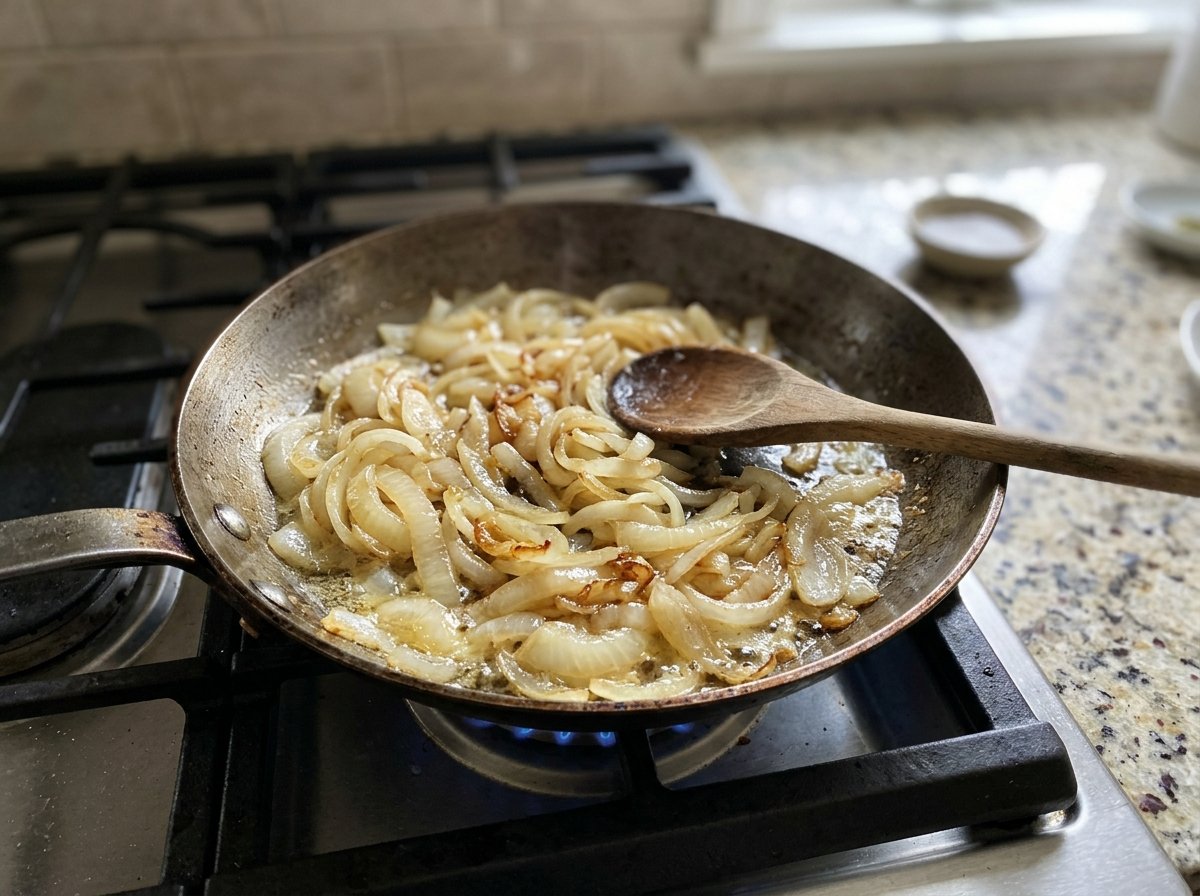
Melt 1 tablespoon butter in a skillet over medium-low heat. Add the onion and salt and cook for 12–15 minutes, stirring occasionally, until soft and lightly golden. If the pan starts to catch, add a teaspoon of water and scrape gently.
Transfer to a plate and cool for a few minutes. The onions should be moist but not wet. Hot filling can soften the chilled biscuit dough before it reaches the oven.
Step 2: Fill the biscuits
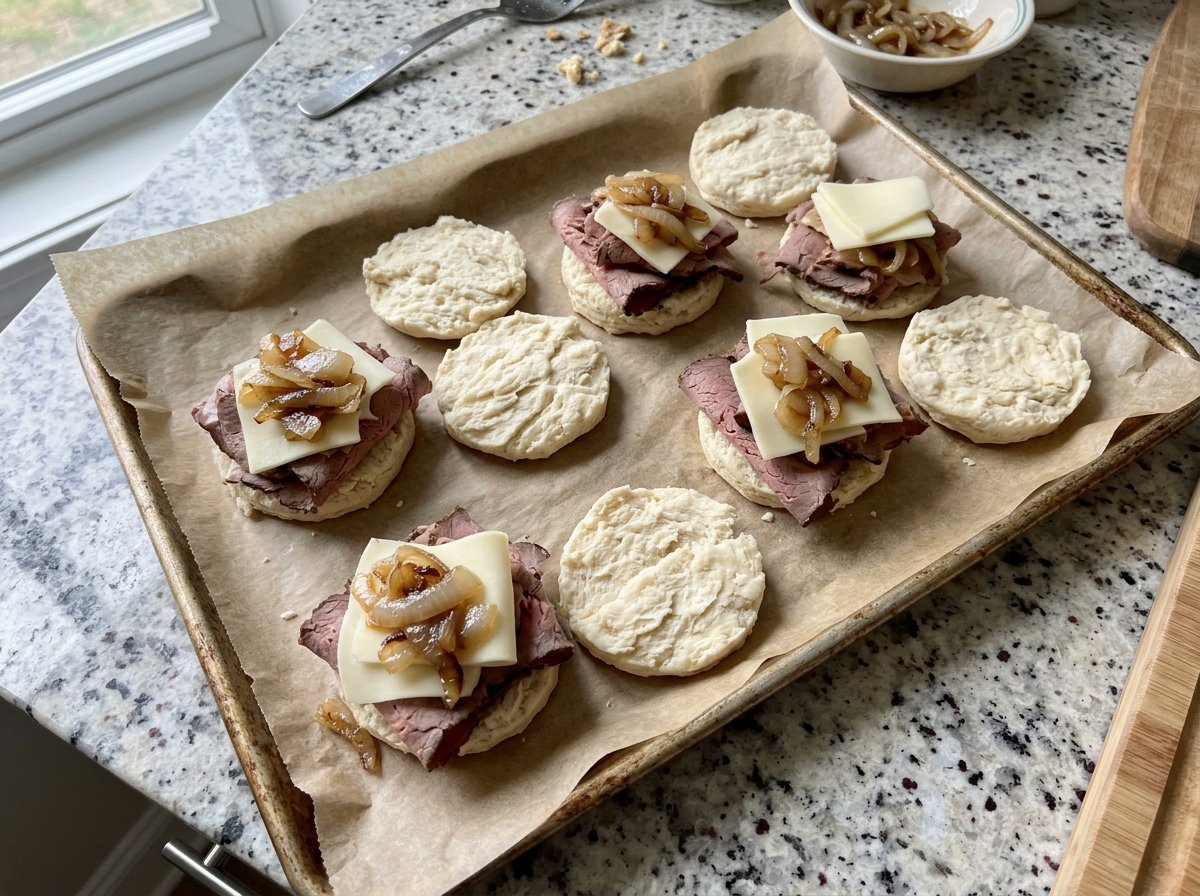
Heat the oven to 375°F (190°C). Line a baking sheet with parchment. Gently separate each biscuit into two horizontal layers, keeping a thicker bottom if the layers are uneven. Place the bottom halves on the tray, leaving about 2 inches between them.
Divide the roast beef across the bottoms, folding it into loose bundles. Add a spoonful of onions and half a slice of provolone to each. Leave a small border of dough around the filling. Put the top layers on and gently press the edges together where they meet; do not flatten the centers.
Step 3: Brush and bake
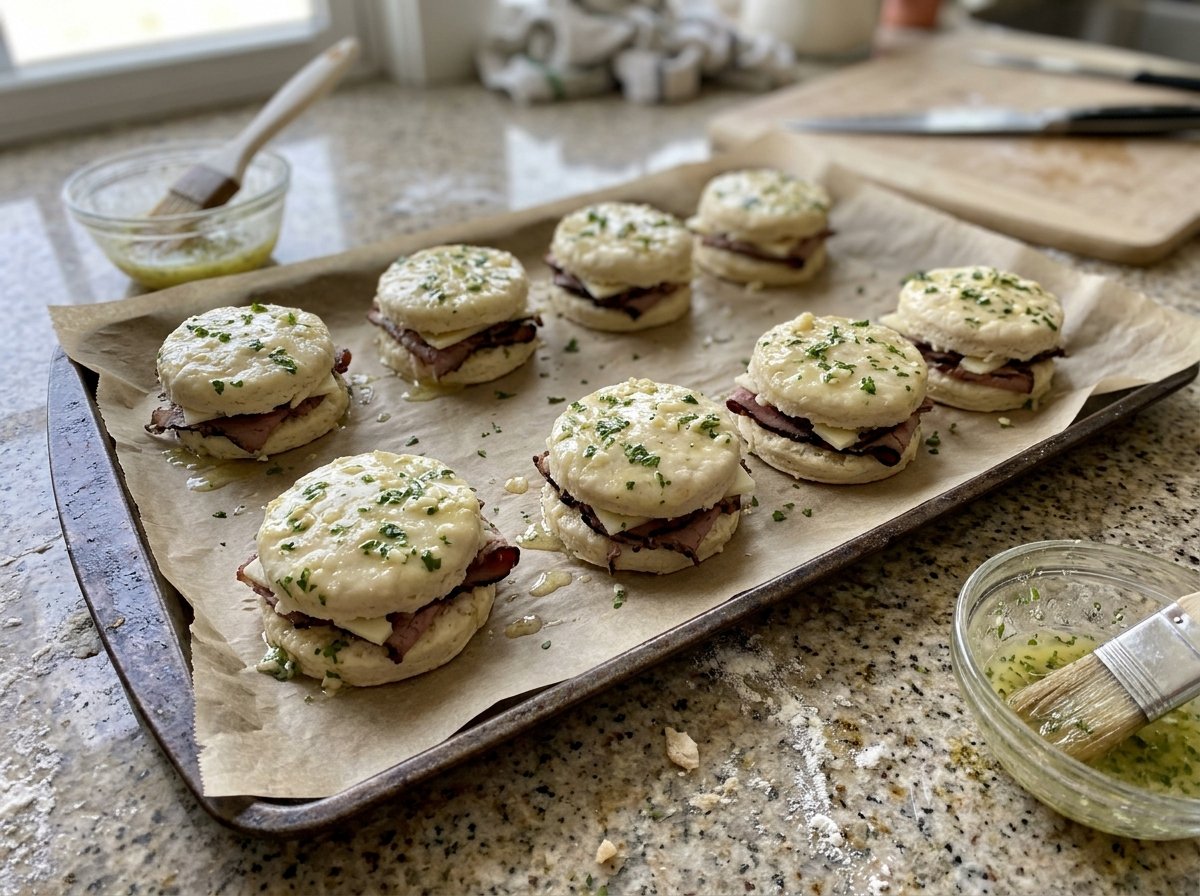
Mix the melted butter with the garlic powder and parsley. Brush lightly over the biscuit tops. Bake for 18–24 minutes, until golden and cooked through. Begin checking at 18 minutes and follow any specific baking guidance on your biscuit package.
Check a center biscuit by lifting or splitting it carefully: the dough underneath the filling should look baked rather than shiny or gummy. If the tops brown before the bottoms finish, tent loosely with foil and continue for a few minutes. Heat the filling to 165°F.
Step 4: Make the au jus and serve
While the biscuits bake, combine the beef broth, Worcestershire sauce, onion powder, and pepper in a small saucepan. Simmer gently for 5–8 minutes. Taste before adding salt because broth and deli beef can already be well seasoned.
Let the baked biscuits stand for 3–5 minutes, then serve with the hot au jus in small bowls. Dip the edge of a biscuit briefly rather than soaking the whole sandwich, which can cause it to fall apart.

Tips for well-baked filled biscuits
- Keep the filling compact. Overstuffed biscuits can split or stay doughy in the middle.
- Cool the onions. A warm tray and hot filling can soften the dough too early.
- Leave space between biscuits. Air needs to circulate for the sides to bake.
- Check the underside. A golden top does not always mean the dough below the filling is done.
- Dip at the table. Adding broth before serving makes the bread soggy.
Variations
Add a thin smear of prepared horseradish to the cooked biscuit for a sharper bite, or serve it on the side. Sautéed mushrooms can replace some of the onion, but cook off their moisture first. Swiss or mild cheddar can replace the provolone.
For smaller party portions, cut the cooked biscuits in half after their brief rest. Avoid cutting the raw filled biscuits into small pieces unless you also adjust the baking time and check the dough carefully.
What to serve alongside
A simple green salad, slaw, or roasted green beans balances the buttery biscuits. For a snack spread, add pickles, raw vegetables, and Party Potato Puffs. The au jus is meant to be a thin dipping broth rather than a thick gravy.
Make-ahead and storage
Cook the onions a day ahead and refrigerate them promptly. Make the au jus ahead too, then bring it back to a simmer before serving. Assemble the biscuits shortly before baking so the filling does not sit against raw dough for a long time.
Refrigerate leftover biscuits and broth separately within 2 hours and use within 3–4 days. Reheat biscuits in a covered 325°F oven until the centers reach 165°F, uncovering for a few minutes to refresh the tops. Bring the dipping broth to a boil when reheating.
For longer storage, freeze cooled biscuits individually for up to 2 months for best quality. Thaw in the refrigerator before reheating. Refrigerated biscuit dough is at its flakiest when freshly baked, so expect a softer texture after freezing.
Frequently asked questions
Can I use homemade biscuits?
Yes, if you use a dough designed for filled biscuits and adjust the bake to its thickness. The timing here is written for large refrigerated flaky biscuits.
Why are the centers gummy?
Too much filling, watery onions, or a short baking time can keep the inner dough from setting. Use modest portions and check a center biscuit before removing the tray.
Can I skip the onions?
Yes. Keep the beef and cheese amounts the same and continue with the assembly step.
Can I use gravy instead of au jus?
You can serve gravy if you prefer, but the traditional dipping effect comes from a thin beef broth. Keep either sauce separate until serving.