
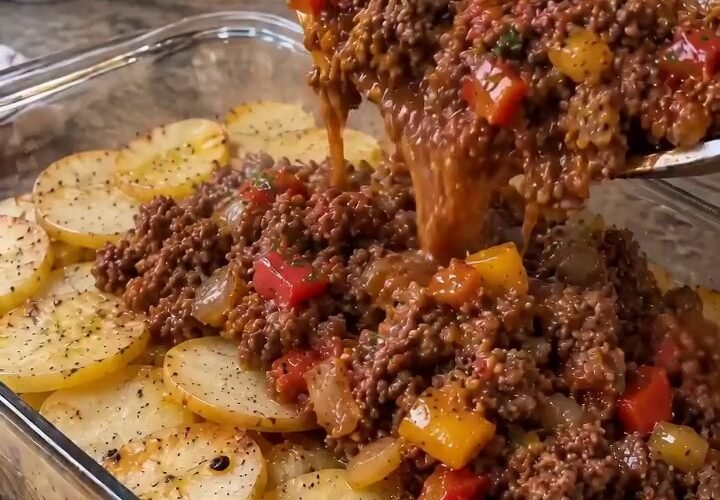
Ground beef and potato casserole is the kind of dinner that makes good use of everyday ingredients: golden potato slices, savory beef, sweet bell peppers, and plenty of onion. A simple tomato sauce brings everything together, and a short bake lets the flavors settle into the potatoes.
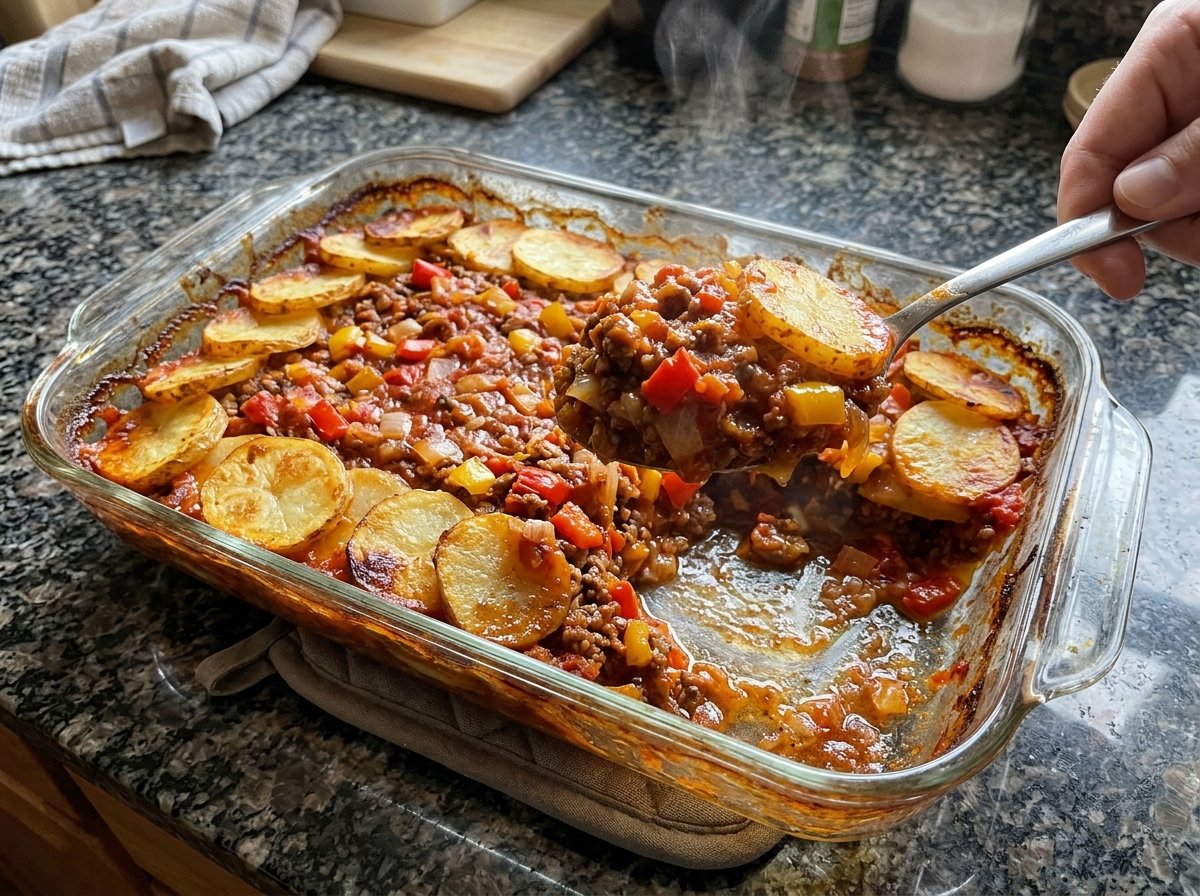
This version has a generous beef-and-vegetable topping over tender potato rounds, just like the dish pictured. There is no condensed soup to open and no cheese required. The peppers bring color and sweetness, while garlic, paprika, and a little Worcestershire sauce give the filling a deeper savory flavor.
Recipe at a glance
- Servings: 6
- Prep time: 20 minutes
- Stovetop time: about 20 minutes
- Bake time: 25–35 minutes
- Rest time: 10 minutes
- Total time: about 1 hour 15 minutes to 1 hour 25 minutes
- Oven: 400°F (200°C), conventional
- Equipment: 9-by-13-inch baking dish, large skillet, saucepan, colander, and sharp knife
Why this casserole works
Potatoes and ground beef do not need the same cooking time. Giving the potato slices a brief simmer first means they can finish in the oven while the cooked beef stays juicy. The tomato filling should be thick enough to coat a spoon before it goes into the dish, so the casserole comes out hearty rather than soupy.
Red and yellow peppers soften into the sauce and balance its acidity. A little space between the potato slices lets some filling reach the bottom, which keeps each serving flavorful all the way through.
Ingredients
For the potatoes
- 2 pounds (900 g) Yukon Gold or other yellow potatoes, scrubbed
- 1 tablespoon olive oil, plus a little for the baking dish
- 1/2 teaspoon fine salt, plus salt for the cooking water
- 1/2 teaspoon dried oregano
- 1/4 teaspoon freshly ground black pepper
For the ground beef filling
- 1 1/2 pounds (680 g) ground beef, preferably 85–90% lean
- 1 large yellow onion, diced
- 1 red bell pepper, seeded and cut into small pieces
- 1 yellow bell pepper, seeded and cut into small pieces
- 3 garlic cloves, minced
- 2 tablespoons tomato paste
- 1 can (15 ounces / 425 g) plain tomato sauce
- 1/2 cup (120 ml) low-sodium beef broth
- 1 tablespoon Worcestershire sauce
- 1 teaspoon smoked or sweet paprika
- 1 teaspoon dried oregano
- 1/2 teaspoon fine salt, or to taste
- 1/2 teaspoon black pepper
- Chopped parsley, optional, for serving
Ingredient notes
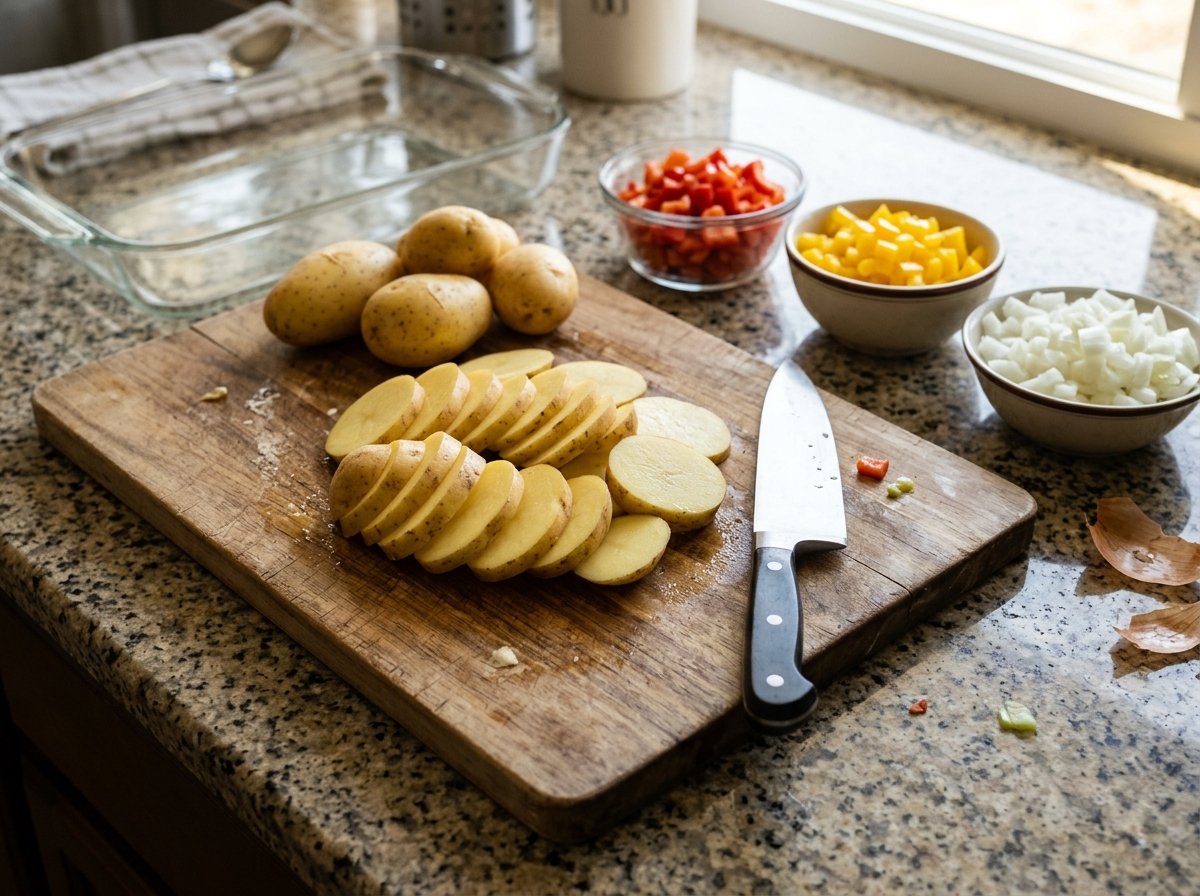
Potatoes: Yellow potatoes hold their shape well and have a creamy center. Leave the thin skins on or peel them if you prefer. Russets also work, though their slices are more fragile once simmered. Cut all the rounds about 1/4 inch thick so they soften at a similar rate.
Beef: Moderately lean ground beef gives the filling plenty of flavor without leaving a layer of grease. Drain any large excess of fat after browning, leaving about a tablespoon to cook the vegetables.
Tomato sauce: Use plain canned tomato sauce rather than ketchup. Passata is a suitable substitute. If your sauce already contains salt or herbs, taste the filling before adding the full amount of seasoning.
Peppers: Red and yellow peppers give the filling a sweeter flavor. Green pepper is fine if you enjoy its sharper taste. Dice the pieces small enough to soften during the stovetop stage.
How to make ground beef and potato casserole
Step 1: Prepare the potatoes and vegetables
Heat the oven to 400°F (200°C). Lightly oil a 9-by-13-inch baking dish. Scrub the potatoes and cut them into rounds about 1/4 inch thick. Dice the onion and peppers, and mince the garlic. Keep raw beef separate from the vegetables until cooking, and wash hands and utensils after handling it.
Step 2: Parboil and season the potatoes
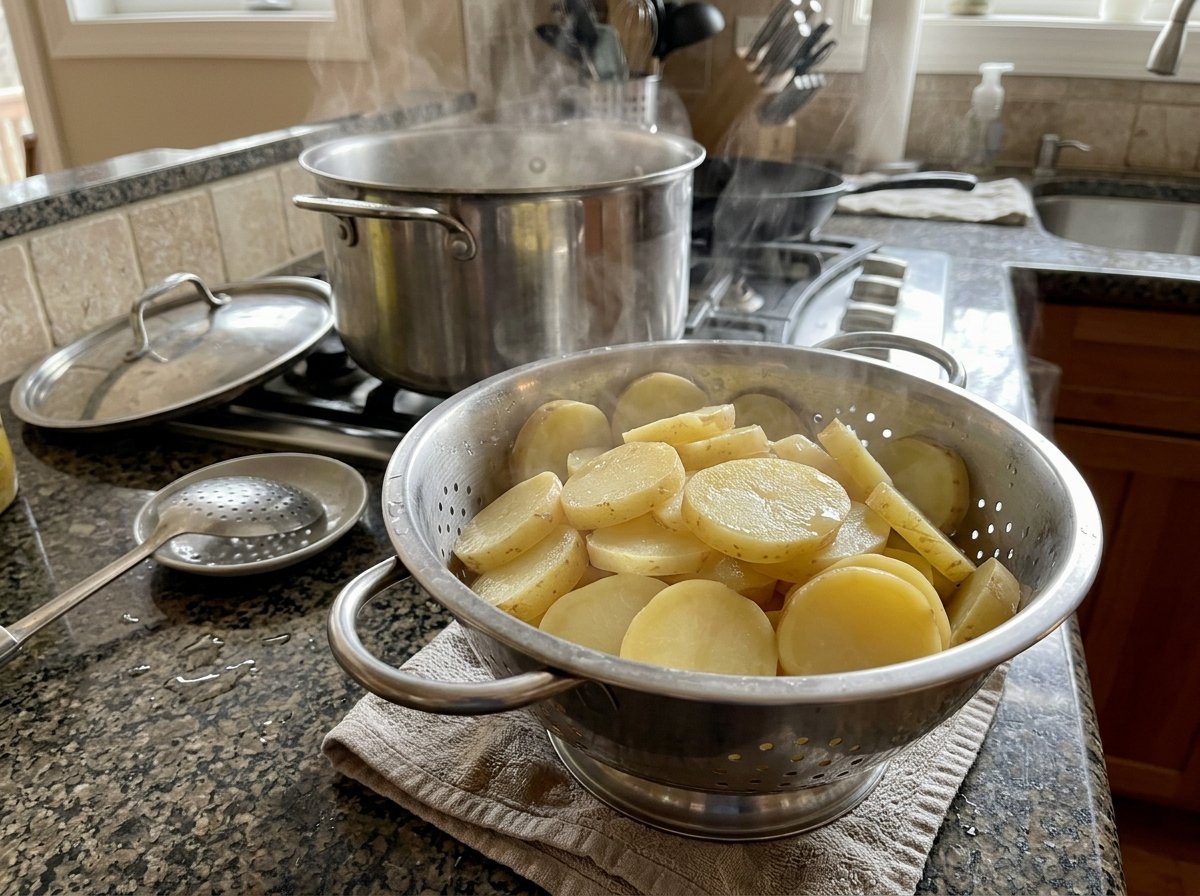
Put the potato slices in a saucepan and cover with cold water by about an inch. Salt the water lightly and bring to a gentle boil. Reduce to a simmer and cook for 5–7 minutes after the water reaches a simmer, checking early. A knife should begin to enter a slice, but the center should still offer some resistance.
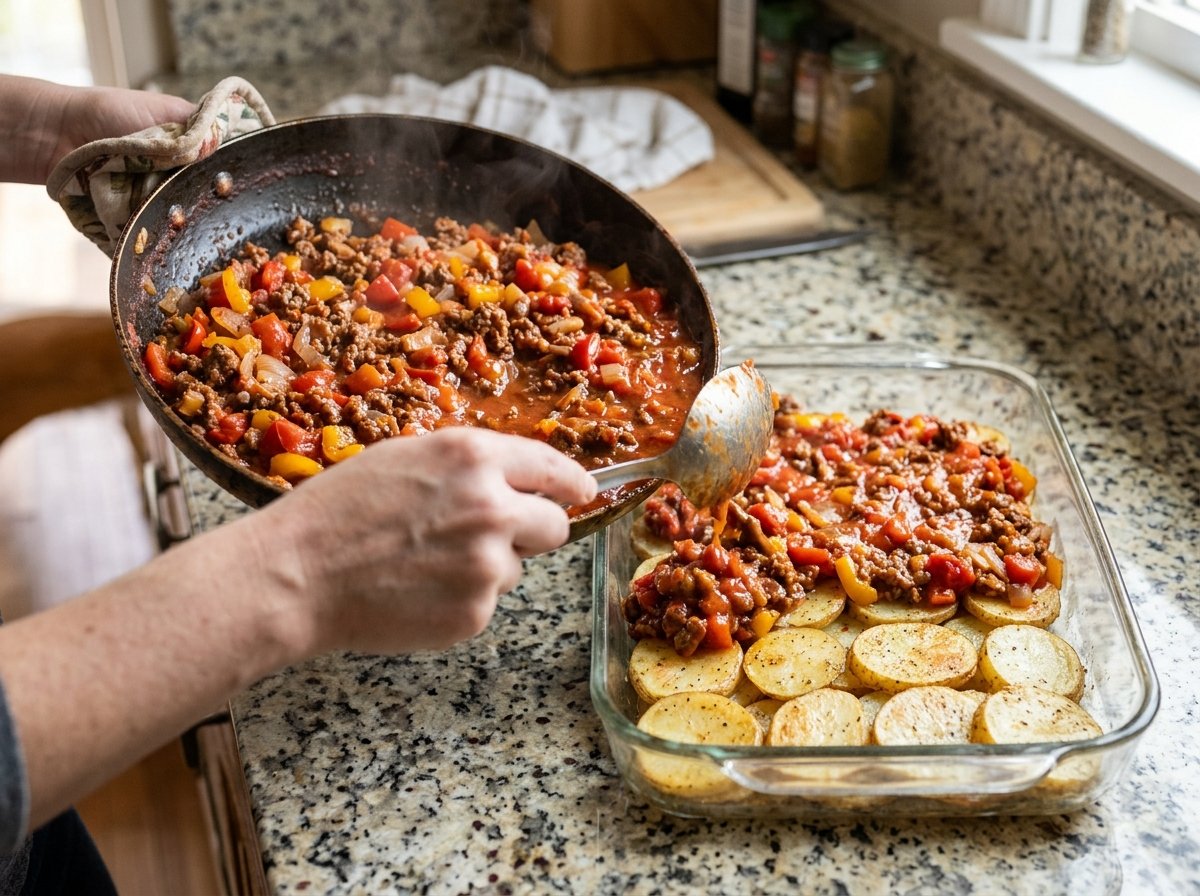
Drain carefully and let the potatoes steam dry for 2 minutes. Toss gently with the olive oil, salt, oregano, and pepper. Spread them across the baking dish in overlapping layers without packing them tightly. They will finish cooking in the oven.
Step 3: Brown the ground beef
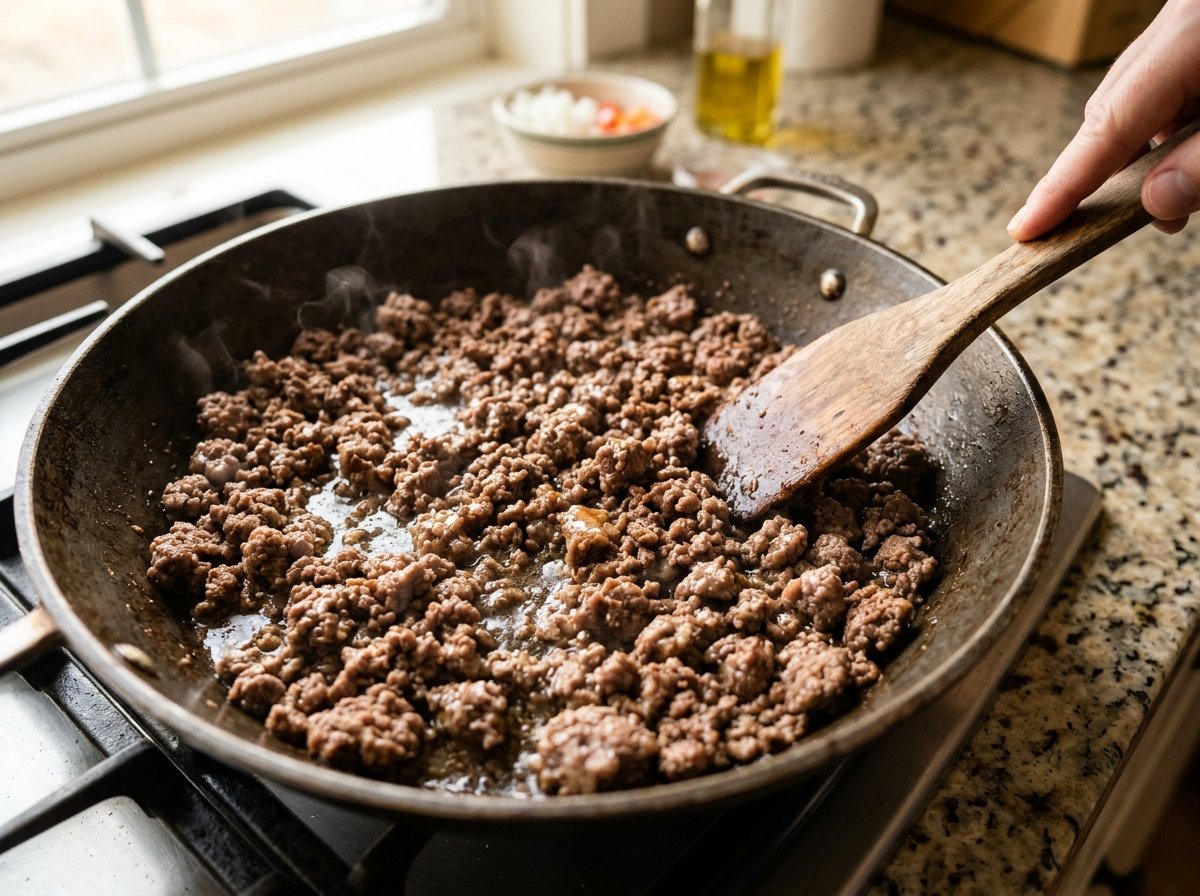
Set a large skillet over medium-high heat. Add the beef and break it into small crumbles with a wooden spoon. Cook for 7–9 minutes, stirring occasionally, until browned and cooked through. Ground beef should reach 160°F (71°C); use a food thermometer rather than relying only on color.
Spoon off excess fat, leaving about a tablespoon in the pan. If using very lean beef and the pan looks dry, add a small drizzle of oil before the vegetables.
Step 4: Build the pepper and onion sauce
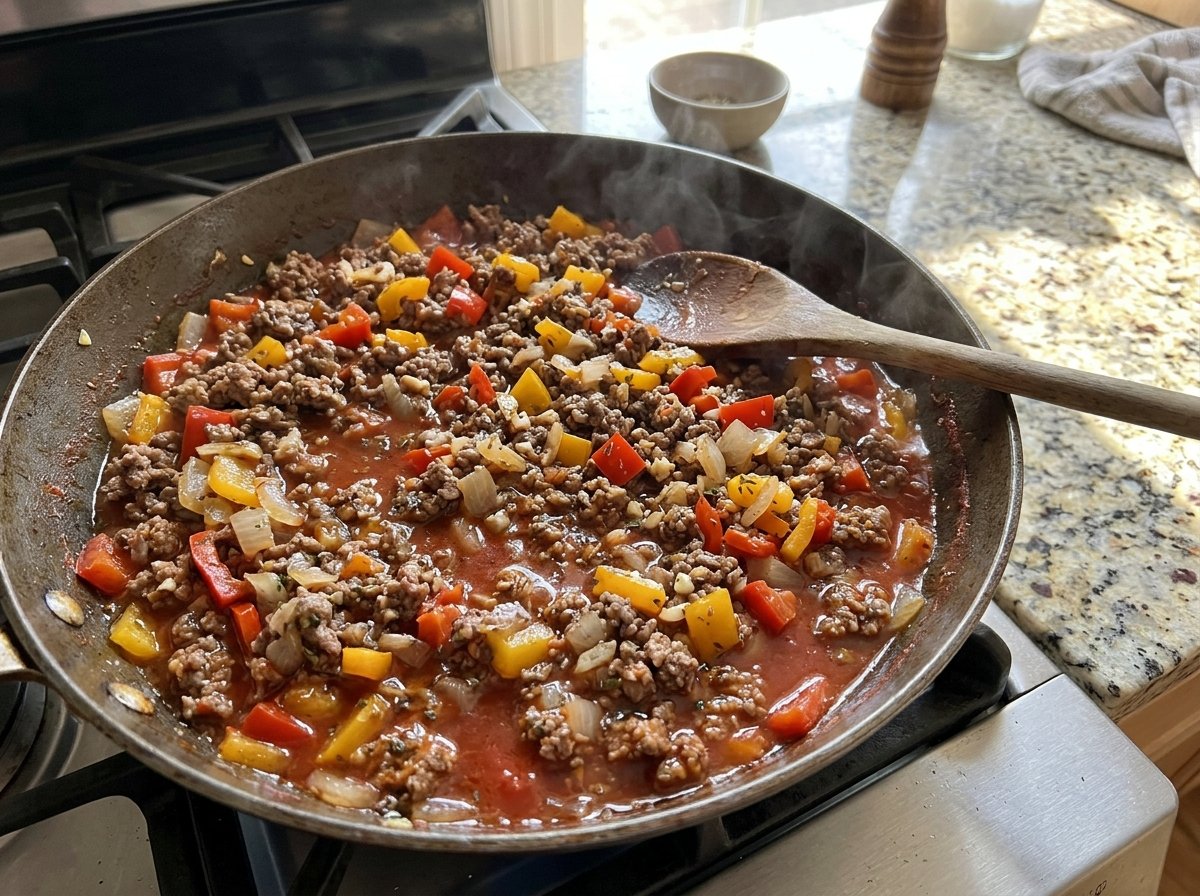
Add the onion and both peppers to the beef. Cook over medium heat for 6–8 minutes, stirring, until the onion turns translucent and the peppers begin to soften. Stir in the garlic and tomato paste for 1 minute.
Add the tomato sauce, broth, Worcestershire sauce, paprika, oregano, salt, and pepper. Simmer uncovered for 5–7 minutes. The filling should remain moist but should not have a pool of thin liquid around the edges. Taste and adjust the seasoning.
Step 5: Assemble the casserole
Spoon the hot beef mixture evenly over the potatoes. Gently work a little filling between some of the slices with a spoon, leaving a few potato edges visible. Cover the dish snugly with foil. Set it on a rimmed baking sheet if the dish is close to full.
Step 6: Bake until tender and let it rest
Bake covered for 20 minutes, then carefully remove the foil and bake for another 5–15 minutes. Check a potato near the center with a small knife; it should slide through easily. The filling should be bubbling and the center of the casserole should reach 165°F (74°C).
If the potatoes still feel firm, cover again and bake a little longer. Let the casserole stand for 10 minutes before serving. This gives the sauce time to settle. Scatter parsley over the top if using, then serve with a wide spoon or spatula.
Tips for the best texture
- Keep the slices even. Thick rounds may stay firm after the rest of the dish is ready.
- Do not fully cook the potatoes in water. They should be partly tender and sturdy enough to layer without breaking.
- Drain well. Wet potatoes and thin sauce can leave liquid in the bottom of the dish.
- Check the center. Potatoes at the edges often soften before those in the middle.
- Use a roomy skillet. Crowded beef steams, and the vegetables take longer to soften.
- Rest before serving. The casserole will hold together better, although this is a spoonable dinner rather than a firm slice.
Easy variations
Add cheese: Sprinkle 1 to 1 1/2 cups shredded cheddar or mozzarella over the casserole for the final 10 minutes of uncovered baking. This is optional; the tomato-and-pepper version is flavorful without it.
Give it some heat: Add a pinch of crushed red pepper or a finely chopped jalapeño with the bell peppers. Start small and taste before adding more.
Use ground turkey: Swap it for the beef and cook it to 165°F. Add a little oil if needed and use chicken broth for a milder sauce.
Add more vegetables: A handful of chopped mushrooms can cook with the onion. Let their liquid evaporate before adding the tomato sauce. Avoid adding large amounts of watery vegetables without reducing the filling.
What to serve with it
The beef, vegetables, and potatoes make this a filling main dish. A green salad with a sharp dressing is a good match, as are steamed green beans or broccoli. A piece of crusty bread is useful for catching any sauce left on the plate.
For another hearty potato dinner, try our cheesy potato and smoked sausage casserole. It is a good option when you want a different protein with the same comforting oven-baked feel.
Make-ahead, storage, and reheating
To prepare ahead: Cook the filling and parboil the potatoes, then cool them promptly in separate shallow containers. Refrigerate within 2 hours and assemble the casserole the next day. Add about 10–20 minutes to the covered baking time for chilled ingredients, checking both potato tenderness and a 165°F center. If using glass bakeware, follow its instructions for refrigerator-to-oven use and avoid sudden temperature changes.
To refrigerate leftovers: Divide into shallow containers and refrigerate within 2 hours, or within 1 hour if the room is above 90°F. Keep at 40°F or below and use within 3–4 days.
To reheat: Warm individual portions in the microwave, covered loosely, or reheat in an oven-safe dish at 350°F. Add a spoonful of broth if the sauce looks dry, cover, and heat until the center reaches 165°F.
To freeze: Freeze cooled portions in airtight containers for up to 2–3 months for best quality. Thaw overnight in the refrigerator before reheating. The potato texture may soften a little after freezing.
Frequently asked questions
Can I use raw potato slices without parboiling?
This recipe is timed for partly cooked potatoes. Raw slices need a longer covered bake and may need more liquid, which changes the filling. For the most predictable result, follow the brief simmering step.
Why are my potatoes still hard?
They may have been sliced too thickly or not simmered long enough. Tomato sauce is acidic and can slow potato softening, which is another reason to start them in water. Cover the casserole again and continue baking until a knife slides through a center slice.
Can I leave out the peppers?
Yes. Use another small onion or some chopped mushrooms instead. Cook the vegetables until their extra moisture has evaporated so the sauce stays thick.
Does this need condensed soup or cream?
No. The tomato sauce, beef juices, and broth make the filling moist. You can keep this version dairy-free by leaving off the optional cheese and checking the packaged ingredient labels.
Can I use leftover cooked potatoes?
Firm, chilled boiled potatoes can work. Slice them carefully and skip the parboiling step. Since they are already tender, watch the uncovered stage closely and heat the assembled casserole to 165°F without letting it dry out.
Can I make a smaller batch?
Halve the ingredients and use an 8-inch square baking dish. Start checking a few minutes earlier, but rely on tender potatoes and a hot center rather than time alone.