
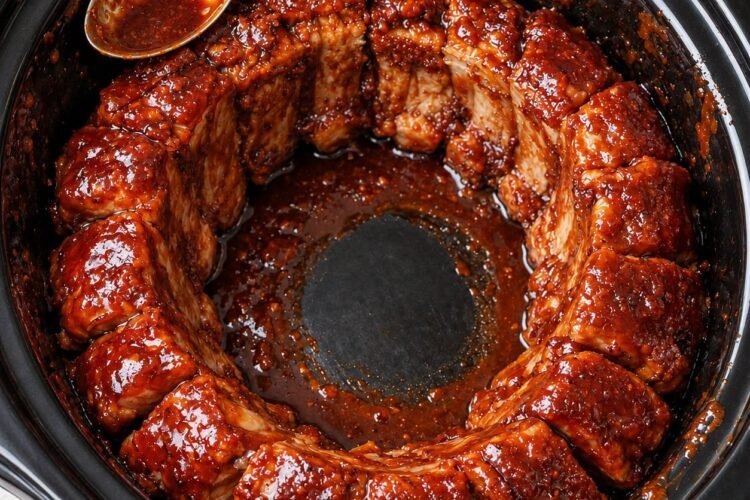
Slow Cooker Sticky Spareribs are tender pork ribs coated in a sweet, tangy barbecue glaze. A simple spice rub seasons the meat, the slow cooker does the gentle cooking, and a short turn under the broiler gives the sauce its sticky finish.
There is no need to stand over a grill. These ribs work for a weekend dinner, a casual gathering, or a meal you want mostly ready before the evening rush. Serve plenty of napkins and spoon a little extra glaze over the ribs just before bringing them to the table.
Why You’ll Love These Ribs
Spareribs have enough fat and connective tissue to become wonderfully tender with slow cooking. The covered cooker keeps them moist, while the final glaze gives the outside a concentrated barbecue flavor. Cutting the rack into sections makes it easier to arrange and lift out without breaking the meat apart.
Servings: 4–6
Prep time: 20 minutes
Cook time: 7–8 hours on LOW or 4–5 hours on HIGH
Finishing time: 10–15 minutes
Ingredients
For the ribs
- 3–4 pounds pork spareribs, preferably trimmed St. Louis style
- 1 tablespoon light brown sugar
- 2 teaspoons smoked paprika
- 1 teaspoon garlic powder
- 1 teaspoon onion powder
- 1 teaspoon fine salt
- 1/2 teaspoon black pepper
- 1/4 teaspoon cayenne pepper, optional
For the sticky sauce
- 1 cup ketchup
- 1/3 cup packed light brown sugar
- 1/4 cup apple cider vinegar
- 2 tablespoons reduced-sodium soy sauce
- 1 tablespoon Worcestershire sauce
- 2 garlic cloves, finely minced
- 1 teaspoon Dijon mustard
Ingredient Notes
St. Louis-style spareribs are trimmed into an even rectangle that fits neatly into a slow cooker. An untrimmed rack also works; remove excess loose fat and any flap that prevents the pieces sitting comfortably. Baby back ribs are smaller and may become tender sooner, so check them earlier.
The sauce is sweet enough to form a shiny glaze, with vinegar and mustard to balance it. Reduced-sodium soy sauce adds savory flavor. If you prefer a hotter sauce, increase the cayenne slightly or add hot sauce at the end.
How to Make Slow Cooker Sticky Spareribs
1. Prepare and season the ribs
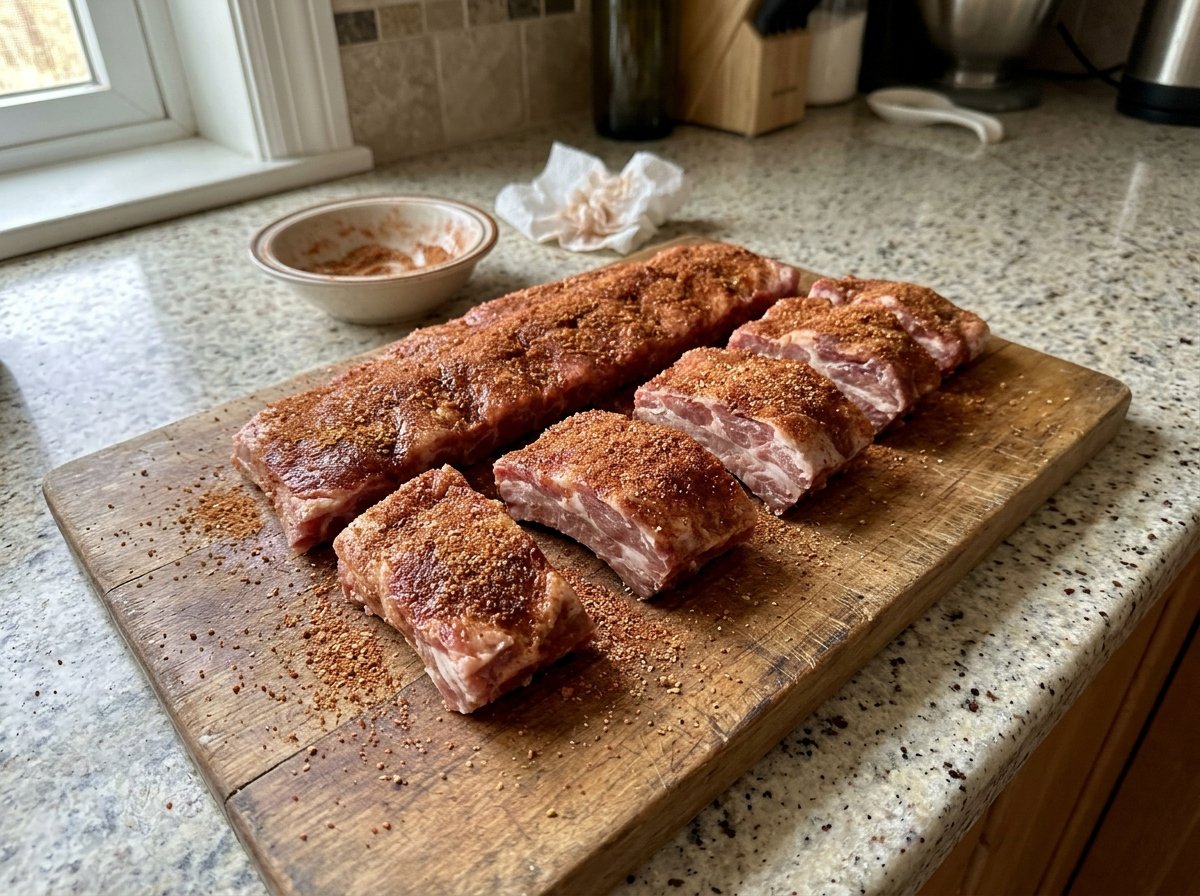
Pat the ribs dry. If there is a tough membrane on the bone side, loosen a corner with a blunt knife and pull it away using a paper towel for grip. Cut the rack into 3- or 4-rib sections. Mix the brown sugar, paprika, garlic powder, onion powder, salt, pepper, and optional cayenne. Rub over both sides.
2. Mix the barbecue sauce
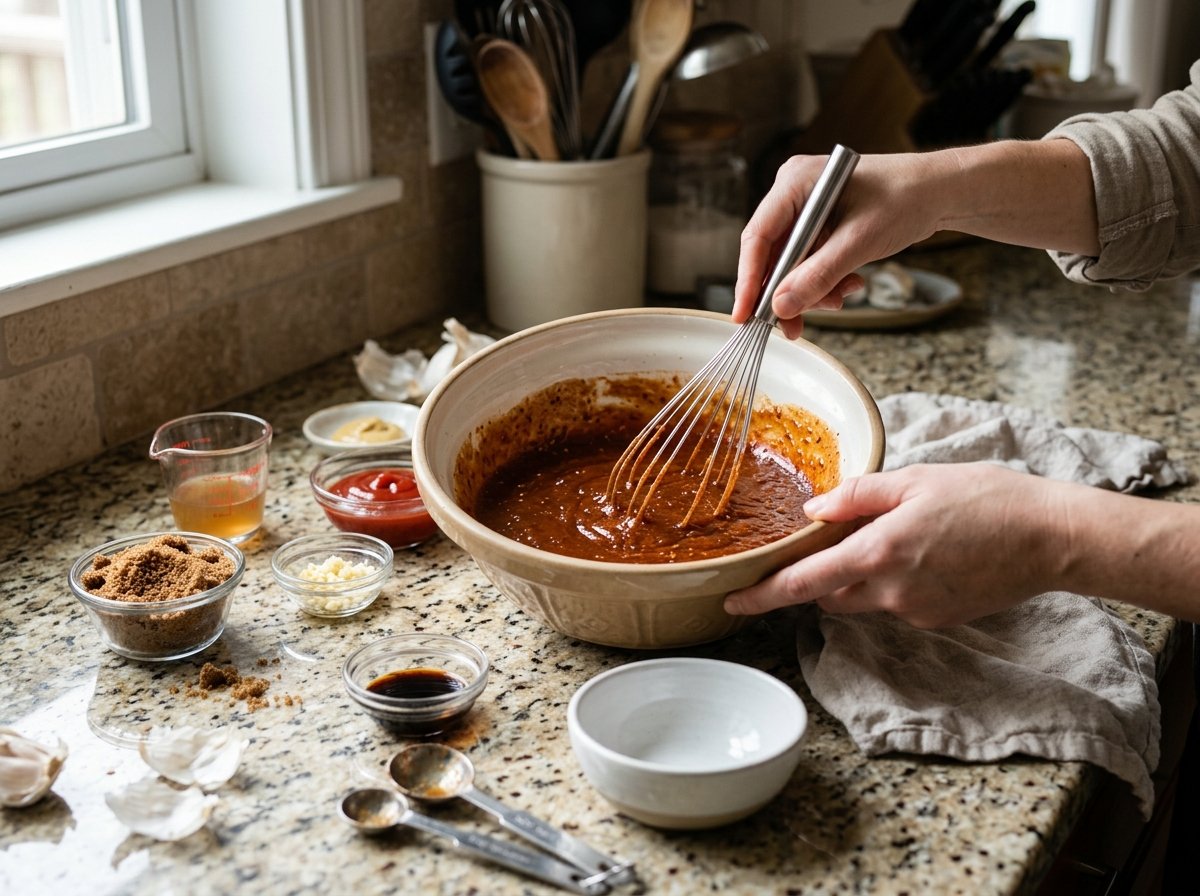
Whisk the ketchup, brown sugar, vinegar, soy sauce, Worcestershire sauce, garlic, and mustard in a bowl until combined. Measure out 1/2 cup into a separate covered container and refrigerate for finishing. Keep this reserved sauce away from utensils that touch the raw pork.
3. Slow cook until tender
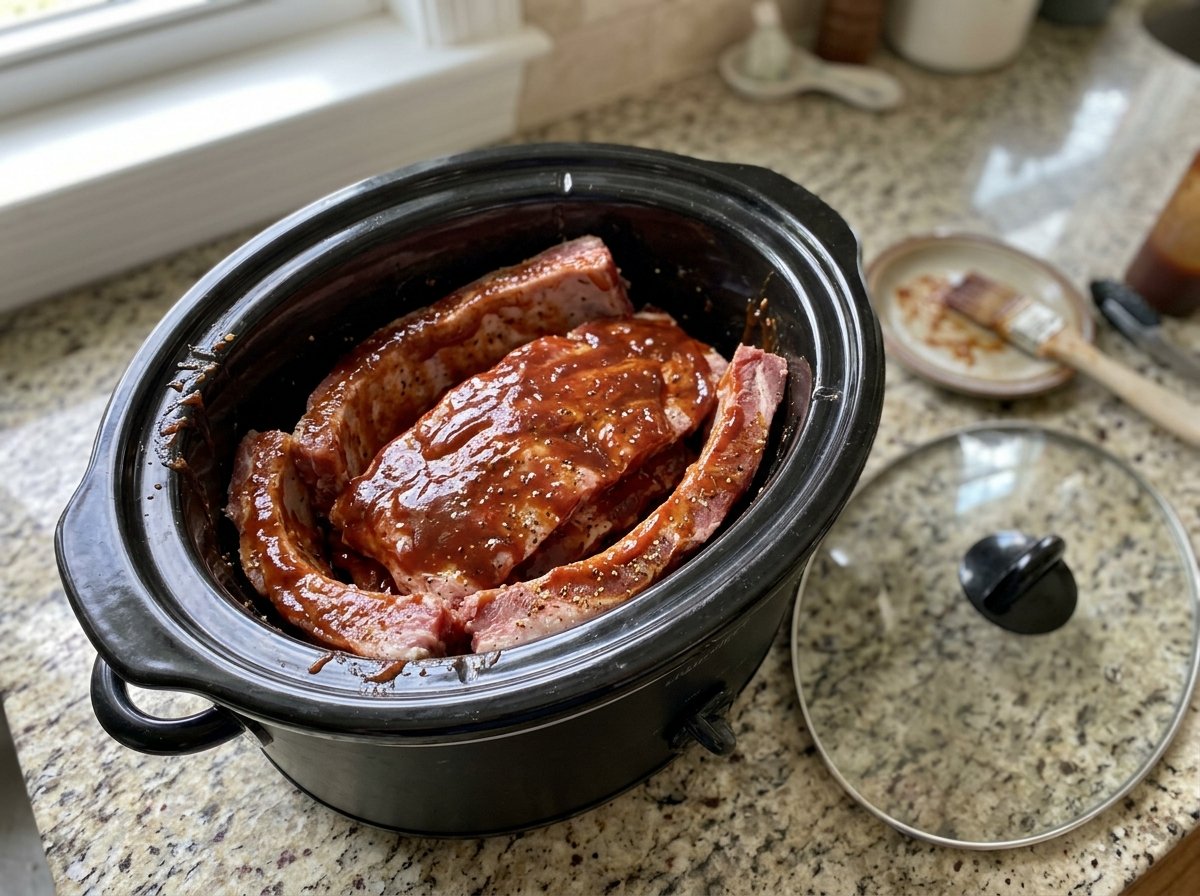
Arrange the ribs in a 6-quart slow cooker, curving the sections around the sides and overlapping loosely as needed. Spoon the remaining sauce over them. Cover and cook on LOW for 7–8 hours or HIGH for 4–5 hours, until the meat is tender and begins pulling back from the bones. Start checking at the shorter time. The meat should yield easily to a fork but still hold together for lifting.
4. Glaze and briefly broil
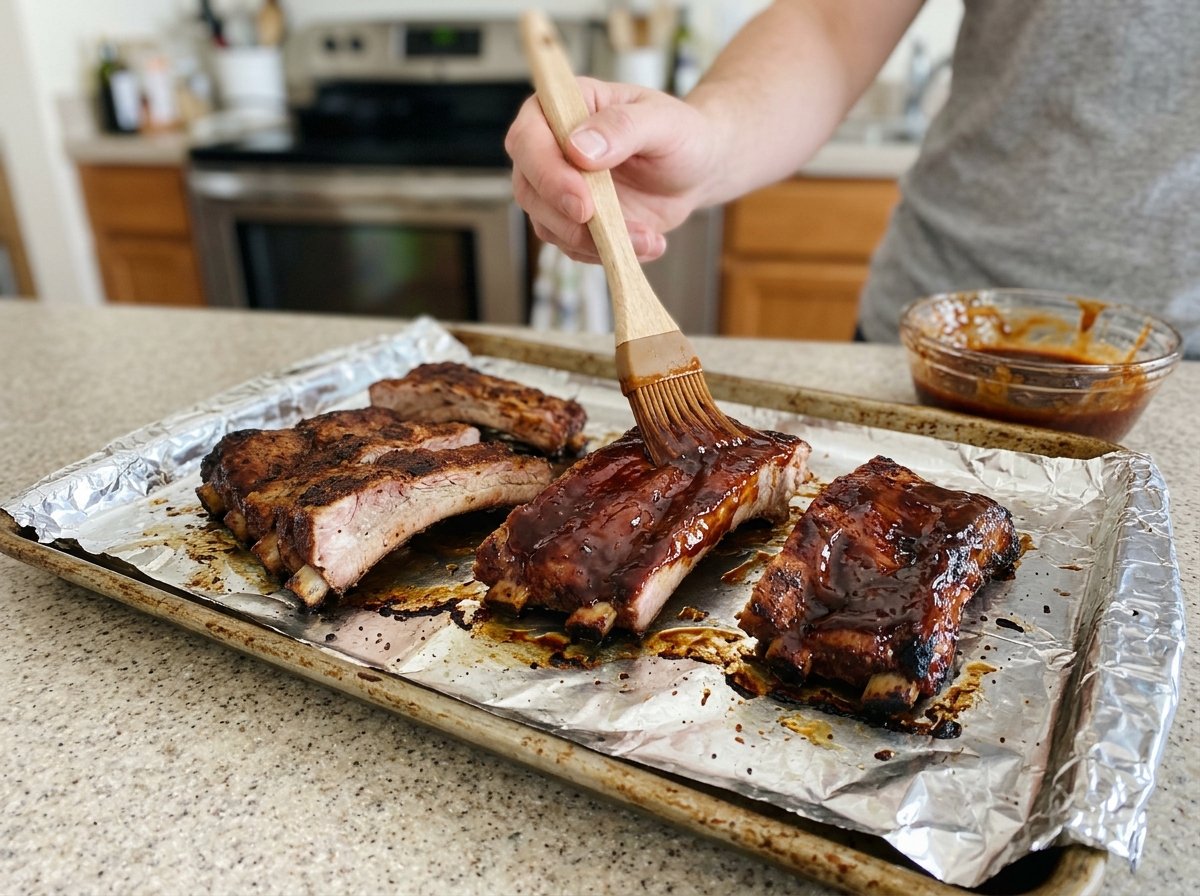
Heat the broiler and line a sturdy metal sheet pan with foil. Carefully transfer the ribs using a wide spatula and tongs. Brush with the reserved sauce. Broil about 6 inches from the heat for 3–5 minutes, watching constantly, until bubbling and sticky. Rotate the pan if needed. Let stand for 5 minutes, then cut between the bones and serve.
Tips for Sticky, Tender Ribs
- Use tenderness as the finish line. Ribs need more cooking than a lean pork chop to soften their connective tissue.
- Lift carefully. Support each section underneath so it does not fall apart.
- Watch the sugar. The glaze can change from caramelized to burnt quickly under a broiler.
- Use a metal pan. Do not put the slow cooker insert or an ordinary glass baking dish under the broiler.
- Do not add a lot of water. The pork releases liquid as it cooks, and extra water dilutes the sauce.
Can I Use the Cooking Liquid?
Yes. Pour it into a saucepan, skim off excess fat, and bring to a full boil. Simmer until reduced to a sauce that coats a spoon. Taste before adding any salt because reduction concentrates the seasoning. This makes a useful extra sauce for serving, while the clean reserved portion is convenient for glazing.
What to Serve With Spareribs
Coleslaw, corn on the cob, baked beans, and potato salad are classic partners. For a warm dinner, try mashed potatoes and green beans. A crisp cucumber salad is especially good against the rich pork and sweet glaze.
Make-Ahead and Leftovers
Mix the dry rub and sauce a day ahead. Keep the sauce refrigerated. You can season the ribs the night before and refrigerate them covered, then transfer to the cooker when ready.
Refrigerate leftovers within 2 hours in shallow covered containers and eat within 3–4 days. Reheat covered in a 300°F oven with a splash of water or sauce until hot throughout; uncover briefly at the end to refresh the glaze. For longer storage, freeze cooked ribs with some sauce for up to 3 months. Thaw in the refrigerator before reheating.
Frequently Asked Questions
Do the ribs need to be covered in sauce?
No. Coat the surfaces, but do not submerge them. The covered slow cooker creates a moist cooking environment.
Can I skip the broiler?
Yes. The ribs will still be tender and flavorful. Brush with sauce and serve, knowing the outside will be softer and less caramelized.
Can I cook frozen ribs?
Thaw them fully in the refrigerator before using the slow cooker. This also makes trimming and seasoning much easier.
Why are the ribs tough?
They usually need more time. Keep them covered and cook longer, checking periodically until a fork slips easily into the meat. If they are already falling apart, lift in smaller sections and shorten the cooking time next time.