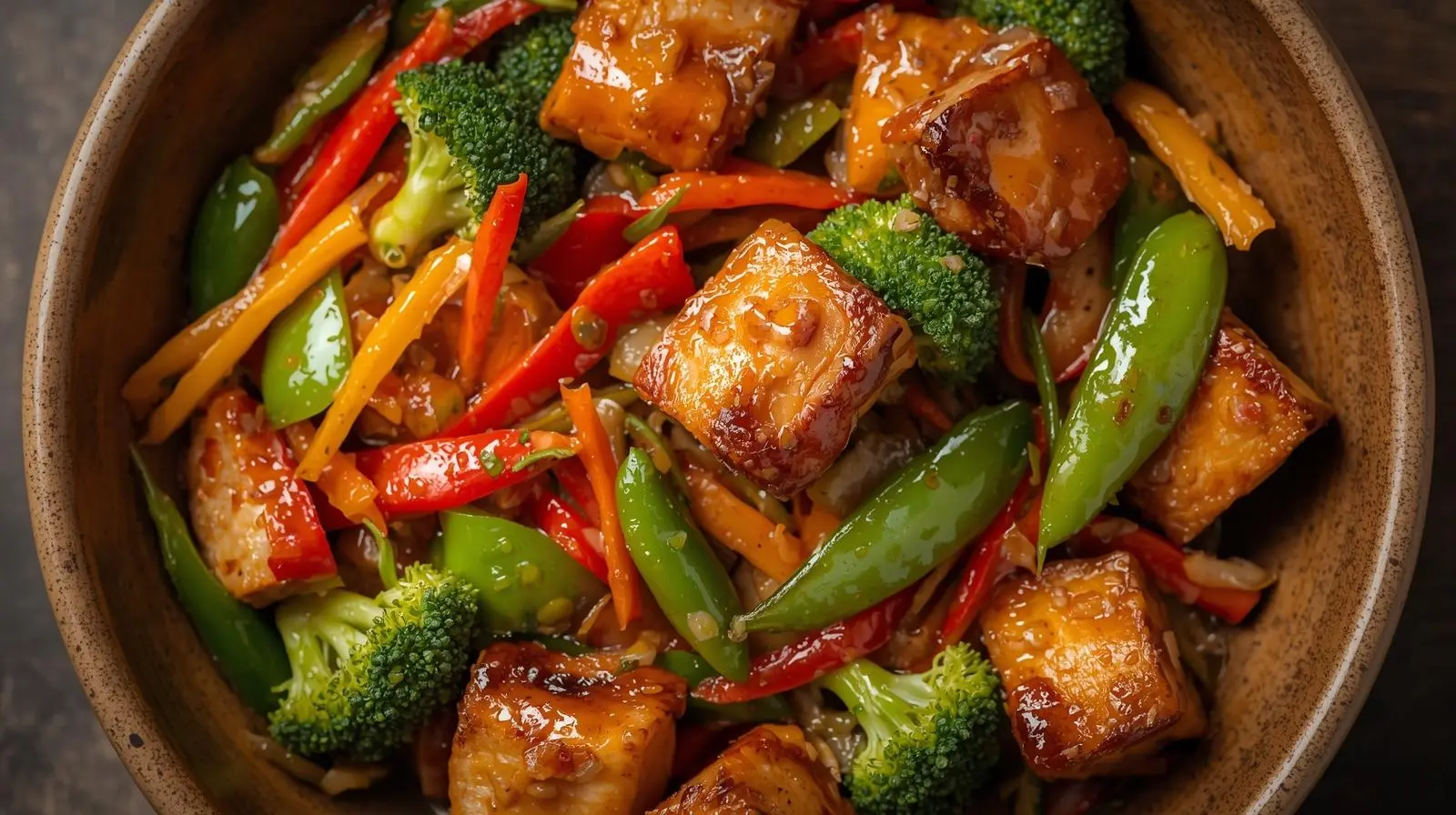
Vegetable Stir-Fry with Tofu
Looking for a fast, easy, and healthy meal for a busy day? A vegetable stir-fry with tofu is a great choice. It’s a tasty way to add more plant-based meals to your diet.
This dish is not only flavorful but also full of nutrients. Mixing colorful veggies with plant-based protein like tofu makes a meal that’s both filling and healthy.
Key Takeaways
- A vegetable stir-fry with tofu is a quick and easy meal option.
- Incorporating plant-based meals can improve overall health.
- Tofu is a versatile and nutritious protein source.
- Combining colorful vegetables adds variety and nutrients.
- This dish is highly customizable to suit your taste preferences.
Understanding Tofu: The Perfect Plant-Based Protein
Learning about tofu is crucial for cooking, especially in stir-fries. It’s a vegan protein made from soybean curd. For centuries, it has been a key ingredient in many dishes.
To enjoy tofu’s versatility, knowing what it is and how it’s made is important.
What is Tofu and How is it Made?
Tofu is made by curdling soy milk with a coagulant like calcium sulfate. The curds are then pressed into blocks of different firmness. This makes tofu great for absorbing flavors and keeping its texture.
Nutritional Profile of Tofu
Tofu is a top plant-based protein and is packed with iron, calcium, and more. A 3-ounce serving has about 9 grams of protein. The nutritional values can change based on the coagulant and tofu’s firmness.
| Nutrient | Amount per 3 oz serving |
|---|---|
| Protein | 9 grams |
| Iron | 3 mg |
| Calcium | 250 mg |
Why Tofu Works Well in Stir-Fry Dishes
Tofu’s neutral taste and ability to soak up flavors make it ideal for stir-fries. Its texture, when cooked right, adds a great feel to meals. Learning how to prepare and cook tofu can make your stir-fries even better.
Essential Ingredients for a Delicious Vegetable Stir-Fry
To make a fantastic vegetable stir-fry, start with the basics. A great stir-fry is more than just vegetables and tofu in a pan. It’s about mixing flavors, textures, and nutrients well. As a healthy alternative to meat, a vegetable stir-fry with tofu is a great meat substitute. It’s a protein-rich meal that’s both filling and good for you.
Selecting the Right Vegetables
The type of vegetables you pick is key. Choose a mix of colors for a wide range of vitamins and minerals. Bell peppers, broccoli, carrots, and snap peas are good choices. Mushrooms add a meaty texture and a rich flavor that goes well with tofu.
Aromatics and Seasonings
Garlic, ginger, and onions are the heart of your stir-fry’s flavor. Soy sauce, oyster sauce (if you like it), and sesame oil add depth. You can adjust the seasonings to fit your taste and dietary needs.
Oil and Sauce Components
The oil you use affects your stir-fry’s taste. Choose a high-heat oil like peanut or avocado oil. For the sauce, mix soy sauce, hoisin sauce, rice vinegar, and a sweetener like honey or maple syrup. This creates a balanced and tasty sauce.
Choosing the Right Type of Tofu for Stir-Frying
Choosing the right tofu for stir-frying can seem hard, but it’s key for great taste and texture. Tofu is a versatile ingredient that can make or break your stir-fry.
Extra-Firm vs. Firm Tofu
Extra-firm and firm tofu are top picks for stir-fries. Extra-firm tofu is dense and keeps its shape well, even with lots of stirring. Firm tofu is softer but still holds up and soaks up flavors nicely.
Silken and Soft Tofu Options
Silken and soft tofu are best for creamy textures, like in sauces or desserts. They don’t work well for stir-fries because they break apart easily. But, they’re great in blended sauces or soups that go with stir-fries.
Specialty and Flavored Tofu Products
There are specialty and flavored tofu products like smoked tofu or tofu in special sauces. They can bring unique tastes to your stir-fry. But, you might need to adjust cooking times or methods. For example, smoked tofu is best added late to keep its smoky taste.
Knowing about the different tofu types helps you choose the best one for your stir-fry. This way, you can make a meal that’s both tasty and fulfilling.
Preparing Your Tofu for Maximum Flavor Absorption
To get the most out of your tofu in a stir-fry, it’s crucial to prepare it properly. This involves a few key steps that will enhance the overall taste and texture of your dish.
Pressing Techniques to Remove Excess Water
Removing excess water from tofu is a key step. Excess moisture can prevent the tofu from absorbing flavors properly. It can also lead to a soggy texture.
To press your tofu, wrap it in a clean kitchen towel or paper towels. Then, place a heavy object, like a cast-iron skillet, on top. Let it sit for at least 20 minutes to allow the excess water to be pressed out.
You can also use a tofu press for this purpose. These presses apply even pressure and can be more effective than using a heavy object. By removing excess water, you’ll get a better texture and more efficient flavor absorption.
Marinating Methods for Flavorful Tofu
Marinating is another crucial step in preparing tofu for a flavorful stir-fry. A good marinade can infuse the tofu with rich, savory flavors. To marinate your tofu effectively, cut it into the desired shape and size after pressing, then soak it in your marinade of choice.
A simple marinade can be made using a mixture of soy sauce, garlic, ginger, and a bit of oil. Let the tofu marinate for at least 30 minutes. Longer times, such as a few hours or even overnight, will result in more intense flavors. Be sure to store the marinating tofu in the refrigerator to prevent bacterial growth.
Pre-Cooking Options: Baking, Frying, or Air-Frying
Pre-cooking your tofu before adding it to the stir-fry can also enhance its flavor and texture. There are several methods to pre-cook tofu, including baking, frying, and air-frying. Baking is a healthier option that allows for even cooking and browning. Simply place the marinated tofu on a baking sheet lined with parchment paper and bake in a preheated oven at 400°F (200°C) until golden brown.
Frying and air-frying can produce a crispy exterior, which adds texture contrast to your stir-fry. To fry, heat a sufficient amount of oil in a pan over medium-high heat and cook the tofu until it’s golden and crispy on all sides. For air-frying, use an air fryer at a similar temperature, shaking halfway through to ensure even cooking.
Cutting and Preparing Vegetables for Optimal Cooking
Cutting and preparing your vegetables right is key for a great stir-fry with tofu. The way you cut them changes how they look and cook. It also affects their texture.
Size and Shape Considerations
When cutting veggies, think about size and shape. Cutting them the same size helps them cook evenly. For instance, thin bell pepper strips cook fast, while bigger carrot pieces take longer.
Vegetable Cooking Times and Sequencing
Vegetables cook at different rates. Harder ones like broccoli and carrots need more time. Softer ones like bell peppers and snow peas cook faster. To cook them right, add them in order from hardest to softest.
Pre-Blanching Techniques for Harder Vegetables
For tough veggies, try pre-blanching. This means briefly boiling or steaming them until they’re slightly tender. It helps all your stir-fry veggies, especially with tofu, cook perfectly.
Creating the Perfect Stir-Fry Sauce
The secret to a great stir-fry is its sauce. It’s a mix of flavors that brings everything together. A good sauce can make your plant-based dishes more appealing and satisfying.
Basic Sauce Components and Ratios
A stir-fry sauce has a base, seasonings, thickening agents, and sometimes sweetener or acid. The base is often soy sauce, broth, or rice vinegar. Seasonings include garlic, ginger, and spices.
To get the right consistency, use cornstarch or flour as thickening agents. Start with a 2:1 ratio of base to thickening agent. But, adjust it to your taste and the ingredients you use.
Asian-Inspired Sauce Variations
For different stir-fry sauces, explore Asian cuisines. For example:
- Szechuan Sauce: Add Szechuan peppercorns, chili oil, and soy sauce for a spicy flavor.
- Thai Sauce: Mix fish sauce (or vegan alternative), lime juice, and chili flakes for a tangy sauce.
- Japanese Teriyaki: Combine soy sauce, sake (or dry sherry), mirin, and sugar for a sweet sauce.
Thickening Agents and Their Applications
Thickening agents are key for the right sauce consistency. Common ones are:
- Cornstarch: Mix with water or broth before adding to the sauce to prevent lumps.
- Flour: Use to make a roux with oil or butter for richness.
- Arrowroot: Works well at high temperatures, like cornstarch.
Knowing the basics, ratios, and variations of stir-fry sauces helps. You can make a sauce that perfectly complements your vegan protein and plant-based ingredients.
Step-by-Step Cooking Process for Tofu Vegetable Stir-Fry
Stir-frying is a quick and nutritious way to make a meal. Using soybean curd as a meat substitute makes it tasty and healthy. This guide will show you how to cook a tasty tofu vegetable stir-fry.
Preparing Your Wok or Pan
Before cooking, prepare your wok or pan well. Choose a wok or large skillet for even heat. Heat it over medium-high, then add oil to stop food from sticking. “A good stir-fry starts with a hot pan,” say many chefs.
The Correct Order of Ingredients
Adding ingredients in the right order is key. Start with garlic and ginger, then the soybean curd. Add vegetables last, starting with the longest-cooking ones. This way, everything cooks perfectly.
Proper Stir-Frying Techniques
Stir-frying means quick, constant movement. Use a spatula to stir and toss, so all ingredients are coated and cooked evenly. Keep the ingredients moving to avoid burning or sticking.
Timing and Temperature Control
Timing and temperature are crucial. Adjust the heat to avoid burning. Cook each ingredient just right, aiming for a dish ready in under 20 minutes. This makes stir-frying a quick, healthy meal choice.
By following these steps and techniques, you can make a delicious, healthy tofu vegetable stir-fry. Soybean curd adds protein and texture, making it great for vegetarians and vegans.
Troubleshooting Common Tofu Stir-Fry Problems
Tofu can be tricky to cook, especially in stir-fries with vegetables. It’s a popular meat substitute that needs some finesse. But with the right techniques, you can make a delicious meal.
Dealing with Soggy or Crumbling Tofu
Soggy or crumbling tofu can mess up a stir-fry. Use extra-firm tofu for stir-fries because it keeps its shape well. If your tofu is too soft, it might break apart. Pressing the tofu before cooking can help remove excess moisture.
| Tofu Type | Texture | Best Use |
|---|---|---|
| Extra-Firm | Dense, chewy | Stir-fries, grilling |
| Firm | Moderately dense | Pan-frying, baking |
| Soft/Silken | Soft, creamy | Blending, sauces |
Fixing Sauce Issues (Too Thin, Too Thick, Too Salty)
Sauce problems can affect your stir-fry’s flavor and texture. If the sauce is too thin, add a cornstarch and water slurry. For a thick sauce, a bit of water or broth can help. If it’s too salty, yogurt or milk can balance it out.
“The art of cooking is not just about following a recipe; it’s about understanding the ingredients and techniques that make a dish come together.”
Chef Jacques Pépin
Addressing Uneven Cooking of Vegetables
Unevenly cooked vegetables can be a problem. Cut all vegetables into similar sizes for even cooking. Also, add harder vegetables first and softer ones later.
- Cut vegetables into uniform sizes.
- Add harder vegetables first.
- Stir frequently to prevent burning.
By solving these common problems, you can improve your tofu stir-fry skills. This versatile ingredient will become a staple in your kitchen.
Health Benefits of Tofu and Vegetable Stir-Fry
A well-prepared tofu and vegetable stir-fry is not only tasty but also full of nutrients. It combines tofu’s protein with the vitamins and minerals in various vegetables. This makes it a healthy choice for your meals.
Protein and Nutrient Content
Tofu is a great source of protein, perfect for those who eat plants. Adding colorful vegetables makes the stir-fry a meal full of nutrients. For instance, broccoli is packed with vitamin C and fiber, while carrots are rich in vitamin A.
| Nutrient | Tofu (100g) | Broccoli (100g) | Carrots (100g) |
|---|---|---|---|
| Protein | 8g | 2.8g | 0.9g |
| Vitamin A | 0% | 10% | 200% |
| Vitamin C | 0% | 100% | 4% |
Cardiovascular and Weight Management Benefits
Using tofu and vegetables in your cooking can boost heart health and help with weight control. Tofu is low in bad fats and high in protein, which can lower cholesterol. The fiber in veggies like broccoli and carrots helps with weight and digestion.
Incorporating Stir-Fry into a Balanced Diet
To get the most health benefits from tofu and vegetable stir-fry, add it to your meals often. Serve it with brown rice or whole-grain noodles for a complete meal. Try different veggies and spices to keep your diet exciting and varied.
PrintVegetable Stir-Fry with Tofu
The Vegetable Stir-Fry with Tofu is a colorful, quick, and nutrient-packed dish ideal for busy days. Combining crisp vegetables with plant-based protein, this recipe offers a perfect balance of flavor, texture, and nutrition. Tofu’s versatility allows it to absorb savory sauces beautifully, creating a wholesome, satisfying meal that’s vegan, high-protein, and naturally gluten-free. It’s a go-to option for anyone looking to add more plant-based meals to their weekly routine.
- Prep Time: 15 minutes
- Cook Time: 15 minutes
- Total Time: 30 minutes
- Yield: 3–4 servings
- Method: Stir-Fry / Sauté
- Cuisine: Asian-Inspired / Fusion
- Diet: Vegan
Ingredients
For the Stir-Fry:
-
1 block (14 oz) extra-firm tofu, pressed and cubed
-
2 tbsp peanut or avocado oil (for high-heat cooking)
-
2 cloves garlic, minced
-
1 tbsp fresh ginger, minced
-
1 small onion, sliced
-
1 red bell pepper, sliced
-
1 cup broccoli florets
-
1 medium carrot, julienned
-
1 cup snap peas or snow peas
-
1 cup mushrooms, sliced
-
2 green onions, chopped (for garnish)
-
1 tbsp sesame seeds (optional garnish)
For the Stir-Fry Sauce:
-
3 tbsp soy sauce (or tamari for gluten-free)
-
1 tbsp hoisin sauce or oyster sauce (optional for flavor depth)
-
1 tbsp rice vinegar or lime juice
-
1 tsp sesame oil
-
1 tbsp honey or maple syrup
-
1 tbsp cornstarch + 2 tbsp water (to thicken)
Optional Base:
- 2 cups cooked brown rice, jasmine rice, or whole-grain noodles
Instructions
-
Prepare the Tofu:
Press tofu for 15–20 minutes to remove moisture. Cut into cubes. -
Pre-Cook (Optional):
For firmer texture, bake at 400°F (200°C) for 20 minutes or pan-fry until golden on all sides. -
Make the Sauce:
In a small bowl, whisk together soy sauce, hoisin, rice vinegar, sesame oil, sweetener, and cornstarch slurry. Set aside. -
Cook the Vegetables:
Heat oil in a wok or large pan over medium-high heat. Add garlic, ginger, and onions; stir-fry for 30 seconds. Add carrots, broccoli, and bell peppers; cook for 2–3 minutes. Then add snap peas and mushrooms; stir-fry until crisp-tender. -
Add the Tofu:
Stir in the cooked tofu and pour in the sauce. Toss well to coat evenly and cook 2–3 more minutes, until the sauce thickens slightly. -
Serve:
-
Serve hot over rice or noodles. Garnish with green onions and sesame seeds.
Notes
-
Use extra-firm tofu for the best texture; silken tofu will break apart.
-
Add chili flakes, Szechuan peppercorns, or sriracha for a spicy kick.
-
Substitute tofu with tempeh, seitan, or edamame for variety.
-
To make the sauce vegan, skip oyster sauce and use hoisin or extra soy sauce.
-
For extra crunch, toss in roasted cashews or peanuts before serving.
-
Store leftovers up to 3 days; reheat in a skillet for best texture.
Conclusion: Mastering the Art of Tofu Vegetable Stir-Fry
You now know how to make a tasty and healthy tofu vegetable stir-fry. Tofu is a great plant-based, vegan protein. It makes your dish both nutritious and delicious.
Try different vegetables, seasonings, and cooking ways to make your own stir-fry. Pick the right tofu and prepare it well to get the best flavor.
Keep practicing and don’t be shy to try new things. Soon, you’ll be great at making many plant-based dishes. They’ll be perfect for any time of day.
FAQ
What is the best type of tofu to use for a vegetable stir-fry?
Extra-firm tofu is the top pick for stir-fries. It keeps its shape well and has a meaty texture. This texture pairs well with many vegetables.
How do I press tofu to remove excess water?
Wrap the tofu in a clean towel or paper towels. Then, place a heavy object, like a cast-iron skillet, on top. Let it sit for 15-20 minutes to drain excess moisture.
Can I use silken tofu in a stir-fry?
Silken tofu isn’t ideal for stir-fries. It’s too soft and can break apart when cooked. It’s better for soups or sauces.
How do I marinate tofu for maximum flavor?
Cut the tofu into small cubes and soak it in your favorite seasonings. Use soy sauce, garlic, and ginger. Marinate for at least 30 minutes, or overnight in the fridge.
What are some common mistakes to avoid when cooking a tofu stir-fry?
Avoid overcooking the tofu and not prepping the veggies right. Also, use the right oil for high heat. Stir-fry quickly to keep the ingredients’ texture and flavor.
Can I make a vegan stir-fry sauce?
Yes, you can make a vegan stir-fry sauce. Mix soy sauce, rice vinegar, and plant-based oils in a bowl. Whisk until smooth.
How do I thicken a stir-fry sauce?
Use cornstarch, flour, or tapioca starch to thicken the sauce. Mix the thickener with a bit of water or broth first. This prevents lumps.
What are some healthy benefits of eating tofu and vegetable stir-fries?
Tofu and vegetable stir-fries are packed with protein, fiber, and vitamins. They’re a nutritious meal that can aid in weight management and heart health.