
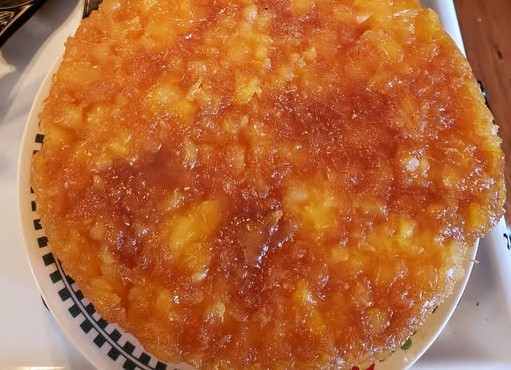
There is a legendary, amber-hued magic in a dessert that transforms a simple box of cake mix and a few pantry staples into a succulent, caramel-crowned masterpiece right in your seasoned skillet. This Skillet Pineapple Upside Down Cake is a “homestyle-hero” favorite, known for its remarkably yielding crumb and a glossy, fruit-packed topping that ensures every bite is a melt-in-your-mouth experience of pure, nostalgic comfort.
This method is a favorite for those who want “bakery-quality” results with absolutely zero complex equipment or cleanup. It captures the essence of a traditional farmhouse kitchen—offering a satisfyingly dense spring and a nostalgic, roasted-pineapple aroma—providing a reliable, effortless technique that proves the most unforgettable treats are often the result of beautiful simplicity and the heat of an iron skillet.
This recipe matters because it honors the beauty of the “cast-iron caramelization” technique. It saves you from the labor of multi-bowl baking by utilizing a straightforward “melt-dump-and-bake” method, providing a reliable, family-friendly centerpiece that feels like a professional-grade indulgence.
Ingredients
1 box Pineapple cake mix
1/2 stick Butter
Brown sugar, enough to cover the bottom of the skillet
1 can Crushed pineapple or pineapple slices (juice reserved)
Pineapple juice (used in place of water for the cake mix)
Eggs and oil as required by the cake mix box
Instructions
Preheat your oven to 350°F.
Place the 1/2 stick of butter in your iron skillet and melt it completely.
Dump brown sugar into the skillet over the melted butter until it evenly covers the entire bottom.
Spread your crushed pineapple or arrange your pineapple slices in a single layer over the brown sugar.
In a separate bowl, prepare the pineapple cake mix following the box instructions, but substitute the reserved pineapple juice for the water required.
Pour the cake batter carefully over the pineapple layer in the skillet.
Bake at 350°F until the cake is done and a toothpick comes out clean.
Allow the skillet to cool for just a few minutes so the caramel sets slightly.
Place a large plate over the skillet and carefully flip it to release the cake.
Serve warm for the ultimate melt-in-your-mouth experience of golden, tropical magic.
Why This Recipe Works
Cast-Iron Caramelization: The iron skillet retains heat perfectly, allowing the butter and brown sugar to fuse into a professional-grade caramel that deeply infuses the fruit.
Juice Substitution: Using pineapple juice instead of water in the cake mix creates a legendary, intensified flavor profile and a more succulent crumb.
Steam-Infused Topping: Baking the cake on top of the fruit traps moisture, resulting in a professional-grade, moist interior that remains soft for days.
One-Pan Simplicity: Melting the butter and building the “topping” directly in the skillet saves time and creates a rustic, heritage-style presentation.
Tips for Best Results
Use a seasoned skillet: A well-seasoned iron skillet is the secret to a professional-grade release when you flip the cake.
Don’t wait too long to flip: Flipping the cake while it is still warm ensures the caramel remains fluid enough to release from the pan perfectly.
Check for doneness: Because cast iron holds heat, watch the cake closely toward the end of the baking time to ensure a professional-grade, moist finish.
Variations & Substitutions
Fruit Swaps: While pineapple is the classic, you can try thinly sliced peaches or apples for a different seasonal profile.
Cherry Garnish: If using slices, place a maraschino cherry in the center of each ring for a professional-looking, vibrant pop of color.
Nutty Crunch: Sprinkle a handful of chopped pecans over the brown sugar layer before adding the pineapple for a more professional-grade, “gastropub” texture.
Frequently Asked Questions
How should I store this cake?
Store it in an airtight container in the refrigerator for up to three days; simply warm a slice to restore its legendary, soft texture.
Can I use a regular cake pan?
You can, but you will miss the professional-grade caramelization and crisp edges provided by the cast iron.
Why did my cake stick to the skillet?
This usually happens if the skillet wasn’t well-seasoned or if you waited until the cake was completely cold before flipping.
Can I use fresh pineapple?
Yes, but you may need to add a splash of store-bought pineapple juice to the cake mix to maintain the succulent moisture level.
There is a simple, savory joy in a cake that looks like a project but comes together with almost zero stress. Skillet Pineapple Upside Down Cake is a reminder that the most legendary traditions are often the simplest. We hope this golden, tropical classic becomes a favorite highlight for your next family gathering.