
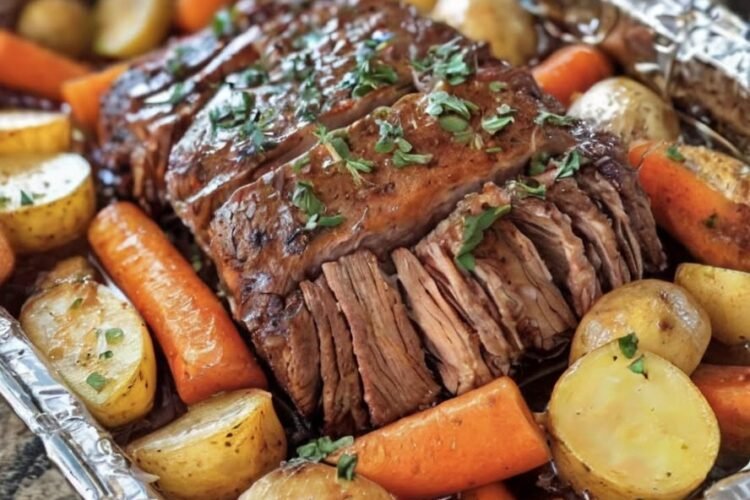
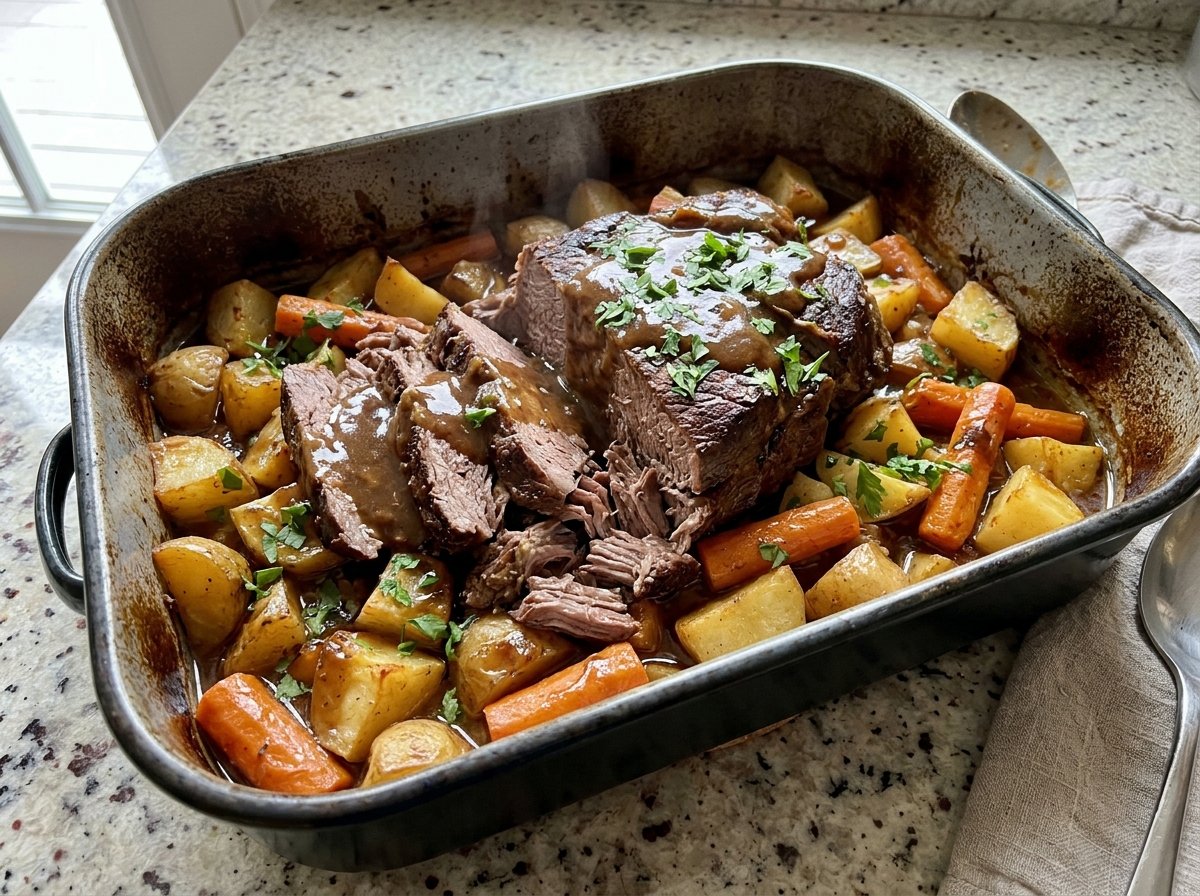
Baked 3 Packet Pot Roast uses a familiar trio of seasoning mixes to turn a chuck roast into a tender oven dinner with plenty of gravy. Ranch seasoning, Italian dressing mix, and brown gravy mix give the braising liquid its savory flavor. Potatoes and carrots join the pan later so they soften without disappearing during the long bake.
This is a covered, low-temperature roast rather than a dry roast cooked in an open pan. A snug lid or tightly sealed foil keeps the liquid around the beef while the connective tissue softens. When the meat yields easily to a fork, it is ready to rest and serve.
Recipe at a glance
- Servings: 6–8
- Prep: 15 minutes
- Searing: 8–10 minutes
- Bake: about 3 1/2–4 1/2 hours
- Rest: 15 minutes
- Oven: 300°F (150°C)
Ingredients
- 1 boneless beef chuck roast, 3–4 pounds (1.36–1.8 kg)
- 1 tablespoon neutral oil
- 1/2 teaspoon black pepper
- 1 packet (about 1 ounce / 28 g) ranch seasoning mix
- 1 packet (about 0.6–0.7 ounce / 17–20 g) dry Italian dressing mix
- 1 packet (about 0.87–1 ounce / 25–28 g) brown gravy mix
- 2 cups (480 ml) water
- 1 large onion, cut into thick wedges
- 2 pounds (900 g) small yellow potatoes, halved
- 1 pound (450 g) carrots, cut into 2-inch pieces
- 1 tablespoon cornstarch mixed with 1 tablespoon cold water, optional
- Chopped parsley, optional
What the three packets do
The ranch mix brings herbs and tangy seasoning, the Italian mix adds another layer of herbs and aromatics, and the gravy packet helps season and thicken the cooking liquid. Brands differ in size, salt, and starch content, so start with the listed water and adjust the finished gravy after cooking.
No extra salt is added to the roast because the packets already contain plenty. Water is a useful choice here instead of salty broth. Choose lower-sodium packet options when available if you prefer a gentler seasoning level.
Chuck is well suited to this method. A very lean roast may turn dry before it becomes easy to pull apart. Trim large hard fat deposits but leave some marbling in the meat.
How to make Baked 3 Packet Pot Roast
Step 1: Sear the chuck roast
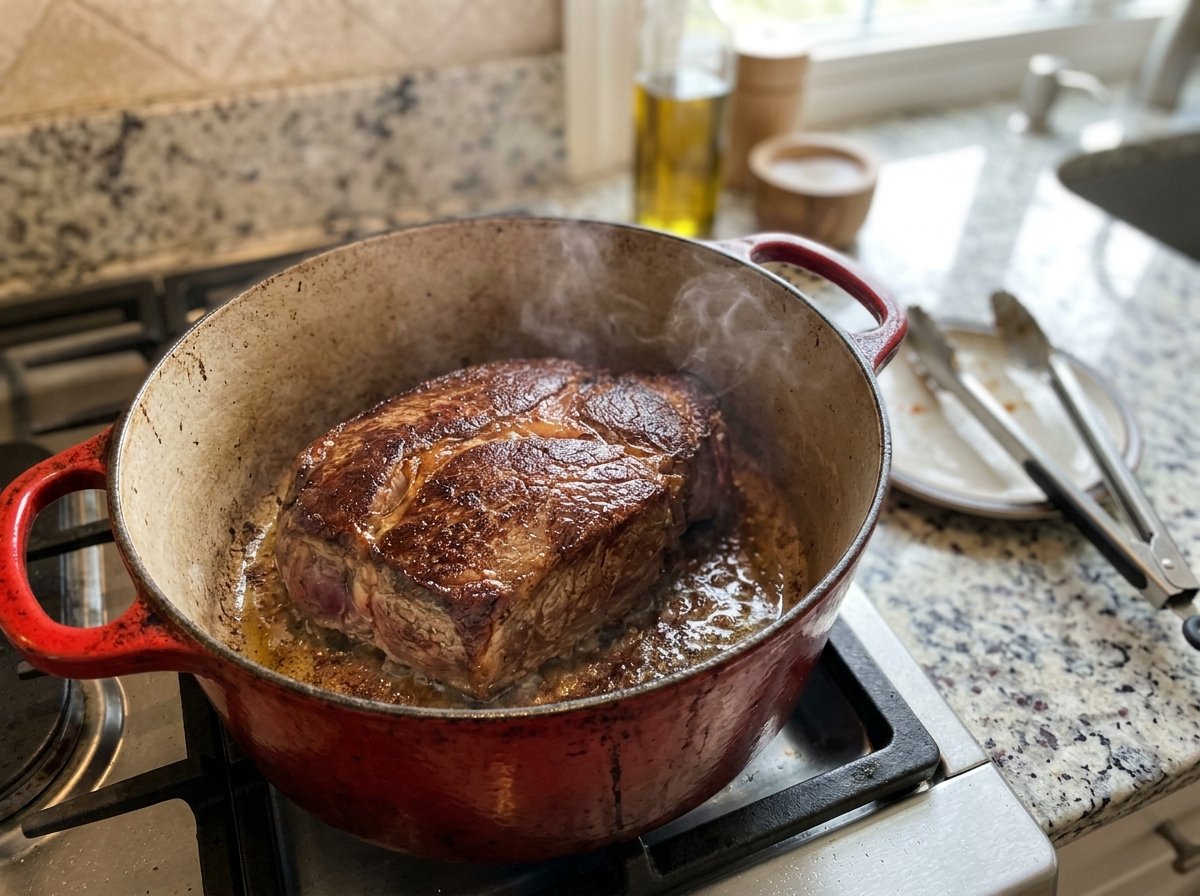
Heat the oven to 300°F (150°C). Pat the roast dry and season with black pepper. Heat the oil in a large Dutch oven over medium-high heat. Sear the beef for 3–4 minutes per broad side, then briefly brown the edges if practical.
Transfer the roast to a plate while you arrange the onions in the pot. Searing adds flavor, though it does not seal juices inside the meat. Continue directly with the braise rather than refrigerating partially cooked beef.
Step 2: Mix the packets and start the braise
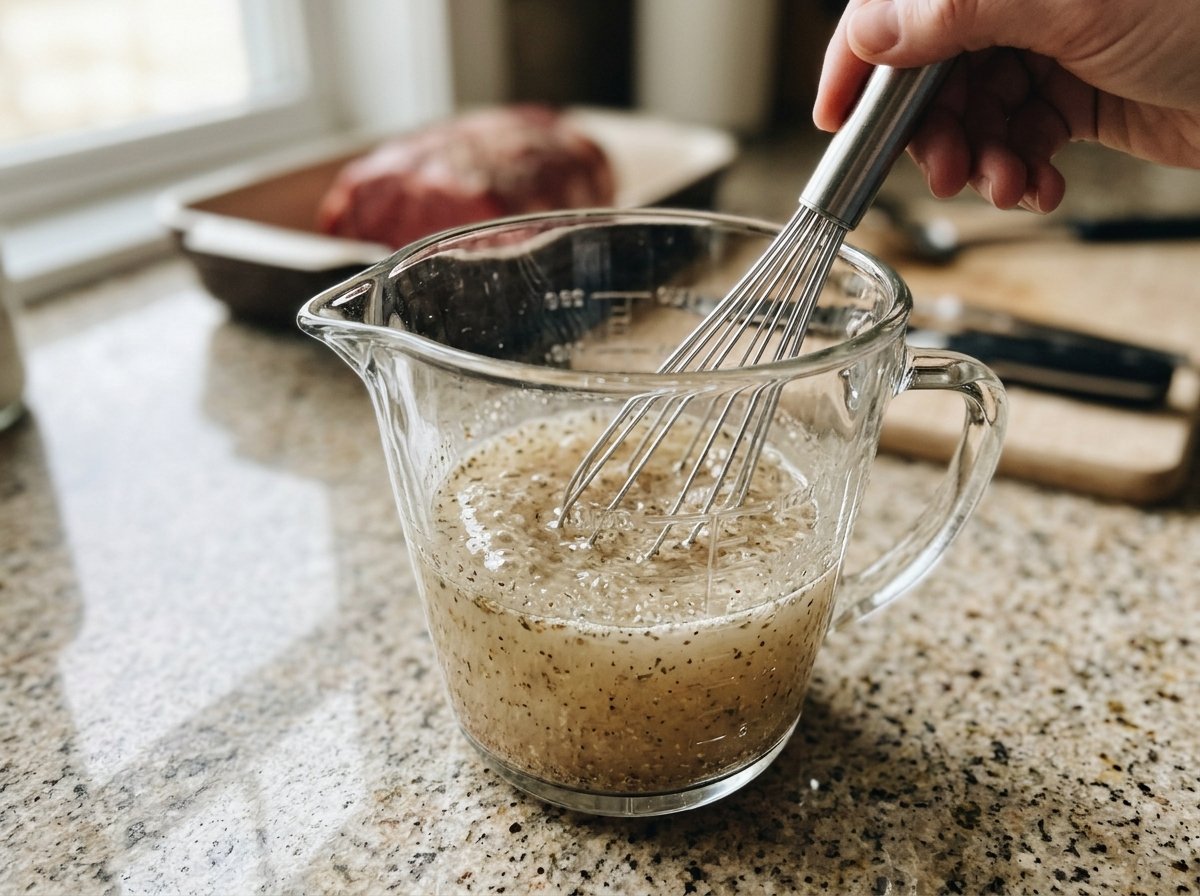
Whisk all three seasoning packets with the 2 cups water until dispersed. Return the roast to the Dutch oven over the onions and pour the mixture around it. The liquid does not need to cover the roast completely.
Bring to a gentle simmer on the stove, cover with a snug lid, and transfer to the oven. Bake for 2 hours. If using a roasting pan instead, transfer the seared beef and onions to it, add the hot liquid, and seal tightly with a double layer of foil.
Step 3: Add the vegetables and finish cooking
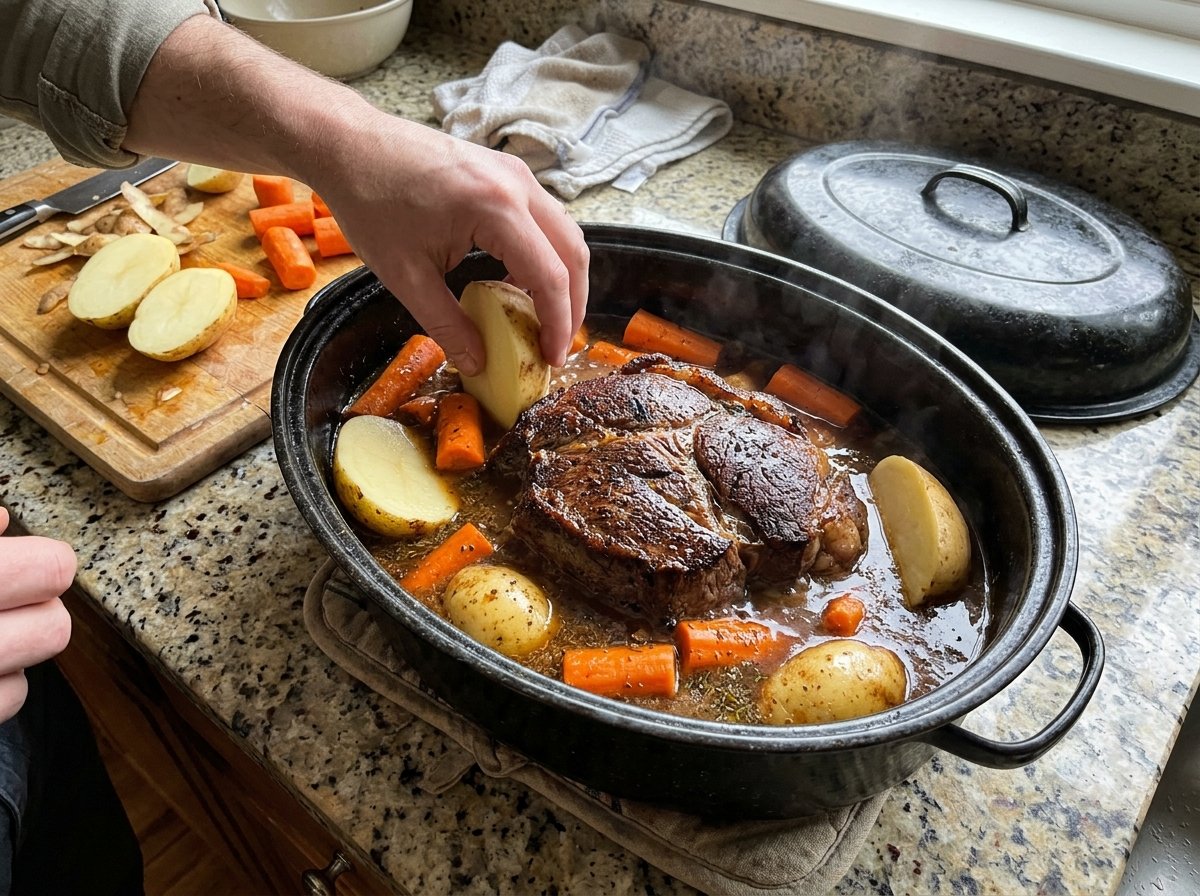
After 2 hours, carefully uncover and add the potato halves and carrot pieces around the beef, turning them in the liquid. If the pan looks nearly dry, add a little hot water. Cover tightly again and bake for another 1 1/2–2 1/2 hours.
Begin checking at the earlier end. The meat should yield readily to a fork and the vegetables should be tender. If the vegetables finish first, lift them out and keep warm while the beef continues covered. Chuck roast often becomes pull-apart tender around 195–205°F, but tenderness is the deciding test.
Step 4: Rest, finish the gravy, and serve
Move the roast and vegetables to a warm platter. Rest the meat for 15 minutes. Skim excess fat from the pan liquid. Simmer the liquid on the stove to reduce it slightly, or whisk in a little cornstarch slurry and simmer until it reaches the thickness you like.
Taste before adding any salt. If the gravy is too strongly seasoned, loosen it with hot water rather than reducing it further. Slice the beef across the grain where it holds together, or gently pull it into serving pieces. Spoon over the gravy and add parsley if using.
Tips for a tender roast
- Keep the cover tight. Moisture loss can leave a dry pan and overly concentrated sauce.
- Use large vegetable pieces. Small pieces can break down before the roast is tender.
- Check liquid when adding vegetables. Add hot water only if needed.
- Allow more time for a firm roast. A cooked-through roast can still need longer to soften.
- Rest before slicing. It also gives you time to finish the gravy.
Serving ideas and variations
The potatoes and carrots make this a complete main dish. Add steamed green beans or a salad for a fresher side, and bread if you want something for the gravy. Mushrooms can join the vegetables if you enjoy them.
For an easier-to-portion beef dinner with a similar gravy feel, try No Peek Beef Tips. Both recipes suit a relaxed afternoon when the oven can work slowly.
Make-ahead and leftovers
You can cut the vegetables and measure the seasoning mix ahead, storing the vegetables chilled. Sear and braise when ready. For a fully cooked make-ahead meal, cool the beef and gravy promptly in shallow containers rather than refrigerating a large hot Dutch oven.
Refrigerate within 2 hours and use within 3–4 days. Reheat covered with some gravy until the center reaches 165°F. Bring reheated gravy to a boil and stir as needed. Freeze cooled beef and gravy for up to 2–3 months for best quality; potatoes can become softer after thawing.
Frequently asked questions
Can I skip searing?
Yes, though the gravy will have less browned flavor. Place the raw roast over the onions, add the seasoning liquid, cover, and follow the oven method, checking tenderness rather than relying only on time.
Why is the roast tough?
Chuck usually needs more time in a moist covered pan. Check the liquid, reseal, and continue cooking until it yields easily.
Can I use pork instead?
This recipe is written for beef chuck. Pork loin and pork shoulder have different textures and timing, so use a recipe designed for that cut.
Why is my gravy salty?
Packet brands differ, and too much evaporation concentrates their seasoning. Use water, avoid added salt, and keep the pan covered.