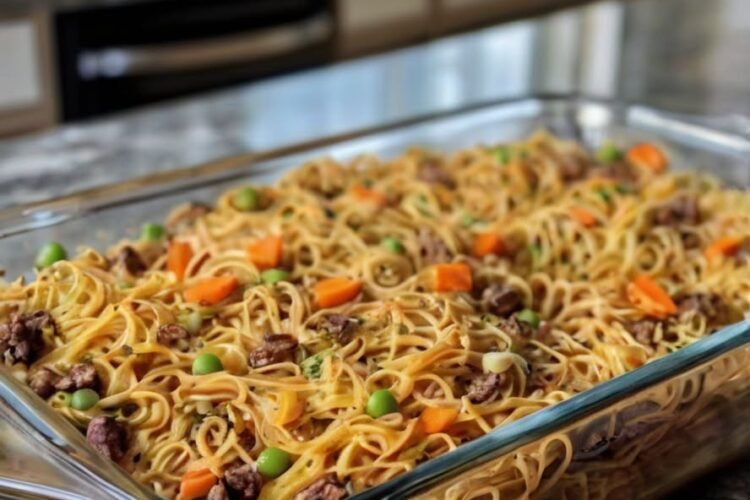
Ground Beef Chow Mein Casserole brings thin noodles, savory beef, and colorful vegetables together in a family-style oven dish. A light soy-and-garlic sauce coats the noodles, while carrots, peas, and cabbage add sweetness and texture. It is a convenient way to turn a skillet meal into a casserole that can be portioned at the table.
This is a home-style baked noodle version, with tender noodles and a few lightly crisp edges. The noodles and beef cook before assembly, so the oven stage is mainly for heating everything together and letting the sauce settle through the dish.
Recipe at a glance
- Servings: 6
- Prep: 15 minutes
- Stovetop: about 20 minutes
- Bake: 20–25 minutes
- Total: about 1 hour
- Oven: 375°F (190°C)
Ingredients
- 10 ounces (285 g) dry thin chow mein or Chinese-style wheat noodles
- 1 tablespoon neutral oil, plus more for the dish
- 1 pound (450 g) ground beef
- 1 medium onion, finely chopped
- 2 medium carrots, diced small
- 3 cups (about 200 g) finely shredded green cabbage
- 2 garlic cloves, minced
- 1 teaspoon grated fresh ginger
- 1 cup (140 g) frozen peas
- 1 cup (240 ml) low-sodium beef broth
- 3 tablespoons reduced-sodium soy sauce
- 1 tablespoon oyster sauce
- 2 teaspoons cornstarch
- 1 teaspoon toasted sesame oil
- 1/4 teaspoon black pepper
- 2 green onions, sliced, for serving
Ingredient notes
Use dry noodles intended to be boiled, rather than the ready-to-eat crunchy noodles sold as a topping. Thin spaghetti can work in a pinch, though the texture will be different. Follow the noodle package because thickness and cooking times vary widely.
Cut the carrots small so they soften during their short skillet cooking. Finely shredded cabbage blends between the noodles more easily than thick pieces. Frozen peas can go straight into the filling without thawing.
Soy sauce and oyster sauce provide most of the salt. Low-sodium broth helps keep the finished dish balanced. Oyster sauce contains shellfish unless specifically labeled otherwise; a mushroom-based alternative can be used if it suits your needs. Check noodles and sauces for allergens when cooking for guests.
How to make Ground Beef Chow Mein Casserole
Step 1: Cook the noodles
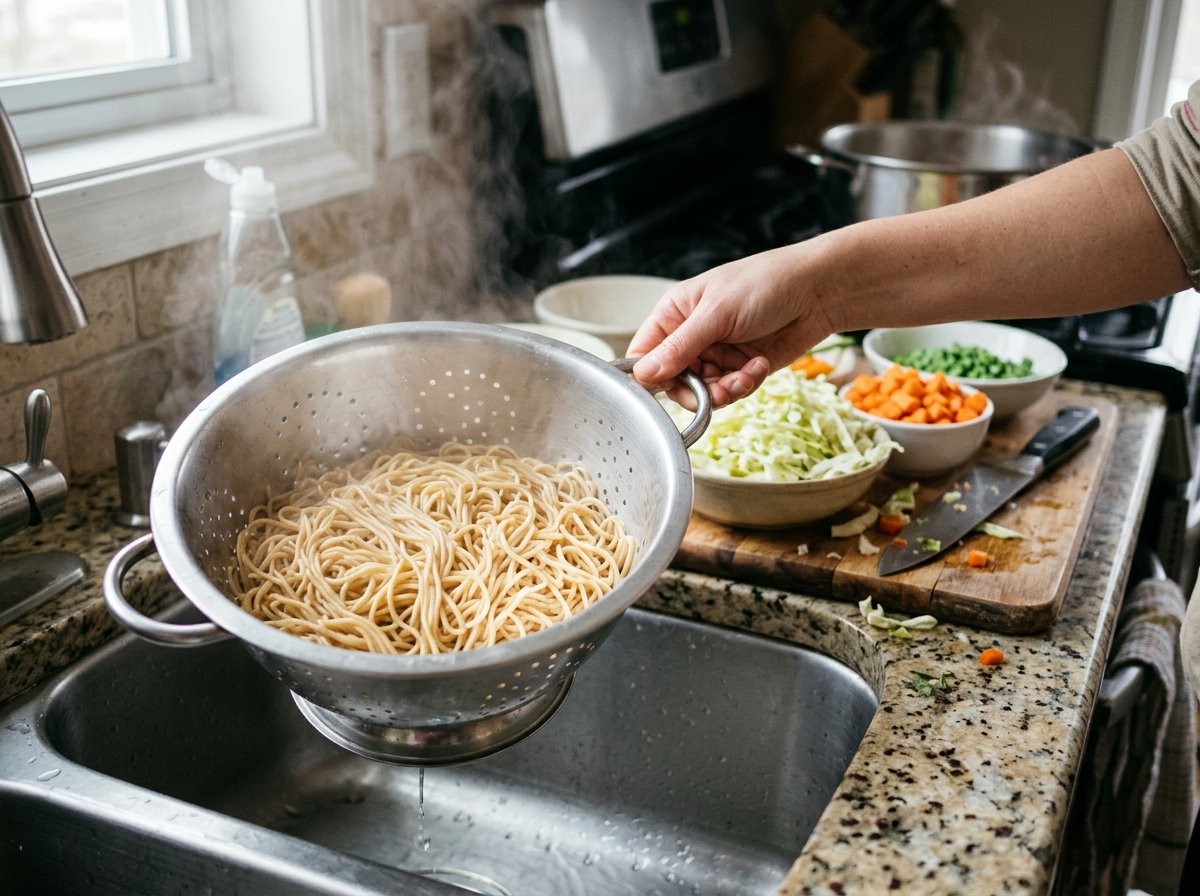
Heat the oven to 375°F (190°C). Lightly oil a 9-by-13-inch baking dish. Bring a pot of water to a boil and cook the noodles for about 1 minute less than the package’s suggested time. They should bend easily but retain a little bite.
Drain thoroughly. If the package calls for rinsing, follow that guidance; otherwise drain and loosen gently with tongs. Do not leave the noodles sitting in water while you prepare the filling.
Step 2: Brown the beef and soften the vegetables
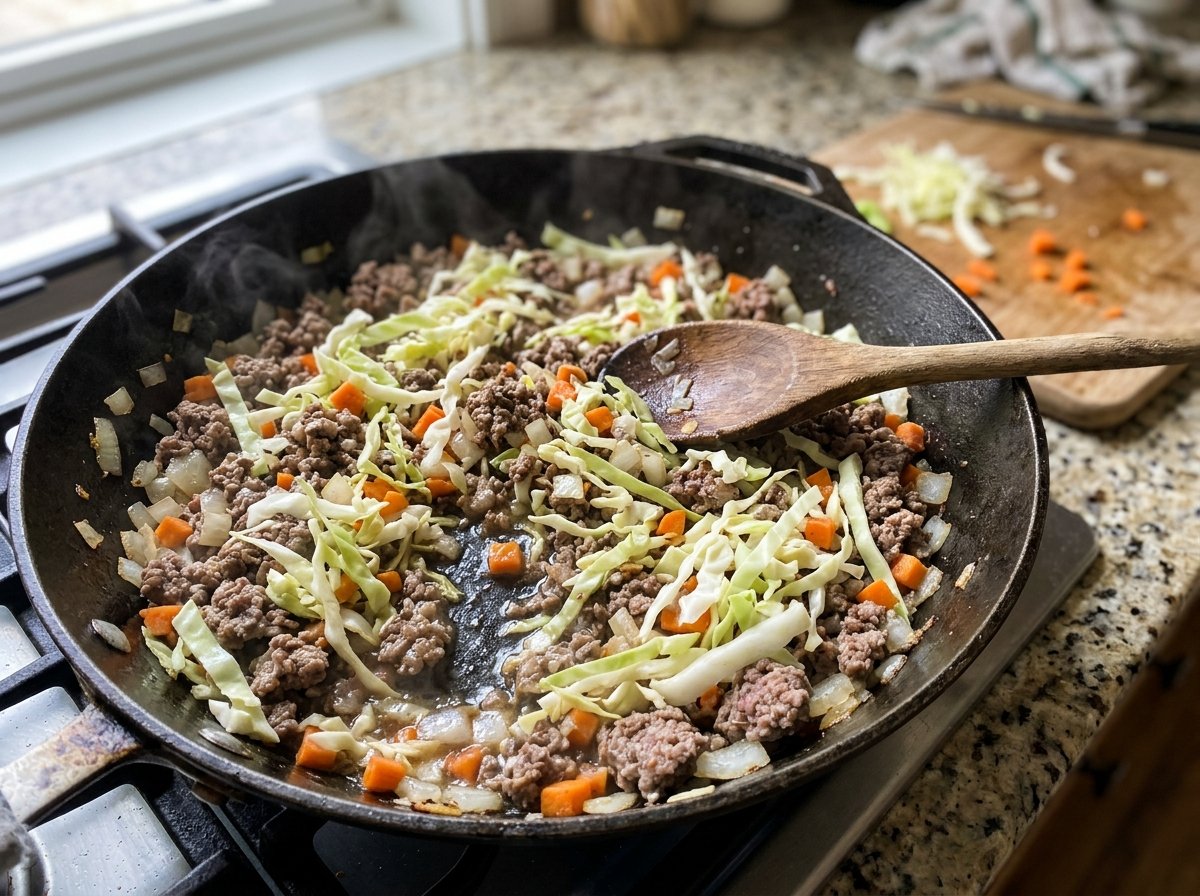
Heat the oil in a large skillet over medium-high heat. Add the beef and onion and cook for 7–9 minutes, breaking the meat into small crumbles, until the beef reaches 160°F. Drain large amounts of excess fat.
Add the carrots and cabbage. Cook for 5–7 minutes, stirring, until the cabbage wilts and the carrot begins to soften. Add the garlic and ginger for the final minute, then stir in the peas.
Step 3: Add the sauce and combine
Whisk the cool broth, soy sauce, oyster sauce, cornstarch, sesame oil, and pepper in a bowl. Stir it into the beef and vegetables. Bring to a gentle simmer and cook for 1–2 minutes, until the sauce looks lightly glossy rather than watery.
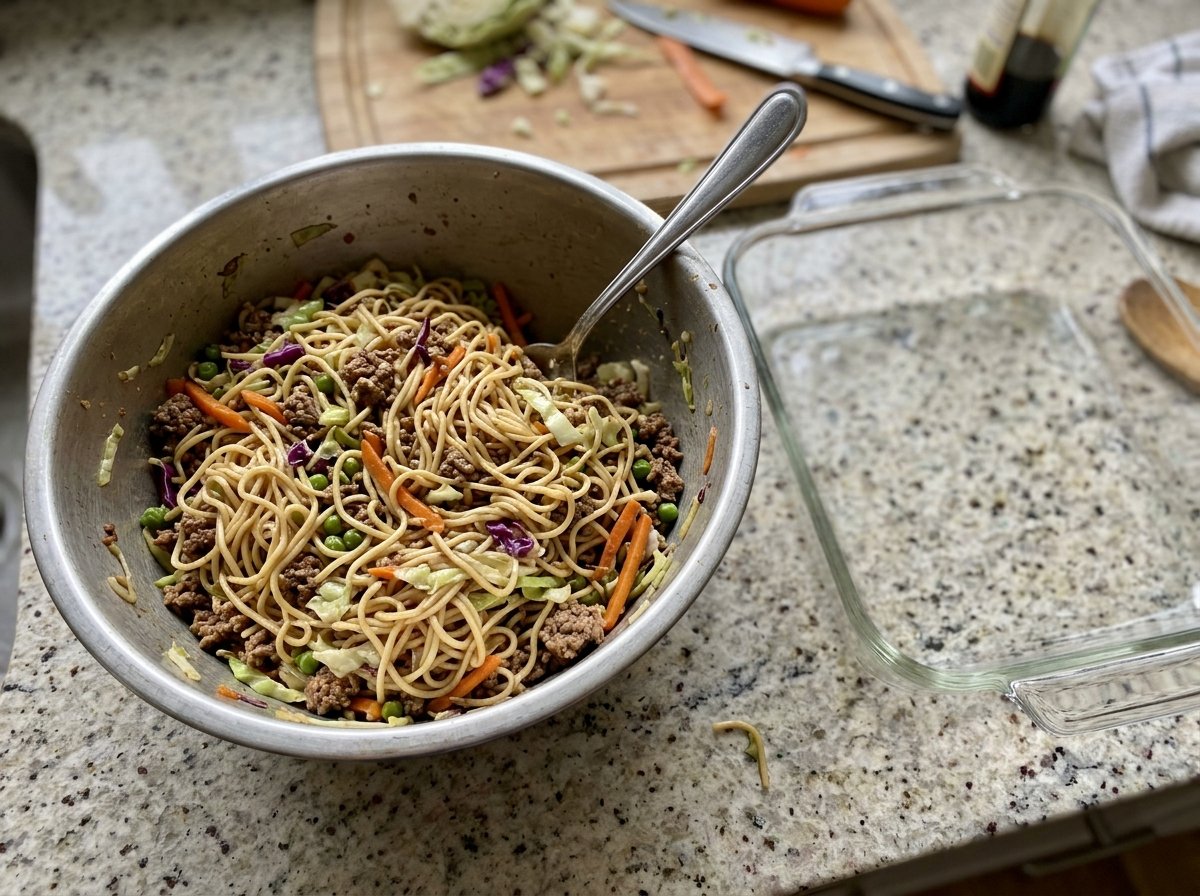
Toss the noodles with the beef mixture using tongs or two large spoons. Transfer to the prepared dish, spreading without packing tightly. The mixture should look moist; add a small splash of broth if the noodles have absorbed the sauce before assembly.
Step 4: Bake and serve
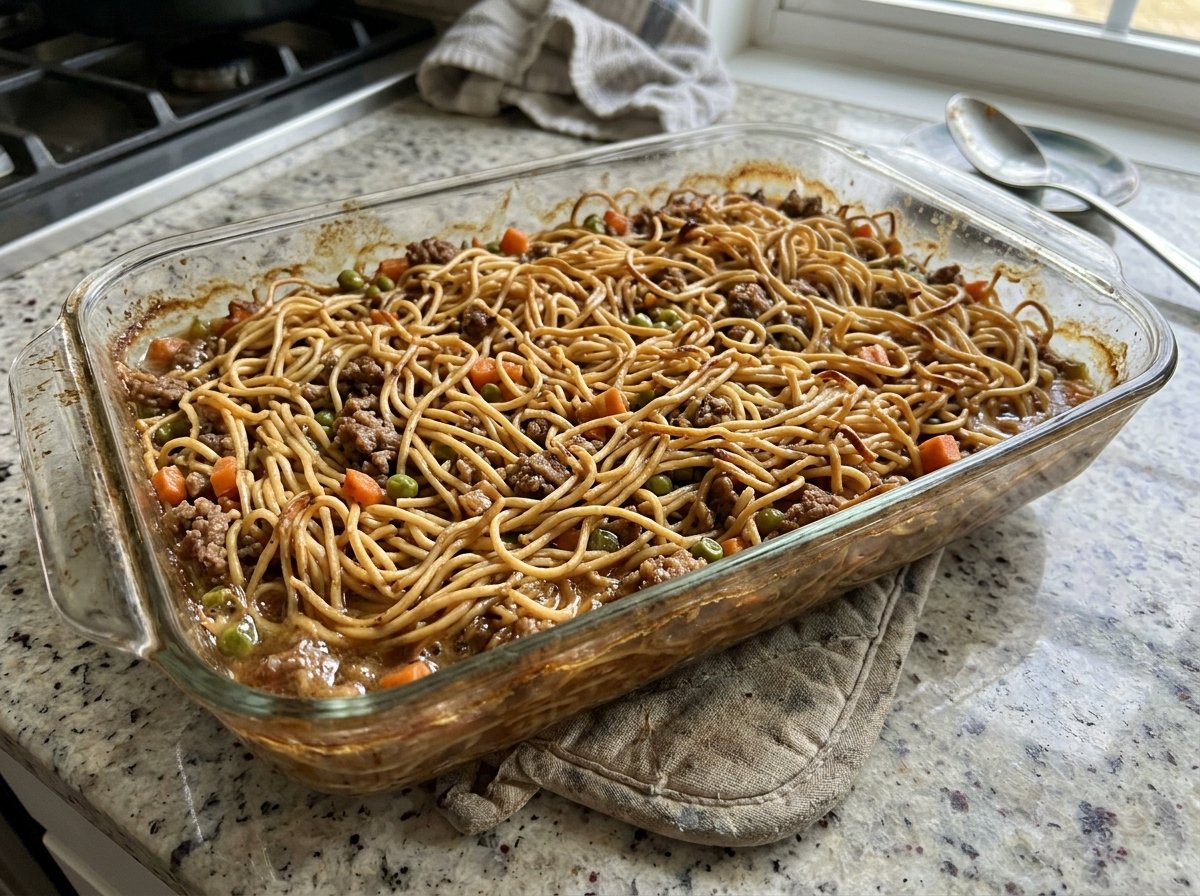
Cover with foil and bake for 15 minutes. Uncover and bake for another 5–10 minutes, until hot throughout and 165°F in the center. A few exposed noodle ends may turn lightly crisp, but the casserole should not dry out.
Rest for 5 minutes, then scatter with green onions. Toss gently as you serve to distribute the beef and vegetables through each portion.
Tips for good noodles
- Do not fully soften the noodles before baking. They continue to cook as they absorb the sauce.
- Drain well. Excess cooking water dilutes the seasoning.
- Use a large skillet. Crowded vegetables release water and take longer to soften.
- Whisk the starch into cool liquid. This helps prevent lumps.
- Cover for most of the bake. The foil protects the noodles from drying out.
Variations and sides
Add sliced mushrooms with the cabbage, cooking until their liquid evaporates. Bean sprouts can be folded in near the end of skillet cooking if you enjoy their texture. For some heat, serve chili sauce separately rather than making the whole casserole spicy.
Ground turkey or chicken can replace the beef; cook either to 165°F before assembling. A small amount of crunchy chow mein noodles can be added at the table for contrast, keeping them separate until serving so they stay crisp.
Serve with cucumber salad, steamed broccoli, or simply a bowl of fresh fruit afterward. The casserole already includes protein, vegetables, and noodles, so it does not need a heavy side.
Make-ahead and storage
Cook the beef-and-vegetable mixture a day ahead and refrigerate promptly in a shallow container. Cook the noodles close to assembly for the best texture. If baking a chilled casserole, allow extra covered time and check the center rather than relying only on the original schedule.
Refrigerate leftovers within 2 hours and use within 3–4 days. Reheat covered until 165°F throughout with a small splash of broth or water, stirring gently where practical. Noodles absorb sauce during storage, so additional liquid is often helpful.
Freeze cooled portions for up to 2 months for best quality. Thaw in the refrigerator overnight. The noodles and cabbage will be softer after freezing, so freshly baked portions have the best texture.
Frequently asked questions
Can I use crunchy chow mein noodles as the base?
No. This recipe uses boilable wheat noodles. Crunchy topping noodles soften differently and will not behave the same way in this amount of sauce.
Can I use rice instead?
Rice needs a different liquid ratio and cooking method. Keep the noodles for this version.
Why is it dry?
The noodles may have been overcooked before baking, or the dish may have spent too long uncovered. Add a little broth and cover while reheating.
Does it need cheese?
No. The soy, garlic, ginger, and sesame sauce provides the flavor without a cheese topping.