
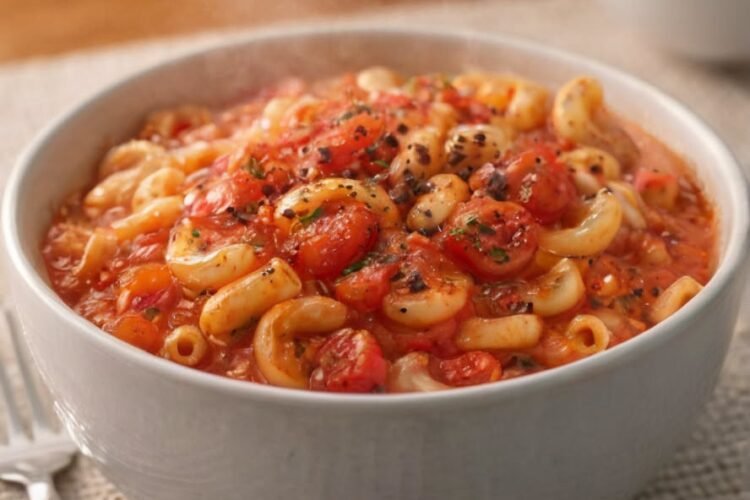
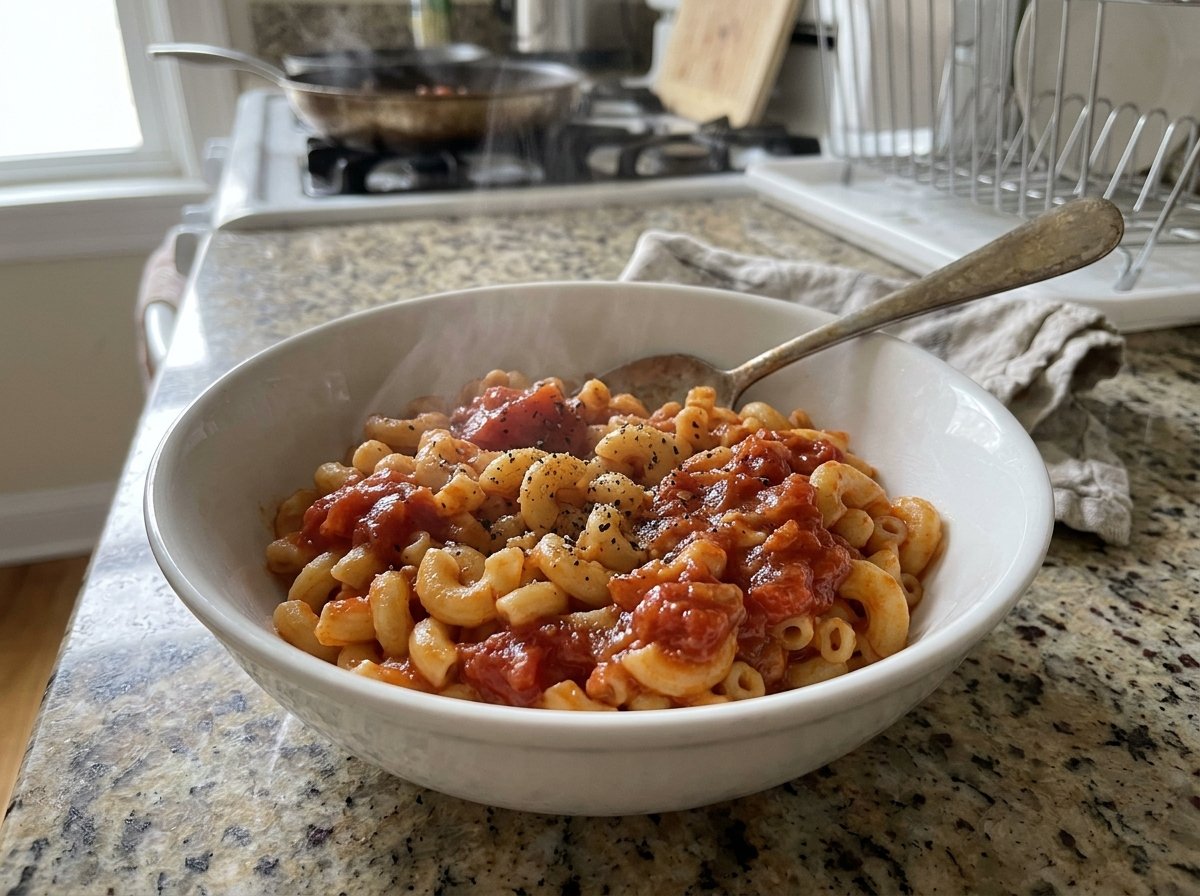
Macaroni and Tomatoes is a simple stovetop dish with tender elbow pasta, juicy tomatoes, and a little butter. Black pepper and softened onion give the sauce enough flavor without taking away its familiar, tomato-forward character. It can be a light lunch or a side for a bigger meal.
The sauce stays a little brothy when first mixed, then thickens as the macaroni rests and absorbs the tomato juices. Cooking the pasta separately gives you control over its texture and keeps the amount of liquid predictable.
Recipe at a glance
- Servings: 4 as a light main or 6 as a side
- Prep: 5 minutes
- Cooking: 20 minutes
- Total: about 25 minutes
- Method: stovetop
Ingredients
- 8 ounces (225 g) dry elbow macaroni
- 2 tablespoons butter
- 1 small yellow onion, finely chopped
- 1 can (28 ounces / 794 g) diced tomatoes with their juices
- 1/2 cup (120 ml) water or low-sodium vegetable broth, plus more as needed
- 1/2 teaspoon fine salt, or to taste, plus salt for pasta water
- 1/2 teaspoon freshly ground black pepper
- 1/2 teaspoon sugar, optional, only if needed
- Chopped parsley, optional, for serving
Ingredient notes
Elbow macaroni catches small pieces of tomato and cooks quickly. Small shells can stand in if that is what you have; use their package timing. Measure the dry pasta rather than starting with the same weight of cooked pasta.
Canned diced tomatoes make this dish easy year-round. Keep their juices, which become the base of the sauce. Whole peeled tomatoes can also be used after crushing them by hand or chopping them in the can. Stewed tomatoes tend to be sweeter and may already contain seasonings.
Butter rounds out the tomato flavor. For a dairy-free version, use olive oil. The small amount of optional sugar is there to balance a particularly sharp can of tomatoes, not to make the dish sweet. Taste after simmering before deciding whether to add it.
How to make Macaroni and Tomatoes
Step 1: Cook the macaroni
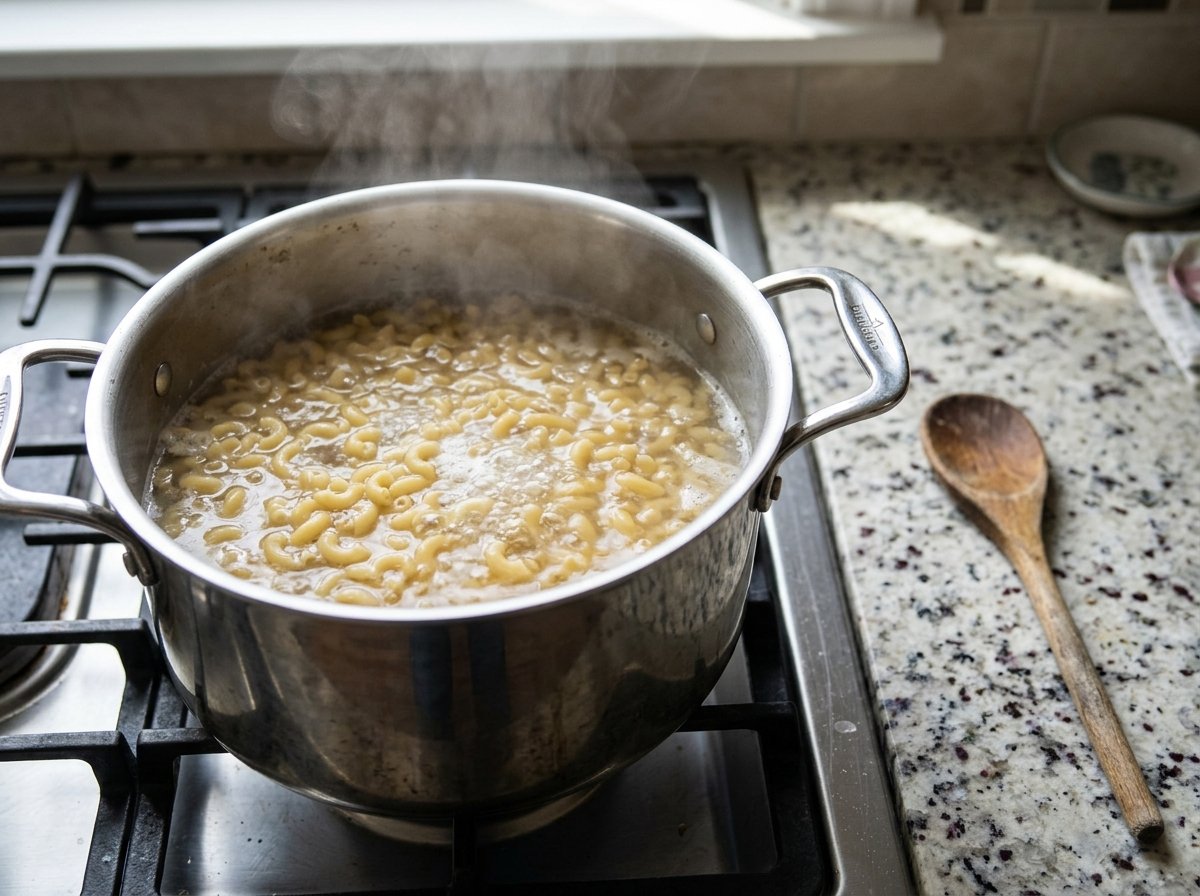
Bring a pot of lightly salted water to a boil. Add the macaroni and cook until about 1 minute short of the package’s suggested al dente time. It will finish in the tomato sauce.
Before draining, reserve about 1 cup of pasta cooking water. Drain the macaroni without rinsing; the surface starch helps the tomato juices cling to it.
Step 2: Soften the onion
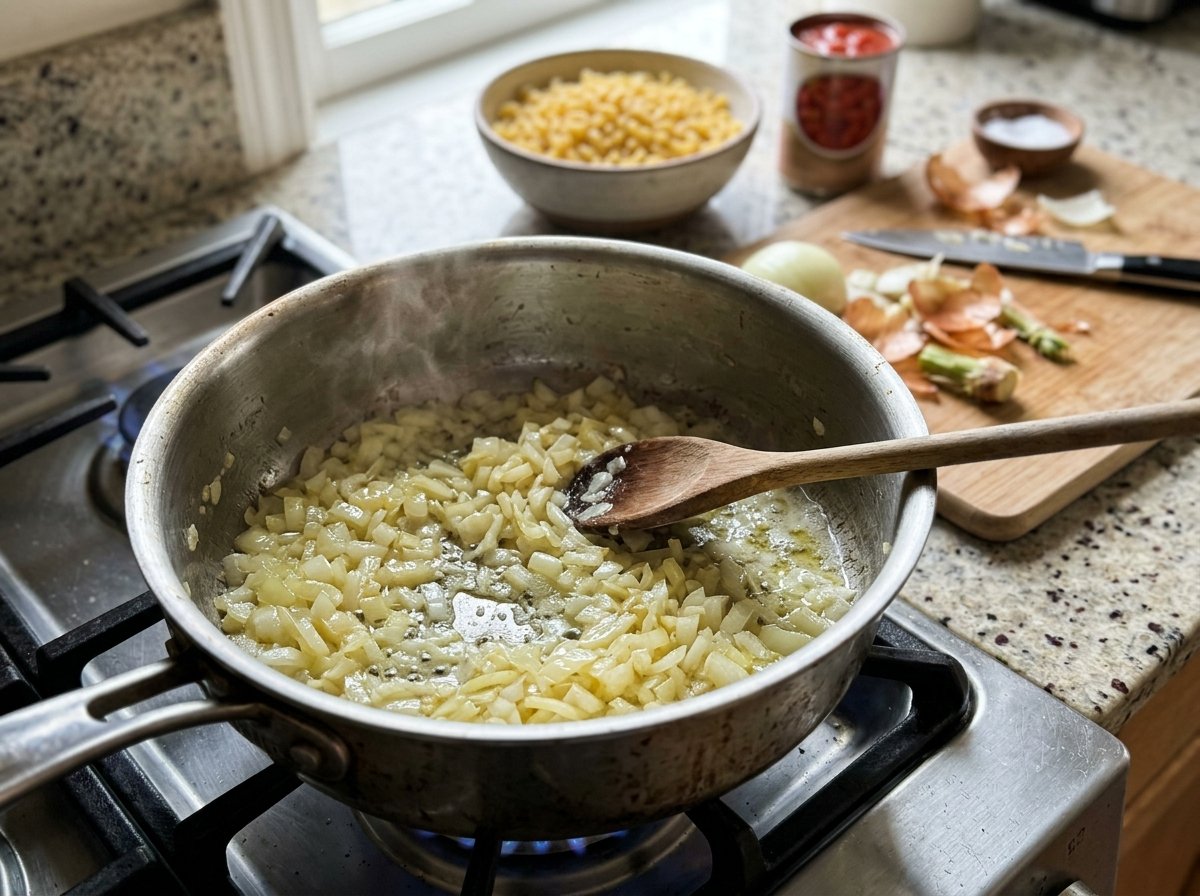
While the pasta cooks, melt the butter in a wide saucepan over medium heat. Add the chopped onion and cook for 5–7 minutes, stirring occasionally, until soft and translucent.
Keep the heat moderate so the butter does not scorch. The onion should soften into the sauce rather than brown deeply. If the pan looks dry, add a teaspoon of water and stir.
Step 3: Simmer the tomatoes
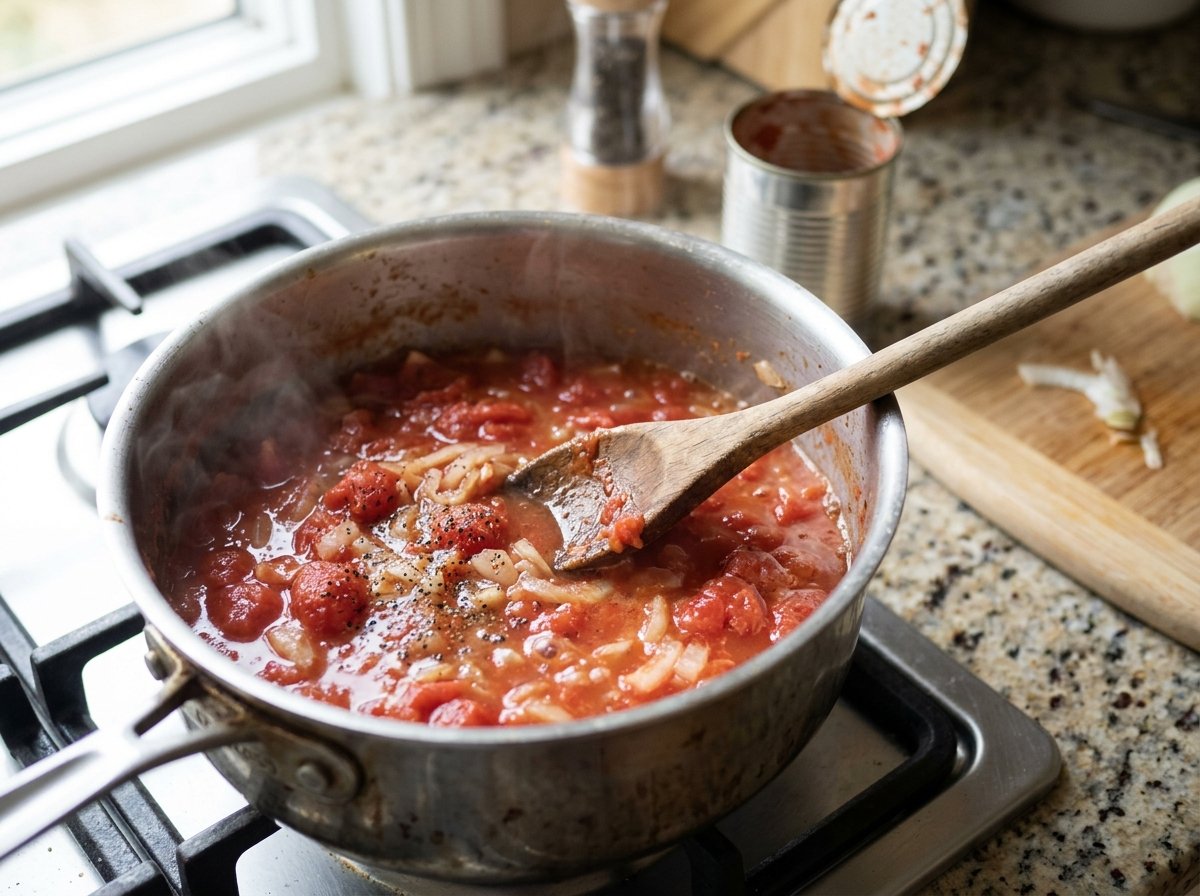
Add the tomatoes and all their juices, the 1/2 cup water or broth, salt, and pepper. Bring to a gentle simmer and cook uncovered for 8–10 minutes, stirring occasionally. Break up larger tomato pieces with the spoon if you want a softer sauce.
Taste the cooked sauce. Add the optional sugar only if the tomatoes are noticeably tart. If you used salted tomatoes or broth, you may need less of the listed salt.
Step 4: Combine and finish
Stir the drained macaroni into the tomatoes. Simmer gently for 2–3 minutes, until the pasta is tender and the juices begin to coat it. Add reserved pasta water a little at a time if it becomes too thick.
Let stand for 3 minutes off the heat, then stir and adjust the pepper or salt. Serve warm in bowls, with parsley if desired. The mixture continues to thicken as it sits, so keep a little extra hot water nearby if serving later.
Tips for the right texture
- Keep the tomato juices. Draining the can removes much of the sauce.
- Cook pasta just short of done. It can finish without becoming mushy.
- Reserve pasta water. A splash loosens the sauce without adding more fat.
- Stir gently. Tender elbows can break when handled roughly.
- Taste at the end. Tomato brands differ in sweetness, acidity, and salt.
Simple variations
For a smoky version, cook two chopped bacon slices first, remove the crisp pieces, and use a tablespoon of the drippings with a little butter to soften the onion. Stir the bacon back in just before serving.
Add a small minced garlic clove for the final 30 seconds of onion cooking if you enjoy garlic. A pinch of crushed red pepper adds heat, while a few torn basil leaves bring a fresher flavor. Keep additions modest if you want the simple character of the original dish.
You can stir in a small spoonful of butter at the end for a richer finish. Cheese is optional at the table, though the tomato juices and pepper are enough on their own.
Serving ideas
Serve as a light main with toast and a salad, or alongside baked chicken, pork chops, or beans. Its soft texture works nicely with a crisp vegetable side. For a heartier tray of comfort food, see our cheesy potato and smoked sausage casserole.
Storage and reheating
Refrigerate leftovers in shallow containers within 2 hours and use within 3–4 days. The pasta absorbs more sauce overnight, so expect a thicker mixture the next day.
Reheat gently in a saucepan with a splash of water or broth, stirring until 165°F throughout. A microwave also works; cover loosely and stir halfway through to heat evenly.
Freeze cooled portions for up to 2 months for best quality. Thaw in the refrigerator before reheating. The pasta will be softer after freezing, so this dish is best fresh if you prefer a firmer bite.
Frequently asked questions
Can I use fresh tomatoes?
Yes. Use about 2 pounds of ripe chopped tomatoes and allow a longer simmer to soften them and develop the juices. Add water as needed because fresh tomatoes vary in moisture.
Should the dish be soupy?
It should be moist with loose tomato juices, not a dry pasta dish. Adjust to your taste with a little hot water, remembering it thickens as it stands.
Do I need sugar?
No. It is optional and depends on the tomatoes. Taste after simmering before adding a small amount.
Can I cook the pasta directly in the tomatoes?
This formula is written for separately boiled pasta. Cooking dry macaroni in the sauce needs more liquid and closer stirring, so it is better to follow the separate-pot method here.